The picks
Best Yarn for a Market Bag
A bag is the one thing you make that has to hold weight. Everything else follows from that.
By Sawyer V. · Published September 6, 2026
Disclosure: we earn a commission when you buy through the links on this page, at no extra cost to you. It never decides what we recommend or how we rank it - read the full disclosure.
The short answer
Use cotton, and mercerized cotton if you can. A bag is the only thing most people make that has to bear weight, and cotton is strong, gains strength when wet and does not stretch permanently under load. Linen is better still and costs more. Do not use acrylic: it stretches under sustained weight and stays stretched.
| # | Product | Best for | Fiber | Weight | Price |
|---|---|---|---|---|---|
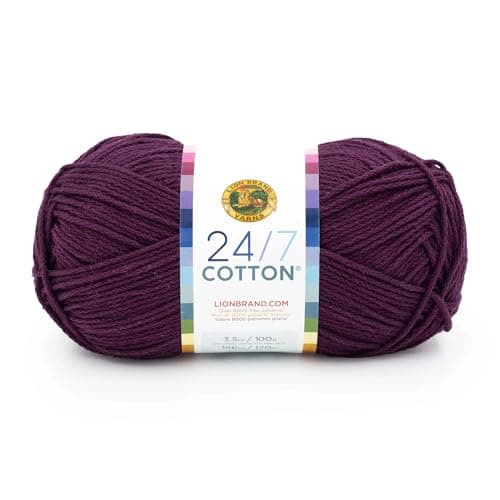
| 1 | Lion Brand 24/7 CottonMercerized cotton: strong, stronger when wet, and it does not stretch under weight. | A bag you will actually load up | Mercerized cotton | Worsted (4) | $6.99 - View on Amazon#ad disclosure - price as of October 22, 2026 |
| 2 | No photoLouet Euroflax LinenLinen is the fiber string bags were made from before anyone thought about it. | The traditional net bag | 100% linen | Sport (2) | Check price on Amazon#ad disclosure |
| 3 | 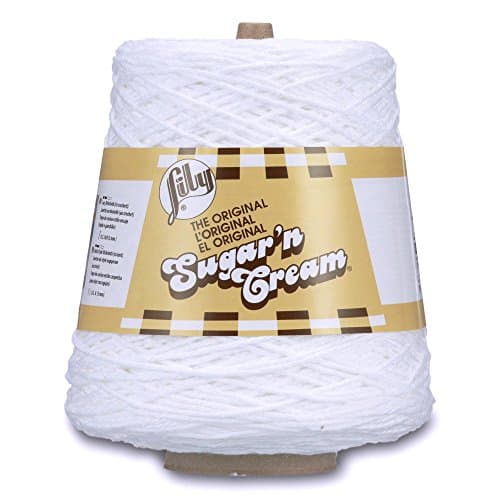 Lily Sugar'n CreamCheap, strong enough, and it comes in every color a craft shop stocks. Lily Sugar'n CreamCheap, strong enough, and it comes in every color a craft shop stocks. | A first bag, or a bag you will not mourn | 100% cotton | Worsted (4) | $17.88 - View on Amazon#ad disclosure - price as of October 22, 2026 |
| 4 | 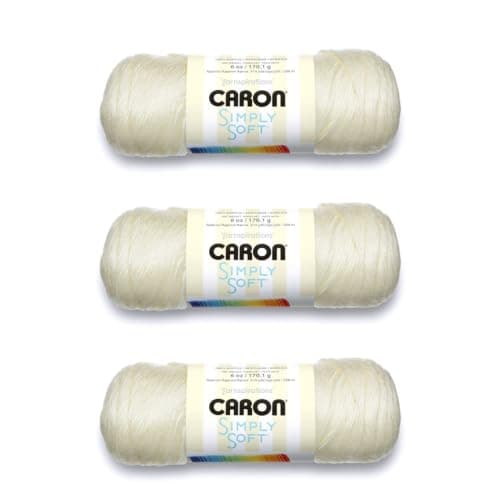 Caron Simply SoftA soft, drapey acrylic - which is exactly the wrong set of properties here. Caron Simply SoftA soft, drapey acrylic - which is exactly the wrong set of properties here. | Blankets and wraps, where drape is the point | 100% acrylic | Worsted (4) | $14.55 - View on Amazon |
Lion Brand 24/7 Cotton
Lion Brand · Best for a bag you will actually load up
Mercerized cotton with a sheen and a stiff hand. Stitch definition is the best on this page, which is why amigurumi people keep buying it.
- Fiber
- 100% mercerized cotton
- Weight
- Worsted
- Skein
- 3.5oz / 100g, 186yd / 170m
- Gauge
- 19 sts x 26 rows on 5mm (US 8)
- Hook
- 5.5mm (US I/9), 16 sc x 18 rows
- Care
- Machine wash, water not above 105F; medium heat dryer
Who it suits
Anyone making a bag for groceries rather than for a photograph.
Why it is here
100% mercerized cotton, worsted weight, 186yd per 100g. Mercerizing treats the fiber under tension, which leaves it measurably stronger and more lustrous - and cotton is one of the few fibers that gains strength when wet, which matters the first time your bag meets rain.
What you give up
It is heavier than acrylic and it has no give at all, so the bag is exactly the size you made it. Get the gauge right, because you cannot block it larger.
Specifications from Lion Brand product page. We have not handled this item - see how we pick.
Louet Euroflax Linen
Louet · Best for the traditional net bag
Wet-spun long-line linen in sport weight - stiff off the ball, and softer after every single wash for years.
- Fiber
- 100% linen
- Weight
- Sport
- Hank
- 100g, 270yd
- Gauge
- 6 sts to 1in on US 2-4
- Spinning
- Wet spun from long line flax - the fibers are not cut
- Care
- Machine wash regular
Who it suits
Anyone willing to spend more for a bag that gets better with age rather than worse.
Why it is here
100% wet-spun long-line linen, sport weight, 100g for 270yd, at 6 sts to 1in on US 2-4. Long-line means the flax fibers are not cut, which is where linen's strength comes from - and it softens with every wash rather than wearing out.
What you give up
It is stiff and unfriendly on the hook or needle for the first few hours, it costs several times what cotton does, and sport weight means a lot more stitches per bag.
Specifications from Louet Euroflax linen yarn - retail specification. We have not handled this item - see how we pick.
Lily Sugar'n Cream
Lily · Best for a first bag, or a bag you will not mourn
Unmercerized cotton in a small 2.5oz ball. Absorbent, hard-wearing, and the reason every dishcloth pattern ever written specifies it.
- Fiber
- 100% cotton
- Weight
- 4 Medium / worsted
- Ball
- 2.5oz / 71g, 120yd / 109m
- Gauge
- 20 sts x 26 rows on 4.5mm (US 7)
- Hook
- 5mm (US H/8), 13 sc x 14 rows
- Care
- Machine wash not above 86F delicate, tumble dry low
Who it suits
Anyone making their first bag, or making several as gifts.
Why it is here
100% cotton, worsted weight, 120yd per 71g ball. Untreated cotton is not quite as strong as mercerized, but it is strong enough for a bag and it costs a fraction as much.
What you give up
The loose spin that makes it absorbent also makes it split on the hook, and it fades over many washes. It is also slightly fuzzy, which shows dirt.
Specifications from Yarnspirations product page. We have not handled this item - see how we pick.
Caron Simply Soft
Caron · Best for blankets and wraps, where drape is the point
A softer, shinier acrylic worsted with noticeable drape - which is exactly why it is a poor choice for anything that needs to hold a shape.
- Fiber
- 100% acrylic
- Weight
- 4 Medium / worsted
- Skein
- 6oz / 170g, 315yd / 288m
- Gauge
- 18 sts x 24 rows on 5mm (US 8)
- Hook
- 5mm (US H/8), 13 sc x 14 rows
- Care
- Machine wash cool, dry flat, no bleach
Who it suits
Not bag makers. It is a genuinely good yarn for a shawl.
Why it is here
100% acrylic, worsted weight, 315yd per 170g. It drapes unusually well for a worsted acrylic, which is why people reach for it.
What you give up
Acrylic stretches under sustained load and does not spring back. Load a bag made from it and the straps lengthen, the body sags, and after a few shops it drags on the ground. This is the single most common market bag failure.
Specifications from Yarnspirations product page. We have not handled this item - see how we pick.
A bag is a structural problem
Every other project on this site is judged on how it feels, how warm it is, or how it drapes. A bag is judged on whether it still works after you put four kilos of shopping in it.
That reframes the fiber question completely. Softness is irrelevant. Warmth is irrelevant. Three things matter, in this order.
- Tensile strength. Can the yarn take the load without breaking a strand at a stress point?
- Resistance to permanent stretch. Does it return to shape when unloaded, or does it stay long?
- Behavior when wet. A bag will get rained on and it will get washed.
Why acrylic fails, specifically
Acrylic has moderate elasticity, which sounds like an advantage. The problem is what happens under a sustained load rather than a brief one.
Held under tension for hours, acrylic fibers creep - they deform slowly and do not fully recover. In a garment, worn for an evening and then hung up, that shows as gradual relaxation over a season. In a bag carrying weight, it shows as straps that are two inches longer than they were this morning.
Cotton, and the mercerized question
Cotton is one of very few textile fibers that is stronger wet than dry. For anything that gets rained on and washed, that is a real structural advantage rather than a curiosity.
Mercerizing - a caustic soda treatment applied under tension - swells and straightens the fiber, leaving it stronger, smoother and better at holding dye. For a bag, the strength is the point and the shine is a bonus. The full comparison is in cotton vs acrylic.
Linen, and why string bags were made of it
Linen is stronger than cotton, and dramatically stronger wet. It is what net bags, fishing nets and sail cord were made from for most of history, which is not a coincidence.
The catch is how it behaves in the hand. Wet-spun linen is stiff and wiry off the ball and it does not forgive uneven tension. It also softens continuously with washing and use - a linen bag is at its worst on day one and at its best after five years. Our linen vs cotton page covers the trade in full.
Construction matters as much as fiber
A market bag is usually a mesh, deliberately, so it stretches over its contents and packs flat. That is a stitch decision, and it interacts with the fiber choice.
| Structure | Behavior | Fiber requirement |
|---|---|---|
| Open mesh, large hook | Stretches hugely; packs tiny | Must not stretch permanently - cotton or linen only |
| Solid single crochet | Firm, holds shape, heavier | More forgiving; acrylic survives here |
| Solid with a lining | Structural; carries anything | Fiber matters least; the lining does the work |
| Knitted stockinette | Curls at the edges; stretches | Avoid for bags - use garter or a crochet fabric |
The mesh is where fiber choice is unforgiving, because there is nothing else holding the shape. A solid, tightly-worked fabric can survive a fiber that a mesh cannot.
Hook and needle size, deliberately large
A market bag mesh is worked two or three sizes above the ball band figure - 6mm to 8mm for worsted cotton - so the fabric opens out under load.
That is the opposite of the amigurumi instruction and for the opposite reason: here you want the fabric to give geometrically, by opening the mesh, rather than by stretching the yarn. Our best hook for cotton yarn page covers the tool side.
Reinforce the handles
Whatever fiber you use, the handles carry everything. Two cheap interventions make a large difference.
- Work the handles doubled. Hold two strands together for the strap rounds only. It roughly doubles the cross-section at the one place that matters.
- Work the handle fabric tighter. Drop two hook sizes for the strap even if the body is an open mesh.
- Add a row of slip stitch or surface crochet along the strap. It acts as a non-stretch spine.
Yardage
- Small mesh produce bag: 150-200yd of worsted cotton. Two balls of Sugar'n Cream.
- Standard market bag: 250-350yd worsted, or 400-500yd in sport-weight linen.
- Large solid tote: 400-600yd worsted cotton, and it will be heavy empty.
Remember that crochet consumes roughly a third more yarn than knitting for the same area - the yardage page has the working.
What we would buy
- Best all-round: Lion Brand 24/7 Cotton, mercerized and strong.
- A bag to keep: Louet Euroflax linen, stiff at first and better every year.
- A first bag: Lily Sugar'n Cream, cheap enough to experiment with.
- Not this: Caron Simply Soft - lovely yarn, and the straps will stretch.
Questions people actually ask
What is the best yarn for a market bag?
Cotton, ideally mercerized. It is strong, gains strength when wet, and does not stretch permanently under load. Linen is stronger still and costs more.
Can you make a market bag with acrylic yarn?
You can, and the handles will stretch. Acrylic creeps under sustained load and does not fully recover, so a loaded bag ends up with long straps that drag. A tightly worked solid fabric survives better than an open mesh.
How much yarn for a crochet market bag?
250 to 350 yards of worsted weight cotton for a standard bag, or 150 to 200 yards for a small produce bag. Crochet uses about a third more yarn than knitting for the same area.
What hook size for a market bag?
Two or three sizes above the ball band - 6mm to 8mm for worsted cotton. The mesh needs to open under load, which is how the bag stretches without the yarn stretching.
How do I stop my bag handles stretching?
Work them with two strands held together, drop two hook sizes for the strap rounds, and add a line of slip stitch along the strap as a non-stretch spine. Then use cotton or linen rather than acrylic.