The picks
Best Yarn for Dishcloths
It has to soak up water, take a hot wash, and dry out. That rules out most of the yarn aisle.
By Sawyer V. · Published September 4, 2026
Disclosure: we earn a commission when you buy through the links on this page, at no extra cost to you. It never decides what we recommend or how we rank it - read the full disclosure.
The short answer
Use cotton. Lily Sugar'n Cream is the standard dishcloth yarn - absorbent, scrubby, cheap and boil-proof. If you want something smoother for washcloths, mercerized cotton such as Lion Brand 24/7 is the upgrade. Do not use acrylic or chenille: neither absorbs water, and both stay damp.
| # | Product | Best for | Fiber | Weight | Price |
|---|---|---|---|---|---|
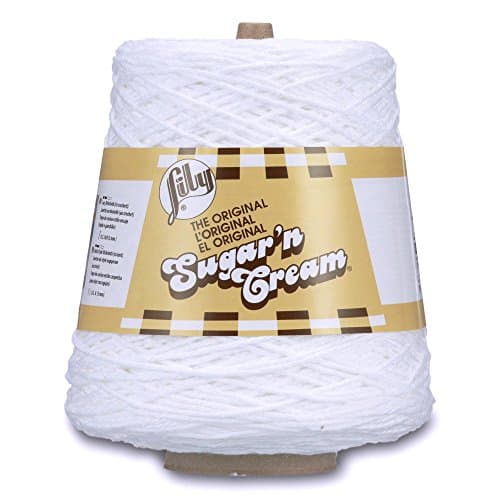
| 1 | Lily Sugar'n CreamAbsorbent, scrubby, boil-proof cotton that costs almost nothing. | Dishcloths, and the reason this yarn exists | 100% cotton | Worsted (4) | $17.88 - View on Amazon#ad disclosure - price as of October 20, 2026 |
| 2 | 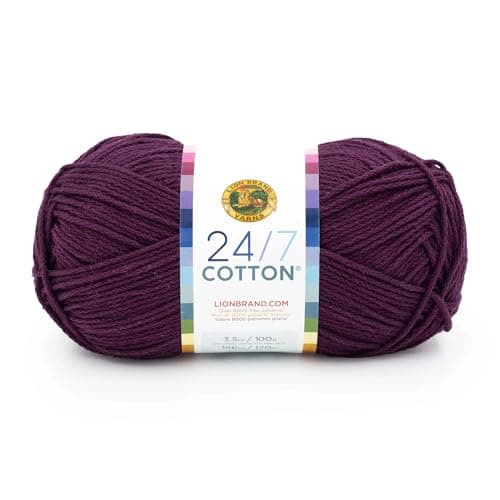 Lion Brand 24/7 CottonMercerized cotton: smoother, shinier and much less prone to splitting. Lion Brand 24/7 CottonMercerized cotton: smoother, shinier and much less prone to splitting. | Face cloths and anything that touches skin | Mercerized cotton | Worsted (4) | $6.99 - View on Amazon#ad disclosure - price as of October 20, 2026 |
| 3 | 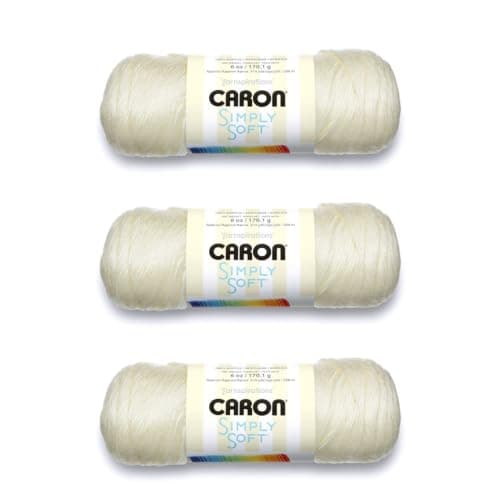 Caron Simply SoftA lovely soft acrylic that will not absorb a drop of water. Caron Simply SoftA lovely soft acrylic that will not absorb a drop of water. | Blankets and garments, where its drape is the point | 100% acrylic | Worsted (4) | $14.55 - View on Amazon |
| 4 | 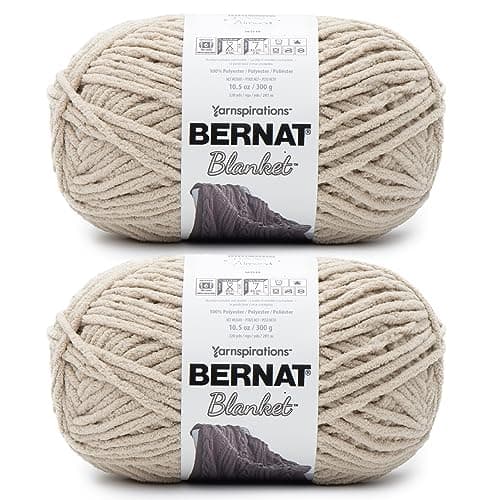 Bernat BlanketA chenille cloth is a sponge that stays wet for two days. Bernat BlanketA chenille cloth is a sponge that stays wet for two days. | Blankets, exactly as the name says | Polyester chenille | Super bulky (6) | $20.96 - View on Amazon#ad disclosure - price as of October 20, 2026 |
Lily Sugar'n Cream
Lily · Best for dishcloths, and the reason this yarn exists
Unmercerized cotton in a small 2.5oz ball. Absorbent, hard-wearing, and the reason every dishcloth pattern ever written specifies it.
- Fiber
- 100% cotton
- Weight
- 4 Medium / worsted
- Ball
- 2.5oz / 71g, 120yd / 109m
- Gauge
- 20 sts x 26 rows on 4.5mm (US 7)
- Hook
- 5mm (US H/8), 13 sc x 14 rows
- Care
- Machine wash not above 86F delicate, tumble dry low
Who it suits
Anyone making dishcloths, washcloths, potholders or a first project.
Why it is here
100% USA-grown cotton, worsted weight (CYC 4), 120yd per 71g ball. Cotton fiber absorbs water into the fiber itself rather than only between the strands, and this yarn is spun loosely enough to be genuinely scrubby.
What you give up
The loose spin that makes it absorbent also makes it split on the hook or needle, and it sheds a little lint in its first few washes.
Specifications from Yarnspirations product page. We have not handled this item - see how we pick.
Lion Brand 24/7 Cotton
Lion Brand · Best for face cloths and anything that touches skin
Mercerized cotton with a sheen and a stiff hand. Stitch definition is the best on this page, which is why amigurumi people keep buying it.
- Fiber
- 100% mercerized cotton
- Weight
- Worsted
- Skein
- 3.5oz / 100g, 186yd / 170m
- Gauge
- 19 sts x 26 rows on 5mm (US 8)
- Hook
- 5.5mm (US I/9), 16 sc x 18 rows
- Care
- Machine wash, water not above 105F; medium heat dryer
Who it suits
Anyone who found Sugar'n Cream unpleasant to work with, and anyone making washcloths rather than scrubbers.
Why it is here
100% mercerized cotton, worsted weight, 186yd per 100g. Mercerizing treats the fiber under tension, which makes it stronger, smoother and more lustrous - and it holds dye far better, so bright colors stay bright.
What you give up
Mercerizing reduces absorbency slightly against untreated cotton, and the smooth surface is less scrubby. It is a better washcloth and a slightly worse dishcloth.
Specifications from Lion Brand product page. We have not handled this item - see how we pick.
Caron Simply Soft
Caron · Best for blankets and garments, where its drape is the point
A softer, shinier acrylic worsted with noticeable drape - which is exactly why it is a poor choice for anything that needs to hold a shape.
- Fiber
- 100% acrylic
- Weight
- 4 Medium / worsted
- Skein
- 6oz / 170g, 315yd / 288m
- Gauge
- 18 sts x 24 rows on 5mm (US 8)
- Hook
- 5mm (US H/8), 13 sc x 14 rows
- Care
- Machine wash cool, dry flat, no bleach
Who it suits
Not dishcloth makers. It is a genuinely nice yarn for a soft blanket and completely wrong for the kitchen.
Why it is here
100% acrylic, worsted weight, 315yd per 170g. Acrylic is hydrophobic: water sits on it rather than in it, so a cloth made from it pushes water around instead of picking it up.
What you give up
Acrylic also melts. A cloth left against a hot pan glazes rather than scorching, and it will not survive the boil-wash that makes cotton cloths hygienic.
Specifications from Yarnspirations product page. We have not handled this item - see how we pick.
Bernat Blanket
Bernat · Best for blankets, exactly as the name says
Polyester chenille at 108 yards to a 150g ball. Fast, warm, machine washable, and it will shed and worm if the tension is loose.
- Fiber
- 100% polyester (chenille)
- Weight
- 6 Super Bulky
- Ball
- 5.3oz / 150g, 108yd / 98m
- Gauge
- 8 sts x 13 rows on 8mm (US 11)
- Hook
- 8mm (US L/11), 7 sc x 8 rows
- Care
- Machine wash delicate, tumble dry gentle
Who it suits
Not dishcloth makers, despite how often bulky yarn gets suggested for fast cloths.
Why it is here
100% polyester chenille, super bulky (CYC 6), 108yd per 150g. The pile that makes it soft also holds an enormous amount of water in the structure of the yarn.
What you give up
A cloth that stays damp grows bacteria. Fast to make, unpleasant within a week, and impossible to wring out properly.
Specifications from Yarnspirations product page. We have not handled this item - see how we pick.
Three requirements, and only one fiber meets all of them
A dishcloth is a piece of engineering with a very short specification, and it is a specification that most yarn fails.
- It must absorb water. Not carry it between the stitches - absorb it into the fiber. This is what makes a cloth wipe rather than smear.
- It must survive heat. A kitchen cloth needs a hot wash to stay hygienic, and it will meet hot pans.
- It must dry between uses. A cloth that stays damp is a cloth that smells within days.
Cotton passes all three. Linen passes all three and is harder to find and more expensive. Acrylic fails the first and the second. Chenille fails the third comprehensively. Wool would felt.
Why acrylic feels like it should work and does not
Acrylic is durable, washable and cheap, which sounds like a kitchen fiber. The problem is that acrylic is hydrophobic - it repels water at the molecular level.
A wet acrylic cloth carries water in the gaps between stitches, not in the yarn. Wipe a counter with it and you push the water into a line rather than picking it up. It is the same property that makes acrylic clammy in a hat, viewed from the other side.
Mercerized or not?
Mercerizing is a caustic soda treatment applied to cotton under tension. It swells the fiber, straightens it, and permanently changes what the yarn does.
| Untreated (Sugar'n Cream) | Mercerized (24/7 Cotton) | |
|---|---|---|
| Absorbency | Higher | Slightly lower |
| Surface | Matte, slightly fuzzy, scrubby | Smooth and lustrous |
| Strength | Good | Higher |
| Splitting on the hook | Splits readily | Much less |
| Color retention | Fades over many washes | Holds dye well |
| Best for | Dishcloths and scrubbers | Washcloths, face cloths, market bags |
Neither is better in the abstract. If the cloth is going to scrub a pan, untreated. If it is going on a face, mercerized.
Stitch pattern does more than you would think
Absorbency is partly fiber and partly surface area, and a textured stitch has far more surface than stockinette.
- Garter stitch - the classic diagonal dishcloth. Maximum texture, thick fabric, dries reasonably.
- Seed or moss stitch - scrubby and reversible, and it lies flat.
- Waffle or grid stitches - the most scrubby, and the slowest to dry.
- Stockinette - avoid. It curls at the edges and has the least surface area.
In crochet, single crochet and the moss stitch both make excellent cloths. Cotton has no stretch, so the fabric comes out exactly the size your gauge says - which makes a dishcloth a genuinely good place to practice gauge and swatching.
Why this is the best first project there is
One ball, one evening, and a finished object you will actually use. A dishcloth is small enough that a mistake costs almost nothing, cotton shows your stitches clearly enough to see what you did wrong, and there is no gauge consequence - a cloth an inch wider is still a cloth.
The beginners' yarn page argues for softer, more forgiving yarn for a first scarf. For a first dishcloth, cotton is the right answer and its slight stiffness is part of what makes stitches easy to see.
What we would buy
- Standard dishcloths: Lily Sugar'n Cream. One ball makes two cloths.
- Washcloths and face cloths: Lion Brand 24/7 Cotton for the smoother surface.
- The hook, if you crochet them: an in-line Susan Bates hook handles cotton's lack of stretch well.
- Do not use: acrylic or chenille. Neither absorbs, and one of them stays wet.
Questions people actually ask
What is the best yarn for dishcloths?
100% cotton in worsted weight. Lily Sugar'n Cream is the standard because it absorbs water, survives a hot wash and is scrubby enough to clean with. Mercerized cotton is smoother and better for washcloths.
Can you use acrylic yarn for dishcloths?
You can make one, but it will not work. Acrylic repels water, so the cloth pushes water around instead of absorbing it, and it cannot take a hot wash or contact with a hot pan.
How much yarn does a dishcloth take?
About 50 to 70 yards for a standard 8in square in worsted cotton, so one 120-yard ball makes two cloths.
What is the difference between mercerized and regular cotton yarn?
Mercerized cotton is treated under tension, which makes it stronger, smoother, shinier and better at holding dye. Untreated cotton is more absorbent and more scrubby, which is what a dishcloth wants.
What stitch is best for a dishcloth?
Anything textured. Garter stitch, seed stitch and waffle patterns all add surface area, which is what does the cleaning. Avoid stockinette - it curls and has the least texture.