Head to head
Mercerized vs Unmercerized Cotton
One treatment, applied to the same plant, splits cotton yarn into two materials that behave nothing alike.
By Sawyer V. · Published September 27, 2026
Disclosure: we earn a commission when you buy through the links on this page, at no extra cost to you. It never decides what we recommend or how we rank it - read the full disclosure.
The short answer
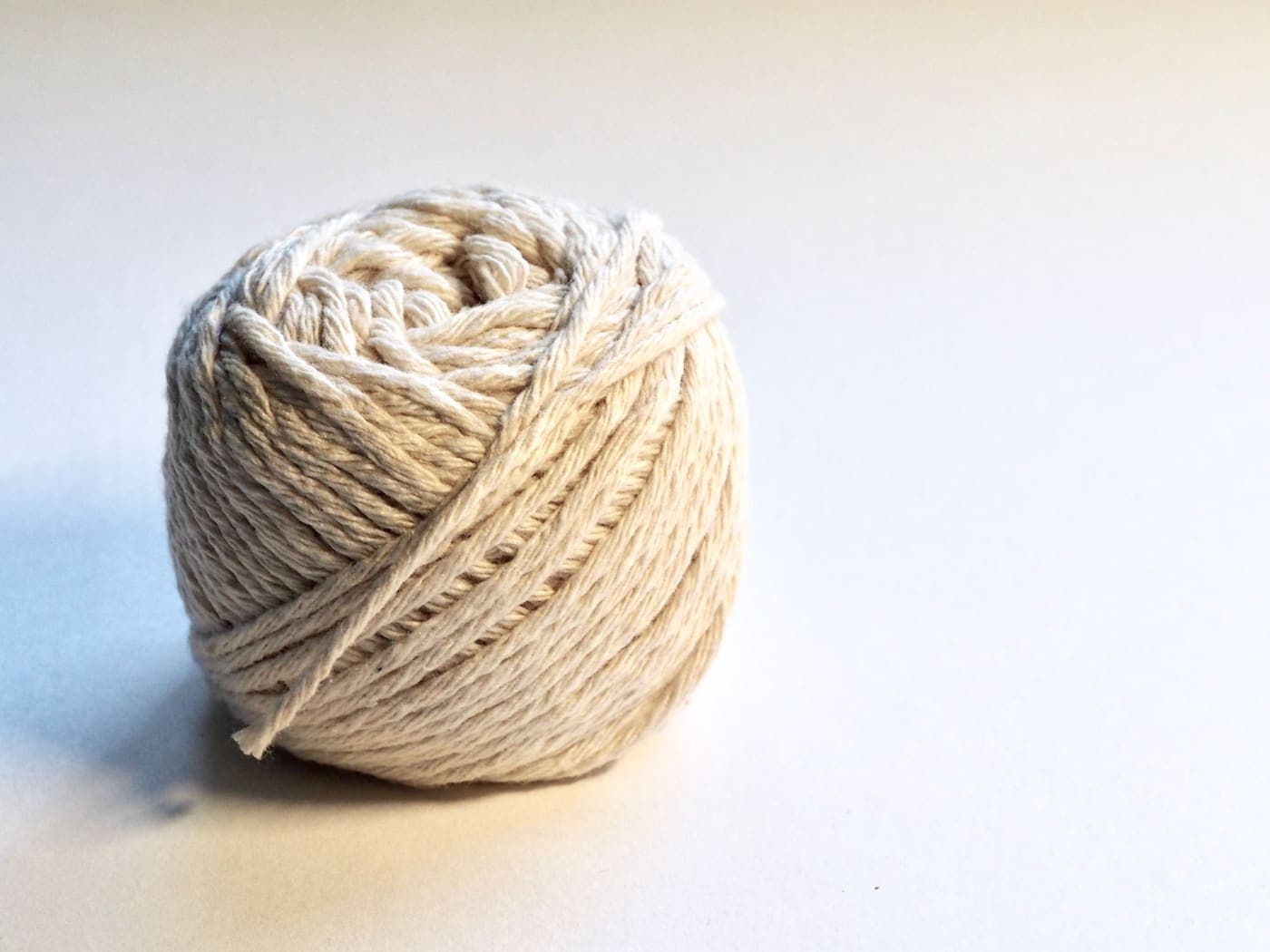
Mercerizing treats cotton under tension in a caustic solution, which makes the fiber swell, straighten and take on a permanent sheen. Mercerized cotton is stronger, shinier, takes dye more vividly and holds stitch definition crisply, but it is stiffer and less absorbent. Unmercerized cotton is matte, softer and far more absorbent. Use mercerized for amigurumi, bags and thread crochet; use unmercerized for dishcloths, washcloths and anything against skin.
What the treatment does
Raw cotton fiber is a flattened, twisted ribbon. Mercerizing swells it into a rounder, straighter cross-section and holds it there while it is under tension. The change is permanent and it is structural rather than a coating.
- A rounder fiber reflects light more evenly, which is the sheen.
- A straighter fiber packs more tightly, which is the strength and the stitch definition.
- A swollen fiber takes dye more readily, which is why mercerized cottons come in more saturated colors.
- A tighter surface absorbs less water, which is the trade.
- Nothing washes out, because the fiber itself has changed shape.
| Mercerized | Unmercerized | |
|---|---|---|
| Surface | Lustrous, almost silky | Matte |
| Strength | Higher | Lower |
| Stitch definition | Crisp | Softer, slightly fuzzy |
| Absorbency | Reduced | High |
| Hand | Stiffer | Softer |
| Dye uptake | Vivid, deep | Gentler, chalkier |
| Typical use | Amigurumi, bags, thread crochet | Dishcloths, washcloths, next to skin |
| Shrinkage | Lower - it has already been treated | Higher |
Telling them apart
- Read the band. Mercerized cotton says so, because it is a selling point.
- Look at the sheen. Mercerized cotton is visibly lustrous next to a matte ball.
- Feel the stiffness. Mercerized is firmer and squeaks slightly against itself.
- Look at the color saturation. Deep, clear colors in cotton usually mean mercerized.
- Crochet thread is essentially always mercerized, which is why doilies have that characteristic shine.
Which to use for what
| Project | Better cotton | Why |
|---|---|---|
| Dishcloths and washcloths | Unmercerized | Absorbency is the whole job |
| Amigurumi | Mercerized | Stitch definition and no stuffing show-through |
| Market bags | Mercerized | Strength under load |
| Baskets | Mercerized | Stiffness holds the shape |
| Doilies and thread crochet | Mercerized | Sheen and crisp stitches |
| Baby garments | Unmercerized | Softer against skin |
| Summer tops | Either | Mercerized drapes better; unmercerized is softer |
| Potholders | Unmercerized, doubled | Absorbency and thickness - see the safety note |
For anything going near heat, cotton is a requirement rather than a preference: best yarn for potholders and trivets covers why, and is acrylic yarn flammable covers the fiber that is wrong for the job.
What neither one fixes
- Cotton has no elasticity, mercerized or not. Ribbing will not grip and a stretched garment stays stretched.
- Both are heavy for their bulk, which is why cotton sweaters hang off the shoulders.
- Both show uneven tension, because there is no loft to even it out - see cotton yarn pros and cons.
- Both take a long time to dry, and a cotton blanket laid flat is a multi-day job.
- Neither blocks permanently. Cotton flattens rather than setting into a new shape.
It is not a quality grade
Mercerized cotton costs more and looks more expensive, so it is easy to read the treatment as an upgrade. It is not - it is a change in behavior, and half of what it changes is a loss.
- You lose absorbency, which is the entire point of a dishcloth or a towel.
- You lose softness, which matters against skin and for babies.
- You gain strength, which matters for bags, warp and anything under load.
- You gain stitch definition, which matters for amigurumi and anything textured.
- You gain color depth, which is why the brightest cottons are mercerized.
- The fiber is the same plant either way. Nothing about mercerizing makes the cotton itself finer or better grown.
The practical test is to ask what the finished object has to do. If it has to hold water, buy the cheaper matte one and do not feel you have compromised.
Care
Both machine wash, and both publish temperature limits worth respecting - the mercerized cotton we list specifies water not above 105F, and the unmercerized one a delicate cycle not above 86F. Mercerized cotton shrinks less, because the treatment has already put the fiber through its dimensional change.
Yarn care symbols covers reading the label.
One of each
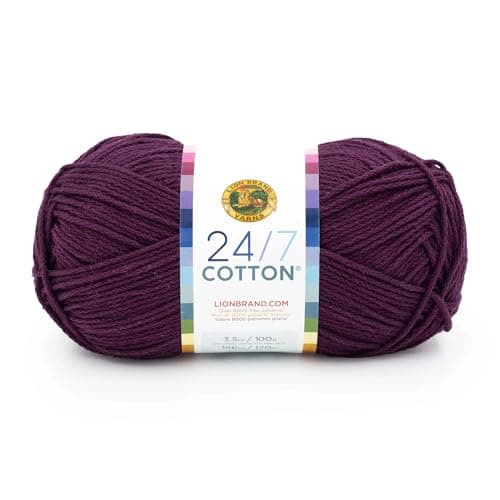
Lion Brand 24/7 Cotton
Mercerized: 100% mercerized cotton, worsted, 186yd per 100g, 19 sts x 26 rows on 5mm, machine wash below 105F.
$6.99 - View on Amazon#ad disclosure - price as of September 27, 2026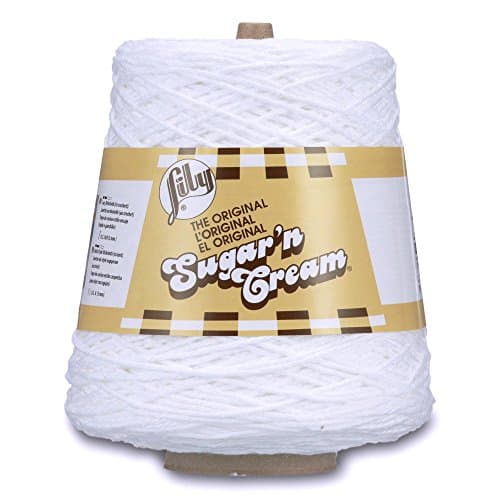
Lily Sugar'n Cream
Unmercerized: 100% cotton, worsted, 120yd per 71g, 20 sts x 26 rows on 4.5mm, machine wash below 86F.
$18.93 - View on Amazon#ad disclosure - price as of September 27, 2026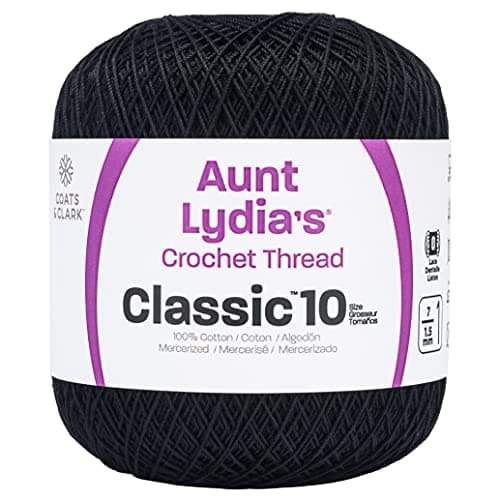
Aunt Lydia's Classic Crochet Thread Size 10
Mercerized at thread weight: 100% mercerized cotton, 3-ply, size 10, 350-400yd depending on color.
$9.99 - View on Amazon#ad disclosure - price as of September 27, 2026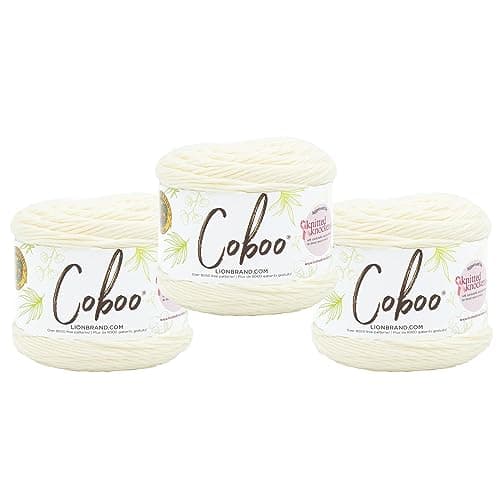
Lion Brand Coboo
A cotton blend for comparison: 51% cotton, 49% rayon from bamboo, DK, 232yd per 100g.
$14.01 - View on Amazon$17.9722% off · #ad disclosure - price as of September 27, 2026
Questions people actually ask
What does mercerized mean on a cotton yarn?
The yarn has been treated under tension in a caustic solution, which swells and straightens the fiber permanently. That gives it sheen, extra strength and crisper stitch definition, at the cost of absorbency and softness.
Is mercerized cotton better?
Better at some jobs and worse at others. It is stronger, shinier and holds stitches more crisply, which suits amigurumi, bags and thread crochet. It is less absorbent and stiffer, which makes it the wrong choice for dishcloths.
Why do dishcloth patterns specify unmercerized cotton?
Because mercerizing tightens the fiber surface and reduces absorbency, and holding water is a dishcloth's entire function. The shiny cotton genuinely works less well at the task.
How can I tell if a cotton yarn is mercerized?
The band usually says so, since it is a selling point. Otherwise look for sheen, a firmer hand that squeaks slightly against itself, and unusually deep, clear colors.
Does mercerized cotton shrink less?
Generally yes, because the treatment has already put the fiber through its dimensional change under tension. Both still publish washing temperature limits worth following.