Head to head
Linen vs Bamboo Yarn
Both are bought for drape. They get there by opposite routes, and they age in opposite directions.
By Sawyer V. · Published September 27, 2026
Disclosure: we earn a commission when you buy through the links on this page, at no extra cost to you. It never decides what we recommend or how we rank it - read the full disclosure.
The short answer
Linen is stiff off the ball and gets softer with every wash for years; bamboo is soft immediately and loses body over time. Linen is strong, stronger when wet, and effectively permanent. Bamboo rayon is weak when wet and has no recovery at all. Buy linen for a garment you intend to keep for a decade, and bamboo for drape you want today - and remember that almost all bamboo yarn is rayon, a processed fiber rather than a natural one.
What each one actually is
Linen is spun from flax, a bast fiber taken from the stem of the plant. Louet Euroflax is wet spun from long line flax, which means the fibers are not cut - that long staple is why linen yarn is so strong and why it starts out stiff.
Bamboo yarn is almost never bamboo fiber. It is rayon regenerated from bamboo cellulose: the plant is dissolved chemically and extruded as filament. That is why the specifications on this site say rayon from bamboo rather than bamboo, and it matters, because rayon behaves like rayon rather than like a plant stem.
The comparison
| Linen | Bamboo (rayon) | |
|---|---|---|
| Source | Flax stem, spun directly | Bamboo cellulose, chemically regenerated |
| Off the ball | Stiff, almost wiry | Soft and slippery |
| After washing | Softer every time, for years | Softer, then limp |
| Strength dry | Very high | Moderate |
| Strength wet | Higher than dry | Low - weakest when wet |
| Elasticity | None | None |
| Drape | Develops with wear | Immediate |
| Sheen | Matte, becomes lustrous | High from the start |
| Splitting | Rarely | Readily |
| Care | Machine washable | Machine wash, handle gently wet |
They age in opposite directions
This is the difference that should decide the purchase, and it is the one least visible in the shop.
- A linen garment is at its worst on day one. It is stiff, it creases, and it does not feel like the thing you were promised.
- It improves with every single wash, for years, and a well-made linen top outlives most of a wardrobe.
- A bamboo garment is at its best on day one. The drape and sheen are immediate and lovely.
- It then stretches and stays stretched, because rayon has no recovery. Shoulders lengthen, cuffs relax.
- Neither is a defect. They are different bargains, and knowing which one you are making is the whole point.
Working with each
- Linen is hard on the hands. It is inelastic and wiry, so it fights you for the first few rows and gives you nothing back in give. Wooden needles help.
- Bamboo is slippery and splits. A blunt tip and a tapered hook are the standard fixes - see why does my yarn split.
- Neither has memory, so ribbing does not grip in either. Design around it.
- Wet bamboo is fragile. Support the whole weight when you lift it out of a soak, or it will stretch permanently while you are blocking it.
- Linen wants aggressive blocking and responds well to it.
Which for which project
| Project | Better fiber | Why |
|---|---|---|
| Summer top to keep for years | Linen | Improves indefinitely with washing |
| Drapey top you want now | Bamboo | The drape arrives on day one |
| Market bag | Linen | Strength, and stretch is a fault here |
| Shawl | Bamboo | Immediate fluid drape |
| Dishcloths | Neither - use cotton | Absorbency and cheapness |
| Baby garments | Bamboo or a blend | Softer against skin from the start |
| Anything ribbed | Neither | No elasticity in either |
The middle ground is a blend. A cotton-bamboo yarn keeps most of the drape and adds enough cotton to hold a stitch - see bamboo vs cotton yarn and linen vs cotton yarn for the other two edges of this triangle.
One of each
- No photo
Louet Euroflax Linen
The linen: 100% linen, sport weight, 100g hank at 270yd, wet spun from long line flax, machine washable.
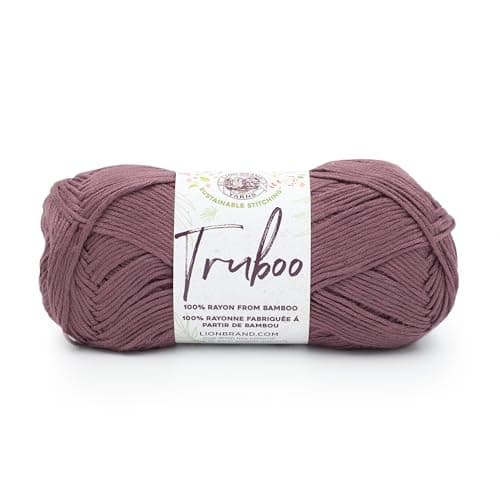
Lion Brand Truboo
The bamboo: 100% rayon from bamboo, DK, 241yd per 100g, 23 sts x 32 rows on US 6 (4mm).
$5.99 - View on Amazon#ad disclosure - price as of September 27, 2026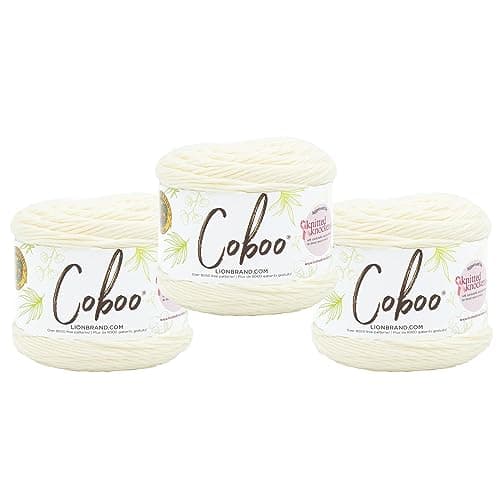
Lion Brand Coboo
The compromise: 51% cotton, 49% rayon from bamboo, DK, 232yd per 100g, machine wash and machine dry.
$14.01 - View on Amazon$17.9722% off · #ad disclosure - price as of September 27, 2026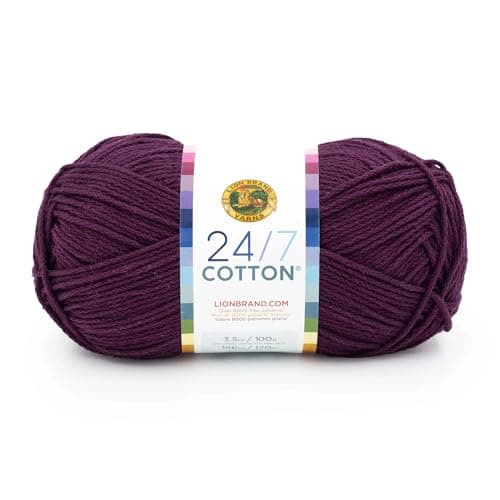
Lion Brand 24/7 Cotton
The third plant fiber for reference: 100% mercerized cotton, worsted, 186yd per 100g.
$6.99 - View on Amazon#ad disclosure - price as of September 27, 2026
Questions people actually ask
Is bamboo yarn actually bamboo?
It is rayon regenerated from bamboo cellulose - the plant is dissolved chemically and extruded as filament. That is why honest ball bands say rayon from bamboo. The drape is real; the minimally-processed-natural-fiber impression is not.
Which is stronger, linen or bamboo?
Linen, substantially - and it is the rare fiber that is stronger wet than dry. Bamboo rayon is at its weakest when wet, which is why a wet bamboo garment must be supported rather than lifted by one corner.
Does linen yarn really get softer?
Yes, and it keeps doing it for years. Linen is at its stiffest on day one and improves with every wash, which is the opposite of how most fibers age and the reason people keep linen garments for a decade.
Which drapes better?
Bamboo, immediately. Linen gets there eventually and then stays. If you want drape in the finished object this week, bamboo; if you want it in a garment you will still be wearing in ten years, linen.
Can I substitute one for the other?
Only with a swatch. They are often sold in different weights - the linen we list is sport and the bamboo is DK - and neither has any elasticity, so gauge has to be matched deliberately rather than assumed.