Guide
Yarn Crafts for Kids
Hand control, not enthusiasm, is the limit. Match the craft to that and almost anything gets finished.
By Sawyer V. · Published September 7, 2026
Disclosure: we earn a commission when you buy through the links on this page, at no extra cost to you. It never decides what we recommend or how we rank it - read the full disclosure.
The short answer
Match the craft to hand control rather than to age on the packet. Under about six, do crafts with no tools at all - pom-poms, finger knitting, yarn wrapping. From six, one tool: a crochet hook. From seven or eight, two tools: short bamboo knitting needles. Use super bulky yarn in a light solid color at every stage, and pick projects that finish in one sitting.
| # | Product | Best for | Suits | Price |
|---|---|---|---|---|
| 1 | Clover Pom-Pom Maker SetWrapping yarn round a former needs no coordination, and there is no way to do it wrong. | A finished object in five minutes | Ages 4-6 | $14.41 - View on Amazon#ad disclosure - price as of October 22, 2026 |
| 2 | 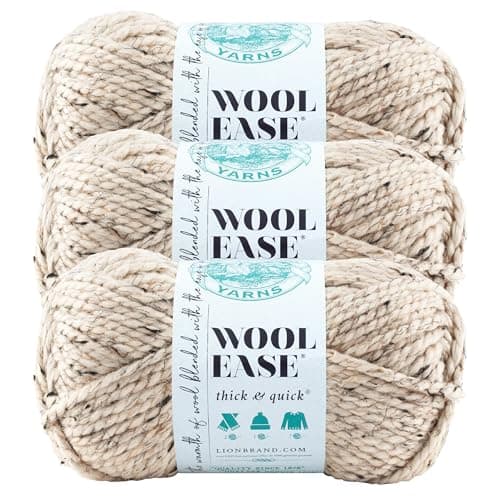 Lion Brand Wool-Ease Thick & QuickSuper bulky, so one row is an inch and a scarf is an afternoon rather than a term. Lion Brand Wool-Ease Thick & QuickSuper bulky, so one row is an inch and a scarf is an afternoon rather than a term. | Making progress a child can see | Any age | $29.22 - View on Amazon#ad disclosure - price as of October 22, 2026 |
| 3 | No photoClover Takumi Bamboo Single Point NeedlesShort, light, warm and grippy - and available in a 9in length, which almost nothing else is. | A child ready for two tools | Ages 7+ | Check price on Amazon#ad disclosure |
| 4 | 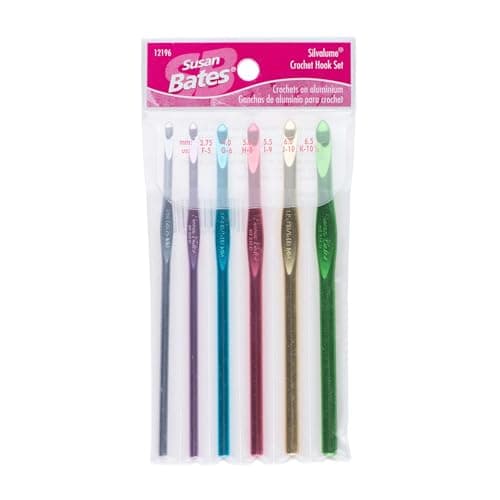 Susan Bates Silvalume Aluminum Crochet HooksOne tool, one live loop, and cheap enough that losing it does not matter. Susan Bates Silvalume Aluminum Crochet HooksOne tool, one live loop, and cheap enough that losing it does not matter. | The first real craft tool | Ages 6+ | $11.57 - View on Amazon#ad disclosure - price as of October 22, 2026 |
| 5 | 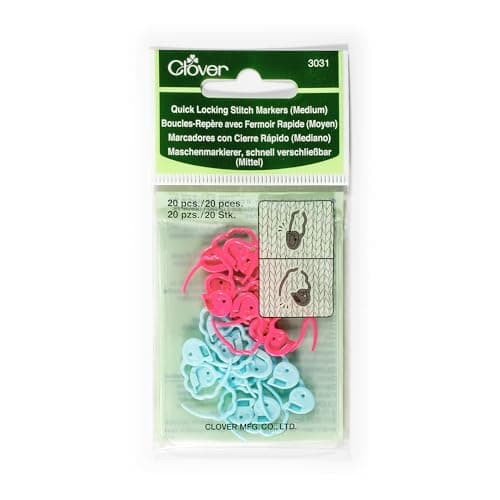 Clover Quick Locking Stitch Markers, MediumA child who loses count cannot recover it from the fabric. A marker can. Clover Quick Locking Stitch Markers, MediumA child who loses count cannot recover it from the fabric. A marker can. | Any child working in rounds or counting rows | Any age counting | $8.00 - View on Amazon#ad disclosure - price as of October 22, 2026 |
| 6 | 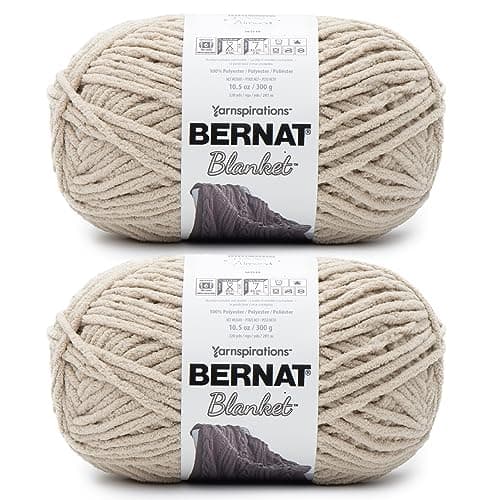 Bernat BlanketIt looks like the perfect children's yarn and it hides every stitch they make. Bernat BlanketIt looks like the perfect children's yarn and it hides every stitch they make. | Adults making plain blankets | Not for learning | $20.96 - View on Amazon#ad disclosure - price as of October 22, 2026 |
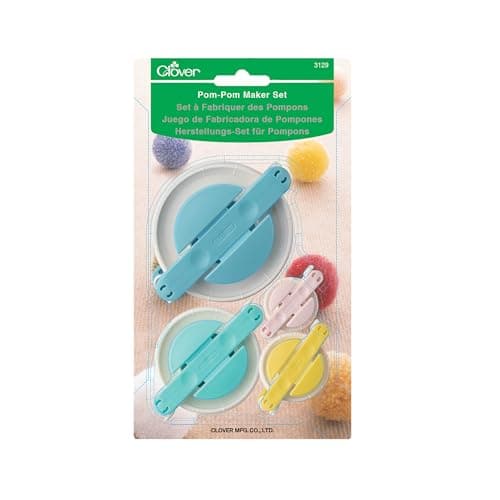
Clover Pom-Pom Maker Set
Clover · Best for a finished object in five minutes
Four hinged formers that make a dense, even pom-pom in one pass - the thing a cardboard donut has never once managed.
- Set
- 4 makers: 1 3/8in (35mm), 1 5/8in (45mm), 2 1/2in (65mm), 3 3/8in (85mm)
- Art. no.
- 3129
- Feature
- Measuring scale on the arch, for layering colors
- Feature
- Triangle markings that stop the arches shifting mid-wrap
- Material
- ABS resin, polypropylene and stainless steel
Who it suits
Any child too young to manage a hook or needles, and any adult who needs the first attempt to succeed.
Why it is here
Four hinged makers producing 35mm, 45mm, 65mm and 85mm pom-poms, in ABS resin, polypropylene and stainless steel, with a measuring scale on the arch for layering colors and triangle markings that stop the arches shifting mid-wrap. The scale is what lets a child make a two-color pom deliberately rather than by accident.
What you give up
It is not knitting or crochet and it will not teach either. Scissors are involved, and an adult should do the cutting for a younger child.
Specifications from Clover USA - Pom-Pom Maker Set. We have not handled this item - see how we pick.
Lion Brand Wool-Ease Thick & Quick
Lion Brand · Best for making progress a child can see
The super bulky the whole arm-knitting and chunky-blanket category is built on, at a gauge that finishes a throw in a weekend.
- Fiber
- 80% acrylic, 20% wool (fiber ratio varies on some heathered colorways)
- Weight
- 6 Super Bulky
- Skein
- 6oz / 170g, 106yd / 97m
- Gauge
- 9 sts x 12 rows on US 13 (9mm)
- Hook
- M (9mm)
- Care
- Machine wash and dry
Who it suits
Every child learning either craft. Getting this right matters more than which tool you buy.
Why it is here
80% acrylic, 20% wool, Craft Yarn Council category 6 super bulky, 106yd per 170g skein, worked at 9 stitches by 12 rows over 4in on US 13 (9mm). At that gauge a child can see individual stitches, get a hook or needle into them without precision, and watch the piece grow fast enough to stay interested. Machine wash and dry.
What you give up
106yd per skein does not go far, and super bulky needs large needles or hooks that most children's kits do not include. The fiber ratio also varies on some heathered colorways.
Specifications from Lion Brand product page. We have not handled this item - see how we pick.
Clover Takumi Bamboo Single Point Needles
Clover · Best for a child ready for two tools
Straight bamboo needles in two lengths - the traditional starting needle, and still the easiest to learn on.
- Material
- Polished bamboo
- Lengths
- 9in and 13in
- Sizes
- 17 sizes in 9in; 15 sizes in 13in
- Point
- Tapered
- Sold as
- A pair, one size per pack
Who it suits
A child ready to manage two tools at once, which is the real threshold for knitting.
Why it is here
Polished bamboo in a 9in length with tapered rather than sharp points, in 17 sizes. Short matters far more for a small hand than for an adult one: a standard 13in needle is a long lever that catches on everything. Bamboo grips, so stitches stay where a wobbly hand puts them.
What you give up
Bamboo snaps if levered sideways, which a child is more likely to do than an adult. Buy the larger sizes, which are much tougher, and treat them as replaceable.
Specifications from Clover Takumi single point knitting needles. We have not handled this item - see how we pick.
Susan Bates Silvalume Aluminum Crochet Hooks
Susan Bates · Best for the first real craft tool
The bare aluminum inline hook that a large share of American crocheters learned on, and still the cheapest way to find out which head shape suits you.
- Head
- In-line (head sits flush with the shaft)
- Material
- Anodized aluminum, heat treated and polished
- Size range
- B-1/2.25mm through N-15/10mm
- Length
- 5.5in for B through K; longer for L, M, N
- Color coding
- One color per size
Who it suits
Most children, earlier than knitting - crochet needs one hand doing the fiddly work rather than two.
Why it is here
In-line head, anodized, heat treated and polished aluminum, B-1/2.25mm through N-15/10mm, color coded by size. The in-line head sits flush with the shaft, which makes it predictable about where it enters a stitch - useful when the person holding it is still learning what a stitch looks like.
What you give up
A bare aluminum shaft with a thumb rest and no cushioning, and aluminum is slicker than a molded grip. For a long session an ergonomic handle is kinder.
Specifications from Susan Bates Silvalume retail specification. We have not handled this item - see how we pick.
Clover Quick Locking Stitch Markers, Medium
Clover · Best for any child working in rounds or counting rows
Markers that clip closed around a stitch instead of only sliding onto a needle - the medium size, which is the one that fits almost everything.
- Contents
- 20 markers, medium size
- Type
- Locking; also usable in the unlocked position
- Shape
- Undulated, so a marked stitch is not stretched
- Material
- Polyacetal
- Art. no.
- 3031; small is 3030 and large is 3032
Who it suits
Everyone, and especially anyone helping a child who has just discovered their scarf is getting wider.
Why it is here
20 markers in the medium size, in polyacetal with a polypropylene case. They lock closed around a stitch rather than sliding onto a needle, so they work in crochet as well as knitting, and the undulated shape does not stretch the marked stitch.
What you give up
36 is far more than one child needs, and the large size is more useful for knitting than for crochet. Small parts, so keep them away from toddlers.
Specifications from Clover USA - Quick Locking Stitch Markers (Medium). We have not handled this item - see how we pick.
Bernat Blanket
Bernat · Best for adults making plain blankets
Polyester chenille at 108 yards to a 150g ball. Fast, warm, machine washable, and it will shed and worm if the tension is loose.
- Fiber
- 100% polyester (chenille)
- Weight
- 6 Super Bulky
- Ball
- 5.3oz / 150g, 108yd / 98m
- Gauge
- 8 sts x 13 rows on 8mm (US 11)
- Hook
- 8mm (US L/11), 7 sc x 8 rows
- Care
- Machine wash delicate, tumble dry gentle
Who it suits
Not children learning. It is a perfectly good yarn for a plain adult throw.
Why it is here
100% polyester chenille, super bulky, 108yd per 150g ball, worked at 7 single crochet by 8 rows on an 8mm hook. Soft, bright, thick and fast - which is exactly why it ends up in children's kits and in well-meant gifts.
What you give up
The pile makes individual stitches invisible. A child who cannot see their stitches cannot count them, cannot find the mistake and cannot be shown what went wrong - and that is the moment most children stop. It also sheds. See [chenille yarn explained](/fiber-guide/chenille-yarn-explained).
Specifications from Yarnspirations product page. We have not handled this item - see how we pick.
The limit is hand control, not interest
A five-year-old can want to knit very much and still be unable to. That is not impatience and it is not a teaching failure - it is fine motor development, and it arrives on its own schedule.
So the useful question is never how old the child is. It is: how many things can they coordinate at once, and for how long? Yarn crafts sort neatly along that axis, which is what the age bands below are really measuring.
Ages 3 to 5: no tools at all
At this age the goal is a finished object and the feeling of having made something. Skill development is a side effect, not the point.
- Yarn wrapping. Wind yarn around a cardboard shape - a letter, a star, a heart - until it is covered. Endlessly forgiving, and genuinely good for grip strength.
- Pom-poms with a maker. Five minutes, no wrong way to do it, and the result is instantly recognizable as a thing. An adult does the cutting.
- Finger knitting. A chain worked over one finger, or a four-finger version that makes a flat cord. No tools, and it produces something wearable within ten minutes.
- Yarn collage. Glue and cut lengths onto paper. See best glue for yarn crafts for what actually holds.
- Weaving on a cardboard loom. Notch a rectangle of card, string it with yarn, weave over and under. This is the bridge to everything else.
None of this needs a kit. A ball of chunky yarn, some cardboard and a pom-pom maker covers the entire age band.
Ages 5 to 7: one tool, big and slow
This is where a child can start holding something and doing something with it at the same time, and where the first real craft appears.
Crochet before knitting. This is the single most useful piece of advice on the page. Crochet uses one tool and holds one live loop; knitting uses two tools and holds an entire row of live stitches on a needle that can be dropped. For most children the difference is decisive, and our knitting vs crochet page compares them properly.
- Chain stitch. A crochet chain is the first thing to learn and it makes bracelets, necklaces and skipping ropes immediately.
- Single crochet on a big hook. 6mm or 8mm with super bulky yarn. Rows are visible and fast.
- Finger crochet. Chain worked with a finger instead of a hook, for a child who is not ready to hold one.
- Arm knitting. Giant loops over the forearms. Silly, fast, and produces a real scarf in an afternoon.
Ages 7 to 9: two tools
Knitting becomes realistic here for most children, and the equipment matters more than at any other stage.
Short needles, big sizes, grippy material. A 9in bamboo needle in 6mm or 6.5mm is the right first knitting needle, and our best knitting needles for kids page works through why each of those three properties matters.
Expect the first few attempts to produce a triangle rather than a rectangle. Accidental increases at the edge are universal, and the fix is a stitch marker and counting rather than more practice - see how to fix common knitting mistakes.
Ages 9 to 12: real projects
By this stage a child can follow a simple written pattern, count reliably, and sustain a project over more than one sitting. That opens up nearly everything.
- Hats in the round. A 16in circular needle and chunky yarn - see best yarn for a hat.
- Amigurumi. Small toys, worked in a spiral. This is where locking stitch markers stop being optional - see best crochet hooks for amigurumi.
- Granny squares. Small, repeatable, and they combine into something larger over months.
- Dishcloths. Genuinely useful, forgiving of gauge, and finished in an evening - see best yarn for dishcloths.
Amigurumi kits are usually rated 12 and up, largely because of safety eyes rather than difficulty. Our best yarn craft kits for kids page covers what to check on any kit before buying.
The whole thing on one page
| Age | Craft | Tools | Time to a finished thing |
|---|---|---|---|
| 3-5 | Yarn wrapping, pom-poms, collage | None, plus adult scissors | 5-15 minutes |
| 5-6 | Finger knitting, cardboard weaving | None | 10-30 minutes |
| 6-7 | Crochet chain and single crochet | One 6mm hook | An afternoon |
| 7-9 | Knitting on 6mm needles | 9in bamboo straights | Two afternoons |
| 9-12 | Hats, amigurumi, granny squares | Circular needles or a hook set | A few sittings |
| 12+ | Kits, garments, patterns | Whatever the pattern says | Weeks |
Yarn choice does more than tool choice
If one thing on this page is worth acting on, it is this. The wrong yarn makes a child fail at something they were capable of.
- Thick. Super bulky, category 6 in the Craft Yarn Council system. Big stitches are easy to see and easy to get a tool into.
- Light and solid. Dark yarn hides stitches. Variegated yarn hides mistakes until they are ten rows down.
- Smooth and plied. A loosely spun yarn splits under a blunt tool and produces a half-stitch nobody can diagnose - see yarn ply and twist explained.
- Not fuzzy, not chenille, not novelty. All three hide stitch structure, which is the one thing a learner needs to see.
- Cheap enough to waste. A child will unravel, restart and abandon. That is fine, and it should not be expensive.
Choose a project that finishes
An adult can hold a half-finished scarf in their head for three months. A child cannot, and there is nothing wrong with that.
A scarf is the traditional first project and it is close to the worst one, because it takes a child months and provides no sense of progress along the way. Almost everything else is better.
- A pom-pom. Five minutes.
- A finger-knitted chain. Ten minutes, and it is wearable.
- A phone or tablet cozy. Twenty stitches, fifteen rows, folded and seamed. One afternoon.
- A headband or a cowl. Slightly bigger, still finishable, and it gets worn.
- A dishcloth. Small, square and useful.
- A scarf. Only for a child who has already finished several smaller things.
Safety, briefly and without alarm
- Safety eyes are a choking hazard. They are the reason most amigurumi kits are rated 12 and up, and the reason to keep them out of a house with toddlers regardless of who is crocheting.
- An adult cuts, for younger children. Pom-pom making involves a lot of cutting - see best scissors for yarn crafts for why small sharp scissors beat kitchen ones.
- Bamboo is blunter than metal. One more reason it is the right first needle.
- Watch yarn wrapped round fingers. Children wrap tightly and then forget.
- Stitch markers are small parts. Fine for a school-age child, not for a toddler in the room.
Teaching notes that actually help
- Sit opposite, not beside, a right-handed child. Facing them puts your hands in mirror image, which is easier to copy than watching over a shoulder. For a left-handed child, sitting beside them does the same job - see best crochet hooks for left-handed crocheters.
- Cast on for them, at least the first few times. Casting on is a separate skill and it is not the interesting part.
- Twenty minutes, then stop. Hands tire long before attention does, and the tiredness reads as boredom.
- Let them unravel it. Undoing is satisfying and it teaches how the fabric is made. A restarted project is not a failed one.
- Do not fix it silently. Show them what went wrong. A child who can spot their own dropped stitch will keep going without you.
- Praise the finishing, not the neatness. Even tension arrives on its own with practice, and nothing else does.
What we would buy
Deliberately short. Almost everything on this page can be done with a ball of chunky yarn and something to cut it with.
- Ages 4 to 6: a Clover pom-pom maker set. Four sizes, and it lasts for years.
- The yarn, at every age: Wool-Ease Thick & Quick in a light solid color.
- First crochet hook: one 6mm Susan Bates Silvalume.
- First knitting needles: 9in Clover Takumi bamboo straights in 6mm or 6.5mm.
- When counting starts to matter: locking stitch markers.
- Not this: chenille yarn, however soft and bright it looks in the shop.
If you would rather buy one box than five items, our best yarn craft kits for kids page covers which kits are worth it and which are a hook and a ball of yarn at a markup.
Questions people actually ask
What age can a child start yarn crafts?
Around three, with crafts that need no tools - yarn wrapping, pom-poms and collage. Crochet becomes realistic around six, knitting around seven or eight. It depends on fine motor control rather than a particular birthday.
What yarn crafts can a 5 year old do?
Pom-poms with a maker, finger knitting, yarn wrapping around cardboard shapes, and weaving on a cardboard loom. All four need no tools beyond adult-supervised scissors and produce a finished object in under half an hour.
Is knitting or crochet easier for kids?
Crochet, for most children. It uses one tool and holds one live loop, where knitting uses two tools and holds a whole row of live stitches on a needle that can be dropped.
What yarn is best for children?
Super bulky, in a light solid color, smooth rather than fuzzy. Thick stitches are visible and easy to work into, and a light color means the child and the adult helping can both see what happened. Avoid chenille - it hides stitches completely.
What should a child make first?
Not a scarf - it takes months and gives no sense of progress. A pom-pom, a finger-knitted chain, a phone cozy, a headband or a dishcloth all finish in one or two sittings, which is what keeps a child going.
What size knitting needles should a child use?
6mm to 6.5mm in a 9in or 10in length, in bamboo. Big stitches are easy to see and to work into, short needles suit small hands, and bamboo grips so stitches stay where they are put.
Sources
- Clover USA - Pom-Pom Maker Set
- Lion Brand - Wool-Ease Thick & Quick specification
- Clover Takumi single point knitting needles
- Susan Bates Silvalume aluminum hook set - retail specification
- Clover USA - Quick Locking Stitch Marker Set
- Yarnspirations - Bernat Blanket specification
- Craft Yarn Council - Standard Yarn Weight System