The picks
Best Scissors for Yarn Crafts
A frayed end is not the yarn's fault. It is a blunt blade pushing the strand away before it cuts.
By Sawyer V. · Published September 7, 2026
Disclosure: we earn a commission when you buy through the links on this page, at no extra cost to you. It never decides what we recommend or how we rank it - read the full disclosure.
The short answer
Use small, sharp scissors with a serrated edge. Yarn is a round, compressible strand, and a blunt or smooth blade pushes it away rather than cutting it, which is what produces a frayed end. Keep them for yarn only - paper and card dull a blade faster than anything else.
| # | Product | Best for | Type | Covers | Price |
|---|---|---|---|---|---|
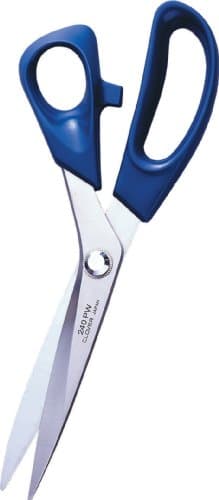
| 1 | Clover Patchwork ScissorsA serrated edge grips the strand instead of pushing it away, which is the whole problem. | Cutting yarn square, every time | Scissors | Yarn, thread, fabric | $59.74 - View on Amazon#ad disclosure - price as of October 22, 2026 |
| 2 | 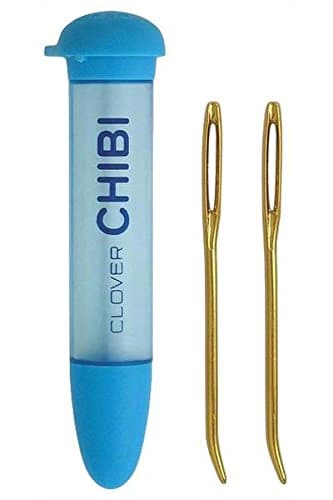 Clover Chibi Darning Needle Set (Bent Tip)Cutting the end is half the job; weaving it in is the half that shows. Clover Chibi Darning Needle Set (Bent Tip)Cutting the end is half the job; weaving it in is the half that shows. | The other half of finishing | Tapestry needles | 3 needles | $8.80 - View on Amazon#ad disclosure - price as of October 22, 2026 |
| 3 | 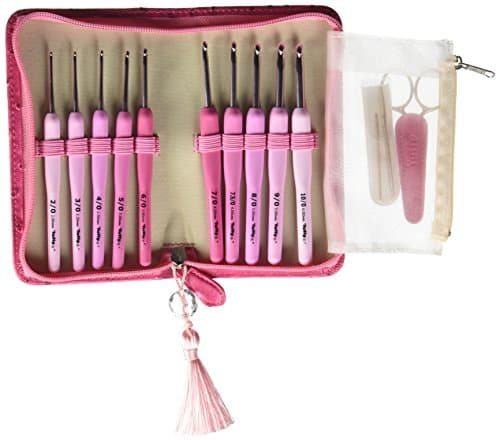 Tulip Etimo Rose Crochet Hook SetA hook set that includes scissors, if you would rather have one purchase. Tulip Etimo Rose Crochet Hook SetA hook set that includes scissors, if you would rather have one purchase. | Someone buying a hook set anyway | Hook set | Includes scissors | $117.00 - View on Amazon#ad disclosure - price as of October 22, 2026 |
| 4 | 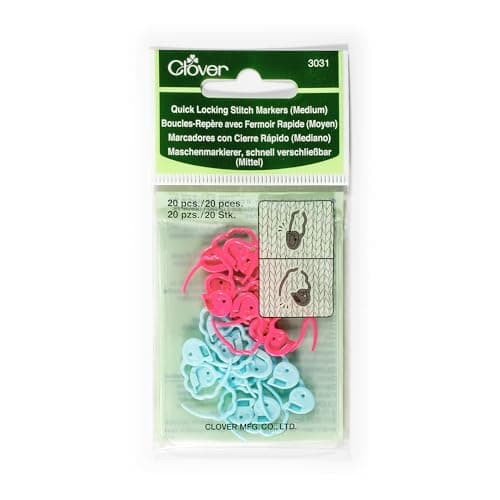 Clover Quick Locking Stitch Markers, MediumIf your budget is one small purchase, markers beat scissors. Clover Quick Locking Stitch Markers, MediumIf your budget is one small purchase, markers beat scissors. | The notion that actually gets used more | Notion | 20 markers | $8.00 - View on Amazon#ad disclosure - price as of October 22, 2026 |
Clover Patchwork Scissors
Clover · Best for cutting yarn square, every time
Serrated stainless blades that hold the strand instead of pushing it away - the reason a yarn end cuts square rather than skidding.
- Sizes
- Mini (493/CW), small (493/S), regular (493), large (493/L)
- Length
- 17cm (7in) for the regular size
- Blades
- Stainless steel with a finely serrated edge
- Handle and cover
- ABS resin
- Included
- Protective blade cover
Who it suits
Anyone whose yarn ends fray, which is anyone using kitchen scissors.
Why it is here
Stainless steel blades with a finely serrated edge, in mini, small, regular (17cm / 7in) and large sizes, with an ABS resin handle and a protective blade cover. The serration is the point: a smooth blunt blade pushes a round strand ahead of it, while a serrated one holds it in place to be cut.
What you give up
Serrated blades cannot be sharpened conventionally once they dull, and the larger sizes are more scissors than a project bag needs.
Specifications from Clover USA - Patchwork Scissors. We have not handled this item - see how we pick.
Clover Chibi Darning Needle Set (Bent Tip)
Clover · Best for the other half of finishing
Three blunt bent-tip tapestry needles in a lidded tube, which is the only reason a tapestry needle is ever findable twice.
- Contents
- Three needles plus a holding tube
- Tip
- Bent, blunt - hooks the yarn without splitting the stitch
- Best with
- DK weight yarns and thinner
- Use
- Weaving in ends, seaming, grafting
Who it suits
Anyone buying scissors, because they are buying them to finish a project.
Why it is here
Three blunt bent-tip darning needles in a holding tube, suited to DK weight and thinner. A clean cut end is only useful if it is then woven in properly - see [how to weave in ends](/guides/how-to-weave-in-ends).
What you give up
Not scissors. This is a companion purchase, and the tube is sized for DK and finer rather than bulky yarn.
Specifications from Clover Chibi darning needle set (bent tip) - retail specification. We have not handled this item - see how we pick.
Tulip Etimo Rose Crochet Hook Set
Tulip · Best for someone buying a hook set anyway
Ten cushion-grip hooks from 2.00mm to 6.00mm, made in Hiroshima, with the finest size steps of any set here.
- Sizes
- 10 hooks: 2.00, 2.20, 2.50, 3.00, 3.50, 4.00, 4.50, 5.00, 5.50, 6.00mm
- Grip
- Cushioned rubber grip
- Head
- Polished tip, Tulip's own hook profile
- Also included
- Two darning needles, scissors, zipped case
- Made in
- Hiroshima, Japan
Who it suits
Anyone buying a premium hook set who would rather not shop twice.
Why it is here
Ten cushion-grip hooks from 2.00 to 6.00mm made in Hiroshima, with two darning needles, scissors and a zipped case. If you were buying the hooks anyway, the scissors are a genuine convenience.
What you give up
Do not buy it for the scissors. Bundled craft scissors are rarely the equal of a dedicated pair, and the set costs many times what good small scissors do.
Specifications from Tulip Etimo Rose set specification. We have not handled this item - see how we pick.
Clover Quick Locking Stitch Markers, Medium
Clover · Best for the notion that actually gets used more
Markers that clip closed around a stitch instead of only sliding onto a needle - the medium size, which is the one that fits almost everything.
- Contents
- 20 markers, medium size
- Type
- Locking; also usable in the unlocked position
- Shape
- Undulated, so a marked stitch is not stretched
- Material
- Polyacetal
- Art. no.
- 3031; small is 3030 and large is 3032
Who it suits
Not people who already own markers. This is for anyone deciding what to add to an order.
Why it is here
20 locking markers in the medium size. You will reach for a marker dozens of times a project and for scissors twice.
What you give up
It is not a cutting tool, and you do need something to cut with. The point is the order of purchase, not that scissors are unnecessary.
Specifications from Clover USA - Quick Locking Stitch Markers (Medium). We have not handled this item - see how we pick.
Why yarn frays when you cut it
Cutting a flat sheet is easy: the blade meets it and there is nowhere for the material to go. Cutting a round strand is a different problem, because the strand can roll and be pushed ahead of the blade.
A sharp blade catches and severs before that happens. A blunt one compresses and pushes, and what finally parts is the strand tearing rather than being cut - which leaves the plies at different lengths. That is the frayed end.
Small beats large, every time
The instinct is to reach for whatever scissors are nearest, which are usually kitchen or household scissors. Three reasons that is the wrong tool.
- Blade length. You are cutting one strand. A 20cm blade gives you no control over where the cut lands, and on a finished piece you are cutting a quarter inch from the fabric.
- Point precision. Trimming a woven-in end close to the surface needs a fine point you can see past.
- They are already blunt. Household scissors have cut card, tape and packaging. Every one of those dulls an edge.
A 10cm to 17cm pair kept only for yarn will outperform a large sharp pair and last far longer.
What size to buy
| Size | Best for | Note |
|---|---|---|
| Mini, under 10cm | Project bag, trimming ends close | Check airline rules if you travel |
| Small, 10-14cm | The all-round choice | Fits a project bag; enough leverage for chunky yarn |
| Regular, around 17cm | Cutting several strands, blocking wires, fabric | The desk pair |
| Large, 20cm plus | Fabric and batting, not yarn | Too much blade for a single strand |
Keep them for yarn
This is the single biggest determinant of how long a pair stays sharp, and it costs nothing.
- Paper and card are abrasive. They dull a blade faster than fabric does.
- Tape gums the pivot. Adhesive residue makes the action stiff and attracts fluff.
- Wire and plastic packaging chip an edge. One nick and the blade catches from then on.
- Label them, or hide them. In a shared household this is the only method that works.
Traveling, and what to carry instead
Scissors are restricted in hand luggage in many jurisdictions and the rules vary, so check before you fly rather than after security takes them.
- A thread cutter pendant. A blade recessed in a disc, sold specifically for this.
- Nail clippers. Widely permitted, and they cut a strand square.
- Dental floss containers. The built-in cutter works on most yarn weights.
- Break it by hand. Works on wool and other animal fibers, which snap cleanly when pulled sharply. Does not work on cotton or nylon-blend yarn.
Where scissors matter most
Three moments in a project, and one of them is the reason to own a good pair.
- Cutting the working yarn. A frayed end is harder to thread onto a tapestry needle, which is where a bad cut costs you time.
- Trimming a woven-in end. Close to the fabric, without cutting the fabric. This needs a fine point and control.
- Cutting a steek or a fringe. Precise and irreversible - the one place where a poor cut cannot be redone.
Everything else in this craft is forgiving. Cutting is not, which is a reasonable argument for owning one decent pair.
Questions people actually ask
What scissors are best for cutting yarn?
Small, sharp scissors with a finely serrated edge. Serration grips a round strand so it cannot roll away from the blade, which is what causes a frayed end.
Why does my yarn fray when I cut it?
The blade is blunt, so it compresses and pushes the strand instead of severing it, and the yarn tears rather than cuts. Household scissors that have cut card and tape are the usual culprit.
What size scissors do I need for knitting?
Between 10cm and 17cm. Small enough for control when trimming an end close to the fabric, large enough to cut chunky yarn without a struggle. A 20cm pair is too much blade for a single strand.
Can you take scissors on a plane for knitting?
Rules vary by country and airline, so check before you travel. A thread cutter pendant, nail clippers or a dental floss cutter are all commonly permitted alternatives.
How do you keep craft scissors sharp?
Use them only on yarn and fabric. Paper, card, tape and packaging dull an edge far faster than textiles do - keeping a dedicated pair is the whole technique.