Guide
Caring for Your Needles and Hooks
Wood roughens, coatings wear, cables remember. Each has a five-minute fix, and none of them is replacement.
By Sawyer V. · Published September 7, 2026
Disclosure: we earn a commission when you buy through the links on this page, at no extra cost to you. It never decides what we recommend or how we rank it - read the full disclosure.
The short answer
Wooden and bamboo tools go rough with use and are fixed by sanding lightly with very fine paper and rubbing with a little wax or oil. Metal tools need drying and occasional polishing. Cables take a set and are relaxed with hot water. Store everything in slots rather than loose.
Each material fails differently
| Material | How it fails | Fix |
|---|---|---|
| Bamboo | Surface roughens; small sizes snap | Fine sanding and wax; replace snapped ones |
| Laminated birch | Coating wears at the tip; can splinter | Very fine sanding; wax the shaft |
| Stainless steel | Almost nothing; can dull | Dry after damp use; polish rarely |
| Nickel-plated brass | Plating wears through at the tip | Nothing to be done; the plating is the surface |
| Anodized aluminum | Color rubs off; can transfer to light yarn | Wash; retire if it marks pale yarn |
| Resin | Scratches; can crack if dropped | Polish lightly; keep it out of a bag with metal |
| Nylon-coated cables | Take a coil; the join can separate | Hot water and hang straight; retire kinked ones |
Rough wood, which is the common one
A wooden or bamboo needle that has been used a lot develops a faintly fuzzy surface, and it starts to catch. It feels like the yarn has got stickier; it has not.
- Sand very lightly along the length with 400 grit or finer, in the direction of the shaft. Seconds, not minutes.
- Wipe the dust off.
- Rub in a little wax or oil. Beeswax, or a small amount of a food-safe mineral oil. Not much - the aim is a sealed surface, not a greasy one.
- Buff with a soft cloth and leave it to dry before use.
Cables, which people replace unnecessarily
A coiled cable is usually a temporary state rather than a dead one. Dip it in hot - not boiling - water for a few seconds and hang it straight to cool, or simply knit with it: the weight of a growing project straightens most cords within a few hours.
What is not recoverable is a hard kink, where the cable has been folded. That will snag a stitch every pass and it will not come out. Retire it. Our interchangeable cables and connectors page covers buying replacements.
Metal, which mostly needs to be dry
Stainless steel is effectively permanent, and the main thing to do is dry it after damp use - working with wet-blocked pieces, or knitting in a humid room.
Plated needles are a different case. Nickel plating is a surface, and when it wears through at the tip there is no repair - the underlying brass is exposed and the tip will feel different. It is a slow process over years of heavy use, and it is worth knowing before you assume a set is faulty.
Anodized aluminum can transfer color to very pale yarn as the finish wears. If a white swatch comes off a needle faintly gray, that is the cause, and that needle should be retired from light-colored work.
Storage is most of the maintenance
- Slots, not a jar. Tools rattling together scratch each other, and a scratched surface catches yarn.
- Straight needles flat or upright, supported. Loose in a drawer is how a 2.5mm bamboo needle gets snapped by something heavier.
- Cables loosely coiled, never tightly. A cable stored tightly wound is a cable you have added memory to.
- Interchangeable parts in a pocket. Keys and stoppers are small, and they are the parts a set is unusable without.
- Away from the stash. Loose tools in a yarn bin tangle with everything - see best yarn storage solutions.
Hooks, which need less than needles
A crochet hook has one working end and no cable, so there is less to go wrong. Two things are worth doing.
Check the head for burrs. Run a hook across a scrap of pale yarn. If it snags or leaves fuzz, there is a rough spot - usually where the head meets the throat. A few passes with very fine paper or a nail buffer fixes it.
Clean molded grips. Elastomer and cushioned handles pick up hand oils and can become slightly tacky. Warm water and a little soap, dried thoroughly. Do not use solvents on a resin or elastomer grip.
When to retire a tool
- A kinked cable. Unrecoverable.
- A cracked or splintered wooden shaft. It will fail mid-row and take stitches with it.
- A hook or needle that marks pale yarn. The finish has gone.
- A bent metal tip. Straightening it work-hardens the metal and it will snap.
- A grip that has hardened or gone sticky and will not clean. Comfort was the reason you bought it.
Everything else is maintenance rather than replacement, and a well-kept set of needles genuinely lasts decades.
What keeps tools in usable condition
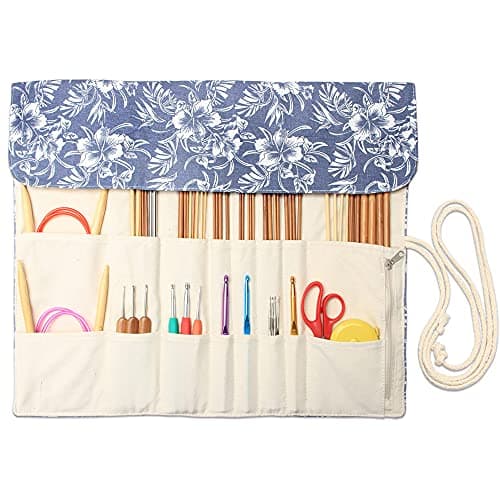
Teamoy Knitting Needle Roll Case
Straight needles stored in a roll stay straight - loose in a drawer is how they bend and snap.
$23.99 - View on Amazon#ad disclosure - price as of October 22, 2026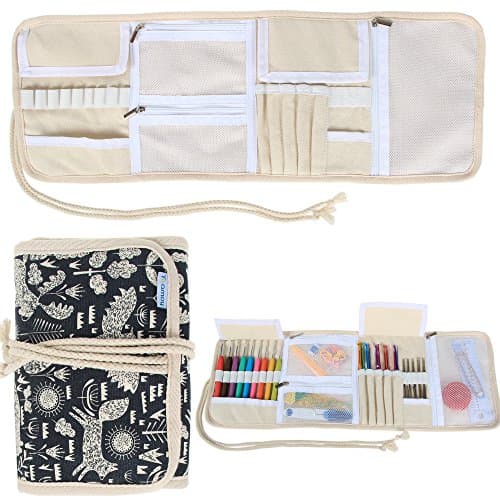
Teamoy Crochet Hook Roll Case
Hooks stored in slots do not scratch each other, and you can find the 4mm.
$13.99 - View on Amazon#ad disclosure - price as of October 22, 2026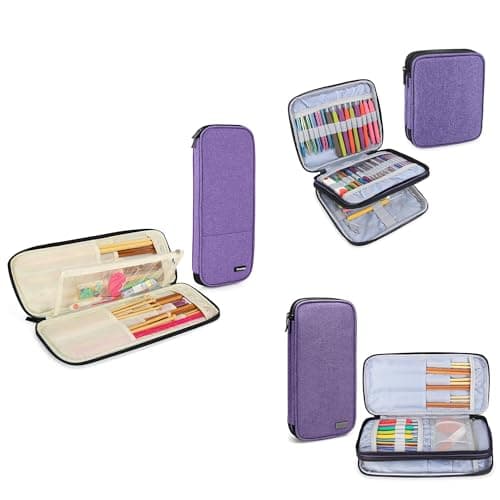
Teamoy Interchangeable Needle Organizer Case
Interchangeable sets have small parts. A case with pockets is the difference between owning a key and having owned one.
$50.57 - View on Amazon$54.978% off · #ad disclosure - price as of October 22, 2026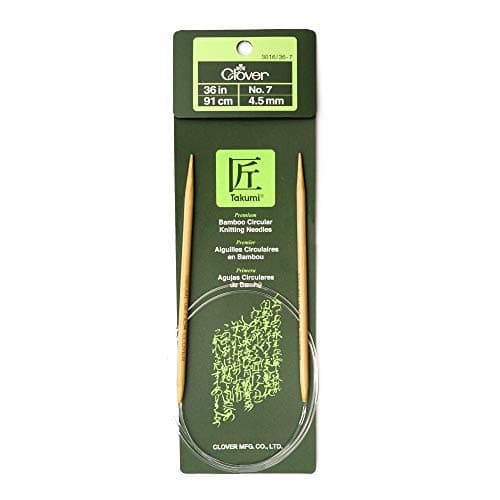
Clover Takumi Bamboo Circular Needles
Bamboo is the material that most rewards maintenance - and the cheapest to replace when it does not.
$9.86 - View on Amazon#ad disclosure - price as of October 22, 2026
Questions people actually ask
How do you fix rough wooden knitting needles?
Sand very lightly along the shaft with 400 grit or finer, wipe the dust off, rub in a little beeswax or food-safe mineral oil, and buff. Keep the paper off the last half inch so you do not reshape the point.
How do you straighten a curled circular needle cable?
Dip it in hot - not boiling - water for a few seconds and hang it straight to cool, or just knit with it; the weight of the project straightens most cords in a few hours. A hard kink is permanent and the cable should be retired.
Do knitting needles need oiling?
Wooden and bamboo ones benefit from a little wax or oil after sanding, to seal the surface. Metal needles need nothing beyond being dried after damp use.
Why is my needle leaving marks on light yarn?
The finish has worn through - usually an anodized aluminum coating. There is no repair; retire that needle from light-colored work.
How should you store knitting needles and hooks?
In slots rather than loose in a jar, so they cannot scratch each other. Store cables loosely coiled, keep interchangeable keys and stoppers in a pocket, and keep tools out of the yarn bin.