Guide
Best Glue for Yarn Crafts
Flexible, washable, invisible. Most craft glue fails at least one.
By Sawyer V. · Published September 4, 2026
Disclosure: we earn a commission when you buy through the links on this page, at no extra cost to you. It never decides what we recommend or how we rank it - read the full disclosure.
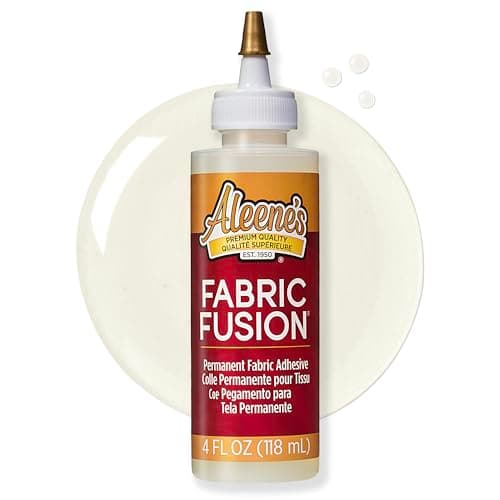
The short answer
Yarn work needs a flexible, washable adhesive that dries clear - which rules out most craft glue. A water-based fabric adhesive such as Aleene's Fabric Fusion is the right category: permanent but flexible after washing, washable after 48 hours, and it cleans up with soap and water while wet.
| # | Product | Best for | Type | Washable | Price |
|---|---|---|---|---|---|
| 1 | Aleene's Fabric FusionWater-based urethane that dries clear and flexible, and is washable after 48 hours. | Bonds that flex and survive a wash | Water-based urethane | After 48 hours | $6.96 - View on Amazon#ad disclosure - price as of October 20, 2026 |
Aleene's Fabric Fusion
Aleene's · Best for bonds that flex and survive a wash
A water-based urethane fabric adhesive that dries clear and flexible and survives a wash cycle - the right glue for finishing yarn work.
- Type
- Clear water-based urethane adhesive
- Bond
- Permanent and flexible, washable after 48 hours
- Dry time
- About 24-30 minutes surface dry; 2-4 hours to cure
- Cleanup
- Soap and water while wet
- Safety
- Non-toxic, machine washable and dry cleanable
Who it suits
Anyone attaching trim, closing a seam without sewing, or fixing an embellishment to a finished piece.
Why it is here
A clear water-based urethane adhesive described by the maker as permanent but flexible even after washing, washable after 48 hours, non-toxic and dry cleanable. It cleans up with soap and water while wet.
What you give up
Surface dry takes about 24 to 30 minutes and a full cure 2 to 4 hours, so it is not an instant fix. And it is permanent - position before it sets.
Specifications from Aleene's product page. We have not handled this item - see how we pick.
What yarn glue has to do
Knitted and crocheted fabric moves. Any adhesive on it has to move too, or the bond cracks and the fabric tears at the join. Three requirements follow, and most craft adhesives fail at least one:
- Stay flexible when cured. A rigid bond in a stretchy fabric is a stress point that will fail.
- Survive washing. Yarn objects get washed. An adhesive that dissolves or crazes in water is a temporary repair.
- Dry clear and not soak through. Yarn is porous, so a glue that wicks appears on the right side as a shiny patch.
What to avoid, and why
| Adhesive | Problem |
|---|---|
| Hot glue | Sets rigid and brittle. Cracks with flexing and peels off knitted fabric. |
| PVA / white school glue | Not washable. Dissolves and goes cloudy. |
| Superglue (cyanoacrylate) | Sets hard and brittle, wicks through porous yarn, and can stain. |
| Spray adhesive | Impossible to control on a porous surface; overspray goes everywhere. |
| Epoxy | Rigid, yellows over time, and heavy for a fabric application. |
Hot glue deserves the specific warning because it is the default reach for craft work and it is genuinely wrong here. It looks fine on the day and cracks within a few flexes.
How to apply it
- Test on a swatch first. Yarn varies, and you want to know how much soaks through before you do it on the finished object.
- Use less than you think. Yarn is porous; excess wicks and shows on the right side.
- Apply with a toothpick or a fine tip rather than straight from the bottle, for anything small.
- Weight or clamp while curing. Gentle even pressure produces a better bond than pressing hard.
- Respect the cure time. Surface dry is not cured - roughly 24 to 30 minutes to dry and 2 to 4 hours to fully cure, and 48 hours before washing.
When to sew instead
Honestly, more often than glue gets used:
- Seams on a garment. Always sew. A glued seam is a failure waiting to happen at the exact point that takes the most stress.
- Anything a child will handle. Sewn attachments survive; glued ones come off, and a small glued-on part is a choking hazard.
- Weaving in ends. Sew them in. Gluing an end is a repair that shows.
- Attaching a lining. Sew, or the glue line becomes a stiff ridge.
Glue is right for embellishments that cannot be sewn, for closing a small gap in a stuffed piece, for attaching yarn to a non-fabric surface like wood or card, and for stopping a cut edge fraying.
The jobs glue is genuinely right for
- Attaching trim, appliques and embellishments that cannot be sewn without the stitches showing on the right side.
- Closing a small gap in a stuffed piece where sewing would distort the shape.
- Fixing yarn to a non-fabric surface - wood, card, a hoop, a canvas - where there is nothing to sew through.
- Sealing a cut edge so it does not fray while you work on it.
- Securing a knot you cannot weave in, such as inside a stuffed toy where the tail has nowhere to go.
Notice what those have in common: none of them is a structural join. Glue on yarn work is a finishing tool, and the moment it is holding a load it is the wrong tool.
Stiffening, which is a different product
People often arrive at fabric glue looking for something else entirely: a way to make a crocheted basket, snowflake or hat brim hold its shape. That is stiffening rather than adhesion, and fabric adhesive does it badly - it dries in patches and leaves shiny spots.
The usual answers are a dedicated fabric stiffener, or a sugar or starch solution for something temporary. A word of warning on the traditional sugar method: it is genuinely effective, genuinely cheap, and it attracts insects, so it is for display pieces rather than anything that will live in a cupboard.
There is also a structural route that needs no chemistry at all: work the piece in unmercerized cotton on a hook a size or two below the label, which produces a fabric dense enough to stand up on its own. That is how baskets are usually made, and it is covered in best hook for cotton yarn.
Testing before you commit
- Make a small swatch in the same yarn - glue behaves very differently on smooth mercerized cotton and on lofty acrylic.
- Apply the amount you actually intend to use, not a generous test blob.
- Let it cure fully, not just dry. Two to four hours, and 48 hours before any washing.
- Flex it hard. A bond that cracks on the swatch will crack on the object.
- Wash it. This is the step people skip, and it is the one that tells you whether the bond survives real use.
Safety, briefly
Aleene's Fabric Fusion is described by the maker as non-toxic, machine washable and dry cleanable. That covers ordinary craft use. It is still an adhesive: ventilate, keep it off skin, and keep it away from children - and for anything a small child will handle, sew rather than glue regardless of what the label says.
How we picked
The specification here - composition, flexibility, wash resistance, dry and cure times - is the manufacturer's published figures. We have not glued anything with it. How we pick is the method.
Questions people actually ask
What is the best glue for yarn crafts?
A flexible water-based fabric adhesive such as Aleene's Fabric Fusion. It dries clear, stays flexible after curing, and is washable after 48 hours.
Can I use hot glue on yarn?
It works on the day and fails soon after. Hot glue sets rigid and brittle, so it cracks as the knitted or crocheted fabric flexes, and it peels away from the surface.
Is fabric glue washable?
Purpose-made fabric adhesives are. Aleene's Fabric Fusion is described by the maker as washable after 48 hours and dry cleanable. Ordinary PVA craft glue is not.
How long does fabric glue take to dry?
Roughly 24 to 30 minutes to surface dry and 2 to 4 hours to cure fully, depending on thickness and temperature. Wait 48 hours before washing.
Should I glue or sew a seam?
Sew it. A seam is the highest-stress point in a garment, and a glued one is a failure waiting to happen. Glue is for embellishments and small repairs.