Guide
Chenille Yarn Explained
It is a construction, not a fiber. Once you know that, the worming makes sense.
By Sawyer V. · Published September 7, 2026
Disclosure: we earn a commission when you buy through the links on this page, at no extra cost to you. It never decides what we recommend or how we rank it - read the full disclosure.
The short answer
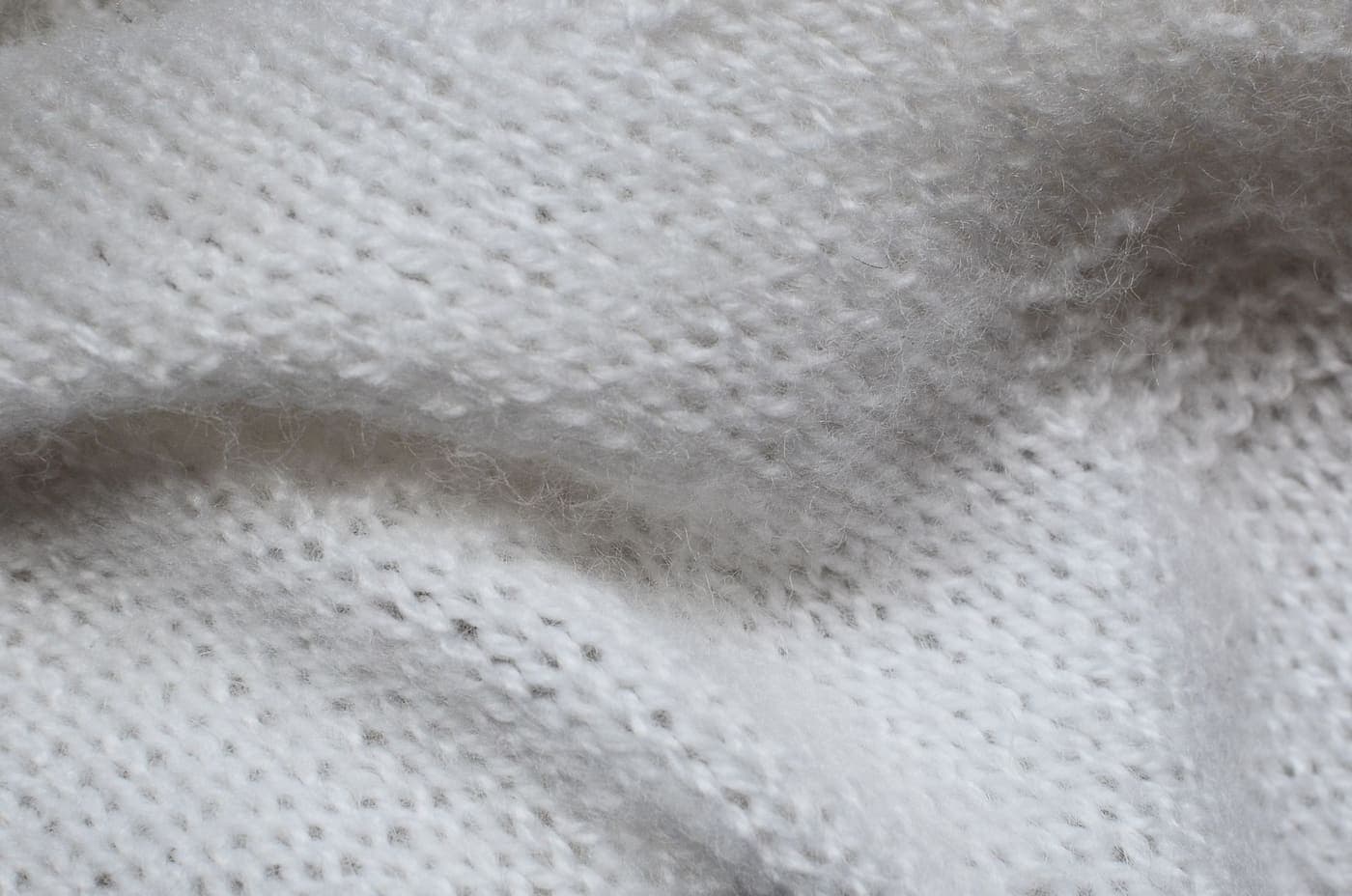
Chenille is not a fiber - it is a way of making yarn. Short fiber lengths are trapped between two twisted core threads and stand out perpendicular, producing a velvety pile. That construction is why it feels the way it does, and why it worms, sheds and hides stitch definition.
What chenille actually is
The name comes from the French for caterpillar, which is a good description of what a strand looks like up close: a fuzzy core with fibers standing out all round.
Structurally, short lengths of fiber - the pile - are laid between two core threads, which are then twisted so the cores trap the pile at its midpoint. Every one of those fibers is held at one point and free at both ends.
Modern craft chenille is overwhelmingly polyester. The reference example on this site is Bernat Blanket: 100% polyester, super bulky, 108yd per 150g, worked at 7 single crochet by 8 rows over 4in on an 8mm hook.
Worming, and how to reduce it
Worming is the characteristic chenille failure: a loop of yarn works its way out of the fabric and stands proud as a small worm-shaped loop. Pull it and you distort the neighboring stitches.
It happens because the pile has almost no friction against itself, so a strand under any slack can slide within the fabric. The fixes are all about removing slack.
- Go down a hook or needle size, sometimes two. A tighter fabric leaves nowhere for a strand to travel. This is the single most effective change.
- Use short stitches. Single crochet worms far less than double crochet, because there is less strand length per stitch.
- Avoid loose, open stitch patterns. Anything with long floats or big chain spaces is a worming machine.
- Do not tug at a worm. Ease it back with a hook or a blunt needle, distributing the slack over several stitches.
- Knit rather than crochet, if you have the option. Knitted chenille worms less, because knitted stitches interlock more.
Our best hook for chenille yarn page covers the tool side of the same problem.
Where chenille genuinely wins
- Blankets and throws. Softness is the whole brief, stitch definition is irrelevant, and it is fast - see best yarn for a blanket.
- Cushion covers. Plain fabric, low friction, and the pile looks expensive.
- Anything a beginner wants finished this weekend. Super bulky and forgiving of uneven tension, because you cannot see the tension.
- Baby blankets, kept away from the face. Machine wash delicate and tumble dry gentle is the specification a baby blanket needs.
Where chenille is the wrong answer
| Project | Why it fails |
|---|---|
| Amigurumi | You cannot see stitches, so you cannot count them - and counting is the shape |
| Granny squares | The pile fills in the chain spaces that define the motif |
| Garments | Heavy, stiff, and it sheds against skin |
| Baby sweaters | Sheds near a face - see best yarn for a baby sweater |
| Rugs | Foot traffic crushes the pile permanently |
| Dishcloths | Holds water in the pile and never dries |
| Anything with cables or texture | The pattern disappears entirely |
Shedding, honestly
Chenille sheds, particularly at cut edges and in the first few weeks of use. Every pile fiber is held at one point, and any that were not caught firmly work free.
It slows down substantially after the first wash or two, and a well-made chenille sheds far less than a cheap one. It never stops entirely, which is why we keep it away from baby garments and from anything worn against a face.
Working with it, practically
- Light colors, always. Dark chenille makes stitches genuinely invisible rather than merely unclear.
- Count out loud, or use markers. You cannot recover a count by reading the fabric - see best stitch markers.
- Do not frog more than a row or two. Unravelling chenille damages the pile and the reworked section looks different.
- Join with a knot rather than a felted or spliced join. Nothing splices; the knot disappears into the pile.
- Weave ends long and reverse twice. Chenille has almost no grip - see how to weave in ends.
Care
Bernat Blanket specifies machine wash delicate and tumble dry gentle, which is the general chenille pattern. It is polyester, so it does not shrink and does not felt.
What it does do is compress. A chenille blanket washed and dried repeatedly loses some loft, and the pile flattens in high-friction areas. That is not reversible, and it is why a chenille rug fails so quickly - see best yarn for a rug.
The honest summary
Chenille has a bad reputation among experienced crafters and a devoted following among everyone else, and both positions are correct about different projects.
It makes a lovely, fast, cheap, soft blanket. It makes a poor version of almost everything else. Buying it for a blanket is a good decision; buying it because it feels nicest in the shop is how it ends up in a project it ruins.
Chenille, and the alternative
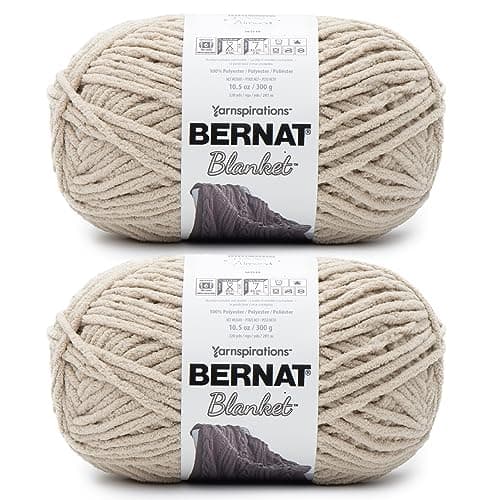
Bernat Blanket
The reference chenille: 100% polyester, super bulky, 108yd per 150g, 7 sc x 8 rows on 8mm.
$20.96 - View on Amazon#ad disclosure - price as of October 22, 2026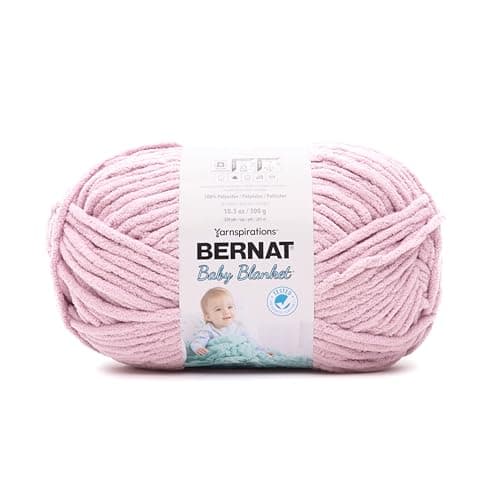
Bernat Baby Blanket
The same construction in a smaller ball, sized for baby projects - 72yd per 100g.
$9.86 - View on Amazon$13.7928% off · #ad disclosure - price as of October 22, 2026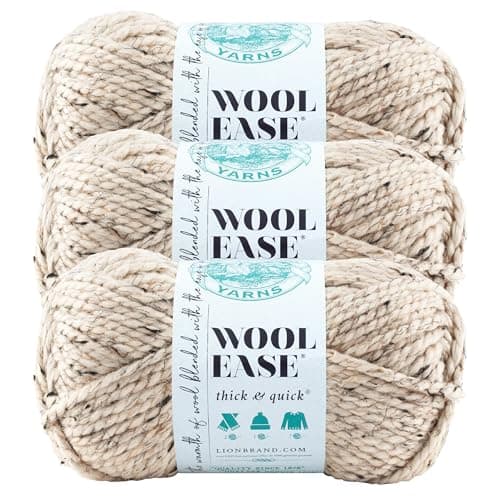
Lion Brand Wool-Ease Thick & Quick
The alternative when chenille is wrong: super bulky with visible stitches and no pile to shed.
$29.22 - View on Amazon#ad disclosure - price as of October 22, 2026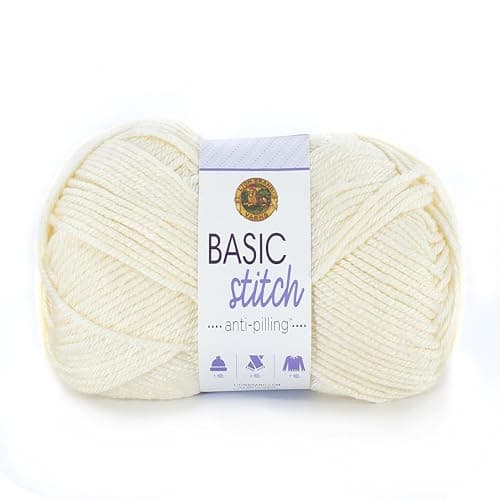
Lion Brand Basic Stitch Anti-Pilling
Where softness matters but stitch definition does too - a smooth worsted acrylic spun against pilling.
$5.99 - View on Amazon$11.7649% off · #ad disclosure - price as of October 22, 2026
Questions people actually ask
What is chenille yarn made of?
Chenille is a construction rather than a fiber - short fiber lengths trapped between two twisted core threads so they stand out as a pile. Craft chenille is overwhelmingly polyester.
Why does chenille yarn worm?
The pile has almost no friction against itself, so a strand with any slack can slide within the fabric and pop out as a loop. Working at a tighter gauge - one or two hook sizes down - is the most effective fix.
What is chenille yarn good for?
Blankets, throws and cushion covers - anything where softness matters and stitch definition does not. It is fast, forgiving of uneven tension and genuinely pleasant to sit under.
Why can't you use chenille for amigurumi?
You cannot see individual stitches in the pile, and amigurumi shaping is entirely a matter of counting stitches. The pile also lets stuffing show through the fabric.
Does chenille yarn shed?
Yes, particularly at cut edges and in the first weeks of use, because each pile fiber is held at only one point. It slows down after the first washes but never stops entirely.