The picks
Best Yarn for Arm Knitting
The one project where the yarn has to be thicker than your wrist to work at all.
By Sawyer V. · Published October 6, 2026
Disclosure: we earn a commission when you buy through the links on this page, at no extra cost to you. It never decides what we recommend or how we rank it - read the full disclosure.
The short answer
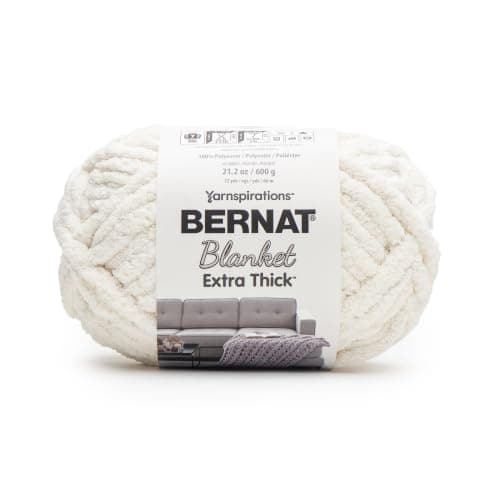
Buy weight 7 jumbo yarn or loop yarn. Bernat Blanket Extra is the best all-round pick - true jumbo chenille at 300g per ball, which means an even fabric and few joins. Bernat Alize Blanket-EZ is the better first attempt because its pre-formed loops make every stitch the same size with no tension skill required. Super bulky weight 6 yarn, which is what most shops stock and what most people buy by mistake, is one size too thin and produces a loose gappy fabric unless you hold it double. A throw takes roughly four to six balls of jumbo chenille; budget for that before you start, because dye lots do not wait.
The one thing that decides this
Arm knitting works on a simple mechanical fact: your forearm is roughly a 50mm knitting needle. A stitch is a loop of yarn around that needle, so the yarn has to be thick enough that a 50mm loop looks like fabric rather than like a hole.
This is why the project fails for most people on their first attempt. They buy the chunkiest yarn in the shop, which is almost always weight 6 super bulky, and the result is an open sloppy net. The yarn they needed was weight 7 jumbo, which is a whole category thicker and which many shops do not stock.
| Weight | Example | Arm knit? | Result |
|---|---|---|---|
| 7 Jumbo | Bernat Blanket Extra | Yes | What the technique is designed for |
| 7 Jumbo, loop | Bernat Alize Blanket-EZ | Yes - fingers only | Even by construction |
| 6 Super bulky | Bernat Blanket, Wool-Ease Thick & Quick | Held double | Gappy single, good doubled |
| 5 Bulky | Most 'chunky' yarn | No | A net, not a fabric |
| 4 and below | Everything else | No | Not a project |
| Unspun roving | Merino roving | Yes | Spectacular, and it pulls apart |
How much you need
Jumbo yarn disappears alarmingly fast, because the yardage per ball is tiny. This is the arithmetic people wish they had run first.
| Project | Finished size | Balls, roughly |
|---|---|---|
| Cushion cover | 18 x 18in | 1 |
| Lap blanket | 30 x 40in | 2-3 |
| Throw | 50 x 60in | 4-6 |
| Twin blanket | 66 x 90in | 9-12 |
| Queen blanket | 90 x 100in | 14-18 |
- Buy it all at once, in one dye lot. A color break across an arm-knitted blanket is enormous and unmissable - the stitches are four inches wide.
- Loop yarn needs far more balls because it is 18yd rather than 97yd. Expect a throw to be in the high teens.
- Overbuy by one ball. Joins eat yarn, and running out two rows from the end of a jumbo blanket is a specific kind of misery.
- [How much yarn do I need](/reference/how-much-yarn-do-i-need) has the method for working it out from your own swatch rather than from a table.
About unspun roving
The most beautiful arm-knitted blankets you have seen online are almost certainly unspun merino roving, and it is worth being clear about what that is before you buy any.
Roving is fiber that has been carded and drawn but never spun, so there is no twist holding it together. It is spectacularly soft and it has essentially no tensile strength - it pulls apart under its own weight, it pills immediately, and a blanket made from it degrades visibly within months of use. It photographs better than anything else on this page and it is the worst durable choice here. If you want the look and intend to use the blanket, buy jumbo chenille.
Technique notes that change the yarn choice
- Arm knitting uses your forearms as needles. Needs jumbo. Fast, and your arms are trapped until you finish the row.
- Hand knitting uses your hands and makes smaller stitches. Super bulky works here where it would not for arm knitting.
- Finger knitting makes a narrow cord. Any weight works; it is what children do.
- Loop yarn is not knitting at all - you pull loop through loop with your fingers. Needs loop yarn specifically, and nothing else substitutes.
- Arm crochet exists and needs the same jumbo weights, plus a jumbo hook if you switch to a tool.
Living with chenille
Four of the five picks here are polyester chenille, because that is what the jumbo market is. Worming is its characteristic failure: the pile pulls out of the twist and loops to the fabric surface wherever it rubs. It is not a defect in your work and it cannot be prevented, only reduced.
- Work tightly. A loose stitch gives the pile room to migrate. This is the single biggest lever you have.
- Wash on delicate and tumble dry gentle, as the ball band says - heat and agitation accelerate it.
- Do not pull a worm. Work it back into the fabric with a blunt needle, or you will make a longer one.
- Choose the wool blend instead if worming will bother you more than the softer hand will please you. It has no pile to migrate.
- [Chenille yarn explained](/fiber-guide/chenille-yarn-explained) covers the construction and why it does this.
What we would buy
For a throw you will actually finish: jumbo chenille, five balls, bought in one lot. For a first attempt or a project with a child: loop yarn, because an even fabric is guaranteed. For a blanket you want to still look right in two years: the wool blend, held double, and accept the extra handling. And do not buy roving unless the blanket is for a photograph.
| # | Product | Best for | Weight | Tool needed | Price |
|---|---|---|---|---|---|
| 1 | Bernat Blanket ExtraTrue weight 7 jumbo chenille - thick enough that an arm-knitted stitch looks deliberate rather than loose. | A full-size arm-knitted blanket that holds together | 7 Jumbo | None - arms only | $19.90 - View on Amazon#ad disclosure - price as of October 7, 2026 |
| 2 | 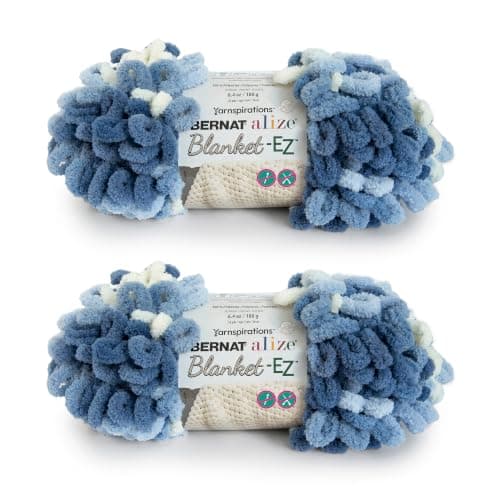 Bernat Alize Blanket-EZLoop yarn: the loops are already formed, so you pull loop through loop with your fingers and every stitch is the same size. Bernat Alize Blanket-EZLoop yarn: the loops are already formed, so you pull loop through loop with your fingers and every stitch is the same size. | Anyone who wants an even fabric without learning tension | 7 Jumbo | None - fingers only | $18.19 - View on Amazon |
| 3 | 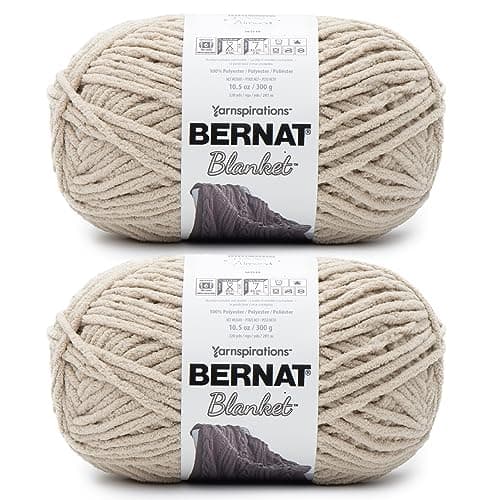 Bernat BlanketSuper bulky rather than jumbo - a size down, widely available, and the usual starting point for hand knitting rather than arm knitting. Bernat BlanketSuper bulky rather than jumbo - a size down, widely available, and the usual starting point for hand knitting rather than arm knitting. | Hand-knitted cushions, small throws and a cheap first try | 6 Super bulky | Arms, held double | $15.39 - View on Amazon#ad disclosure - price as of October 7, 2026 |
| 4 | 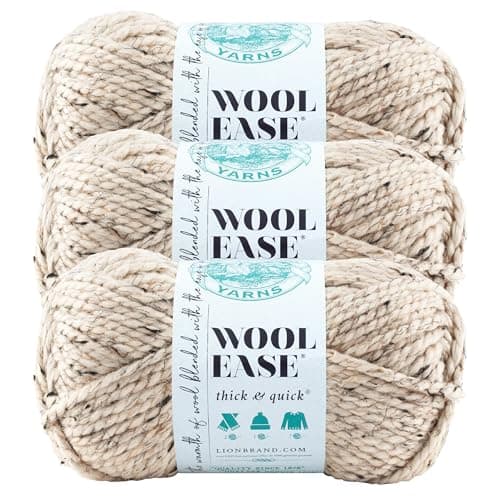 Lion Brand Wool-Ease Thick & QuickThe only pick here with wool in it - warmer, less plush, and it does not worm. Lion Brand Wool-Ease Thick & QuickThe only pick here with wool in it - warmer, less plush, and it does not worm. | A throw you want to feel like wool rather than plush | 6 Super bulky | Arms, held double | $30.76 - View on Amazon#ad disclosure - price as of October 7, 2026 |
| 5 | 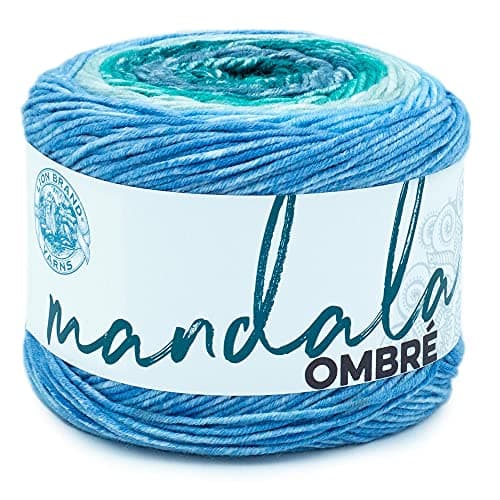 Lion Brand MandalaFingering-weight cake yarn. Nothing about arm knitting works at this diameter. Lion Brand MandalaFingering-weight cake yarn. Nothing about arm knitting works at this diameter. | Shawls and colorwork, at the weight it actually is | 1 Fingering | Needles, not arms | $6.66 - View on Amazon |
Bernat Blanket Extra
Bernat · Best for a full-size arm-knitted blanket that holds together
Jumbo weight 7 chenille - the thickest yarn most shops stock, and the one an arm-knitted blanket is actually written for.
- Fiber
- 100% polyester
- Weight
- 7 Jumbo
- Ball
- 300g (10.5oz), 97yd (87m)
- Knit gauge
- 5 sts x 7 rows on 12.75mm (US 17)
- Crochet gauge
- 4 sc x 4 rows on 15mm (US P/Q)
- Care
- Machine wash delicate, tumble dry gentle, no bleach, no iron
Who it suits
Anyone making their first arm-knitted blanket, and anyone who tried it in bulky yarn and got a sloppy open fabric.
Why it is here
100% polyester, #7 Jumbo, 300g (10.5oz) at 97yd, knit gauge 5 sts x 7 rows on 12.75mm (US 17). The weight-7 classification is what separates this from the bulky yarn sold beside it: at this diameter your forearm is roughly the right needle size, which is the entire mechanic of arm knitting. 300g balls also mean fewer joins across a blanket, and a join is the ugliest thing in an arm-knitted fabric.
What you give up
Chenille worms - the pile pulls out of the twist and loops to the surface wherever the fabric is handled, which on a blanket is constantly. It is also 97yd per ball, so a throw is four to six balls and the cost adds up fast.
Specifications from Yarnspirations - Bernat Blanket Extra specification. We have not handled this item - see how we pick.
Bernat Alize Blanket-EZ
Bernat · Best for anyone who wants an even fabric without learning tension
Pre-formed loops instead of a strand: you pull loop through loop with your fingers, so there is no needle, no hook and no gauge to hit.
- Fiber
- 100% polyester
- Weight
- 7 Jumbo
- Ball
- 180g (6.3oz), 18yd (16m)
- Worked with
- Fingers only - no needles or hooks
- Construction
- Pre-formed loops along the strand
- Gauge
- Not published - the loop size fixes the stitch size
- Care
- Machine wash delicate, tumble dry gentle, no bleach, no iron
Who it suits
Complete beginners, anyone making this with children, and anyone whose arm-knitted fabric came out uneven.
Why it is here
100% polyester, #7 Jumbo, 180g (6.3oz) at 18yd, worked with fingers only - no needles or hooks. The pre-formed loops remove the single hardest part of arm knitting, which is keeping tension consistent when your 'needle' changes diameter as you move your arm. The loop size fixes the stitch size, so the fabric is even by construction.
What you give up
Eighteen yards per ball is very little, so a blanket is a large number of balls and a large number of joins. The finished fabric also has a distinctive loopy look that is not to everyone's taste, and you cannot change the stitch size at all.
Specifications from Yarnspirations - Bernat Alize Blanket-EZ specification. We have not handled this item - see how we pick.
Bernat Blanket
Bernat · Best for hand-knitted cushions, small throws and a cheap first try
Polyester chenille at 108 yards to a 150g ball. Fast, warm, machine washable, and it will shed and worm if the tension is loose.
- Fiber
- 100% polyester (chenille)
- Weight
- 6 Super Bulky
- Ball
- 5.3oz / 150g, 108yd / 98m
- Gauge
- 8 sts x 13 rows on 8mm (US 11)
- Hook
- 8mm (US L/11), 7 sc x 8 rows
- Care
- Machine wash delicate, tumble dry gentle
Who it suits
Anyone wanting to try the technique cheaply, and anyone making a cushion cover or a small throw rather than a full blanket.
Why it is here
100% polyester chenille at super bulky (6). It is a weight below the jumbo yarns and that is the honest description, but it is in every craft shop, it is the cheapest per yard here, and held double it approximates jumbo for a fraction more work.
What you give up
On its own it is genuinely too thin for arm knitting a blanket - the fabric comes out loose and gappy and reads as a mistake. Held double it works, but you are then managing two strands with your arms. It worms like all chenille.
Specifications from Yarnspirations product page. We have not handled this item - see how we pick.
Lion Brand Wool-Ease Thick & Quick
Lion Brand · Best for a throw you want to feel like wool rather than plush
The super bulky the whole arm-knitting and chunky-blanket category is built on, at a gauge that finishes a throw in a weekend.
- Fiber
- 80% acrylic, 20% wool (fiber ratio varies on some heathered colorways)
- Weight
- 6 Super Bulky
- Skein
- 6oz / 170g, 106yd / 97m
- Gauge
- 9 sts x 12 rows on US 13 (9mm)
- Hook
- M (9mm)
- Care
- Machine wash and dry
Who it suits
Anyone who dislikes the synthetic hand of chenille, and anyone who wants the blanket to be genuinely warm rather than just thick.
Why it is here
80% acrylic, 20% wool at super bulky. The wool content changes the fabric's behavior: it has some loft and some warmth, and critically it has no chenille pile to pull out, so it does not worm. For a blanket that gets used rather than photographed, that matters more than the plush hand.
What you give up
Super bulky, not jumbo, so it needs holding double for arm knitting. It is noticeably less soft than chenille, and the wool content means it is not as carelessly washable - check the ball band rather than assuming.
Specifications from Lion Brand product page. We have not handled this item - see how we pick.
Lion Brand Mandala
Lion Brand · Best for shawls and colorwork, at the weight it actually is
A self-striping cake with long, seamless color changes - one ball produces a whole striped shawl with no ends to join.
- Fiber
- 100% acrylic
- Weight
- 3 Light / DK
- Cake
- 150g, 590yd
- Color change
- Self-striping, long seamless transitions
- Family
- Mandala Ombre is the thicker, more subtle worsted-weight sibling
Who it suits
Nobody, for this. It is a good yarn being named here because the mistake is common.
Why it is here
A fine, thin yarn. Arm knitting works because your forearm is approximately a 50mm needle and the yarn is thick enough to make a sensible stitch at that size. At fingering weight the stitches are enormous open loops with nothing in them, and the fabric is a net rather than a blanket.
What you give up
None - this simply is not the project for it. Use it for the shawl it is designed for.
Specifications from Lion Brand product page. We have not handled this item - see how we pick.
Questions people actually ask
What yarn do you use for arm knitting?
Weight 7 jumbo yarn, or loop yarn. Jumbo chenille such as Bernat Blanket Extra is the standard choice. Super bulky weight 6 yarn - which is what most shops stock and most people buy by mistake - is one category too thin and gives a loose gappy fabric unless you hold it double.
How many balls of yarn for an arm knit blanket?
In jumbo chenille at 97yd per 300g ball: roughly 2-3 for a lap blanket, 4-6 for a throw, 9-12 for a twin. Loop yarn needs far more because it is only 18yd per ball. Buy the whole quantity in one dye lot, and add a spare ball for joins.
Can you arm knit with chunky yarn?
Not on its own. 'Chunky' usually means weight 5 bulky or weight 6 super bulky, and at those diameters a stitch wrapped around your forearm is a large empty loop. Hold super bulky double and it works; weight 5 and below does not, at any number of strands you can comfortably manage.
Is loop yarn better than regular jumbo yarn?
For a first attempt, yes. The loops are pre-formed so every stitch is the same size and you cannot get tension wrong. The costs are that a blanket takes many more balls at 18yd each, you get many more joins, and the finished fabric has a distinctive loopy look you cannot alter.
Why does my arm knit blanket look loose and gappy?
The yarn is too thin for the stitch size. Arm knitting makes stitches around a roughly 50mm 'needle', so it needs weight 7 jumbo. If you used super bulky, hold two strands together and the same pattern will give a solid fabric.
Is merino roving good for arm knitting?
It looks the best and wears the worst. Roving is unspun, so it has no twist holding it together - it pulls apart under its own weight, pills immediately, and a used blanket degrades visibly within months. For a blanket you intend to use rather than photograph, buy jumbo chenille.