The picks
Best Yarn for a Rug
It gets stood on. That single fact inverts almost every yarn recommendation on this site.
By Sawyer V. · Published September 7, 2026
Disclosure: we earn a commission when you buy through the links on this page, at no extra cost to you. It never decides what we recommend or how we rank it - read the full disclosure.
The short answer
Use a firmly spun acrylic or a wool blend, worked at a dense gauge, usually with the yarn held double or triple. A rug is walked on, so abrasion resistance and crush recovery matter and softness does not. Cotton is the right answer for anything that gets wet; chenille is the wrong answer everywhere on a floor.
| # | Product | Best for | Fiber | Weight | Price |
|---|---|---|---|---|---|
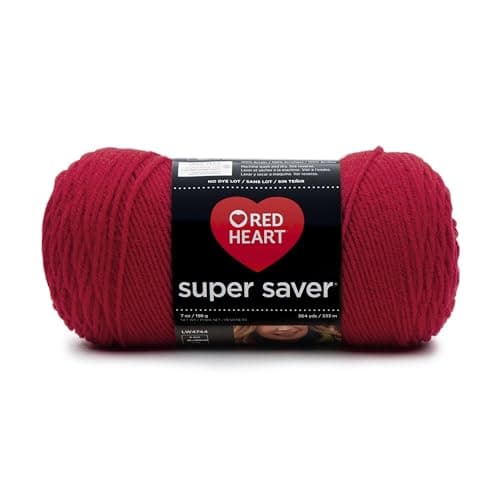
| 1 | Red Heart Super SaverThe firm, hard-wearing spin that makes it a poor scarf yarn makes it the right rug yarn. | A rug that gets walked on daily | 100% acrylic | Worsted (4) | $4.18 - View on Amazon#ad disclosure - price as of October 22, 2026 |
| 2 | 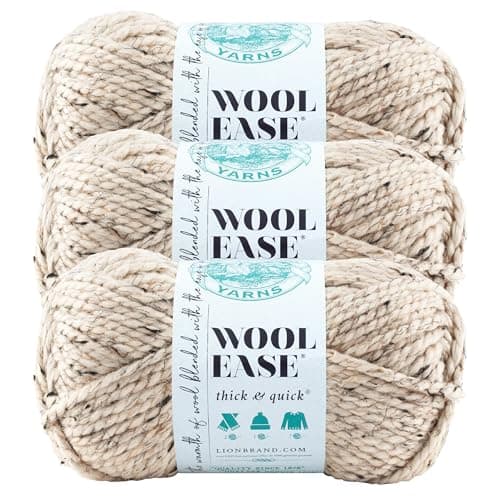 Lion Brand Wool-Ease Thick & QuickSuper bulky makes a rug thick enough in one strand instead of three. Lion Brand Wool-Ease Thick & QuickSuper bulky makes a rug thick enough in one strand instead of three. | A bedside or bathroom rug in a weekend | 80/20 acrylic-wool | Super bulky (6) | $29.22 - View on Amazon#ad disclosure - price as of October 22, 2026 |
| 3 | 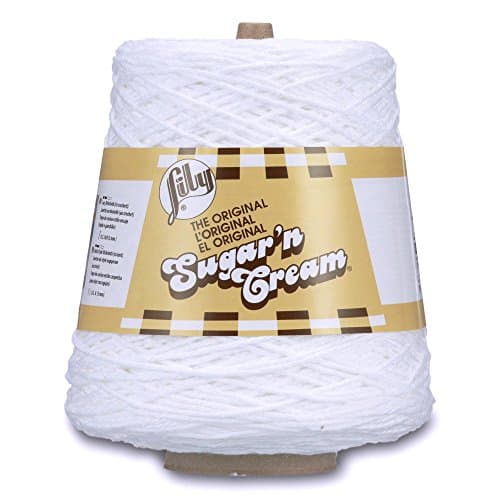 Lily Sugar'n CreamCotton absorbs, takes a hot wash, and gets stronger wet rather than weaker. Lily Sugar'n CreamCotton absorbs, takes a hot wash, and gets stronger wet rather than weaker. | Anywhere that gets wet | 100% cotton | Worsted (4) | $17.88 - View on Amazon#ad disclosure - price as of October 22, 2026 |
| 4 | 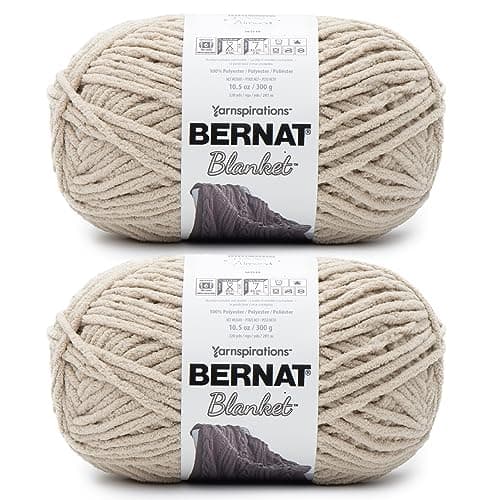 Bernat BlanketChenille crushes flat under feet within weeks and never recovers. Bernat BlanketChenille crushes flat under feet within weeks and never recovers. | Blankets, exactly as labeled | Polyester chenille | Super bulky (6) | $20.96 - View on Amazon#ad disclosure - price as of October 22, 2026 |
Red Heart Super Saver
Red Heart · Best for a rug that gets walked on daily
The 7oz workhorse acrylic. Coarser than the softer acrylics here, and the cheapest yardage on the shelf by a distance.
- Fiber
- 100% acrylic
- Weight
- 4 Medium / worsted
- Skein
- 7oz / 198g, 364yd / 333m (no-dye-lot solids)
- Gauge
- 17 sts x 23 rows on 5mm (US 8)
- Hook
- 5.5mm (US I/9), 12 sc x 15 rows
- Care
- Machine wash warm gentle, tumble dry low, no bleach
Who it suits
Anyone making a rug for an actual floor rather than a photograph.
Why it is here
100% acrylic, worsted weight, 364yd per 198g, machine wash warm and tumble dry low. The firm spin resists the crushing that foot traffic does to a loosely spun yarn, acrylic does not rot when damp, and 364yd per ball matters when a rug takes several thousand.
What you give up
It is not soft, which is the entire point here and will still disappoint anyone expecting a bath mat. Held single it also makes a thin fabric - most rug patterns hold it double or triple.
Specifications from Yarnspirations product page. We have not handled this item - see how we pick.
Lion Brand Wool-Ease Thick & Quick
Lion Brand · Best for a bedside or bathroom rug in a weekend
The super bulky the whole arm-knitting and chunky-blanket category is built on, at a gauge that finishes a throw in a weekend.
- Fiber
- 80% acrylic, 20% wool (fiber ratio varies on some heathered colorways)
- Weight
- 6 Super Bulky
- Skein
- 6oz / 170g, 106yd / 97m
- Gauge
- 9 sts x 12 rows on US 13 (9mm)
- Hook
- M (9mm)
- Care
- Machine wash and dry
Who it suits
Anyone who does not want to hold three strands together for a thousand stitches.
Why it is here
80% acrylic, 20% wool, CYC 6 super bulky, 106yd per 170g, at 9 sts x 12 rows on US 13. A rug needs density, and super bulky delivers it in a single strand - which makes the project several times faster and far easier on your hands.
What you give up
106yd per skein means a small rug is still eight or nine skeins. The wool content also means it should not be soaked repeatedly, so keep it away from a shower door.
Specifications from Lion Brand product page. We have not handled this item - see how we pick.
Lily Sugar'n Cream
Lily · Best for anywhere that gets wet
Unmercerized cotton in a small 2.5oz ball. Absorbent, hard-wearing, and the reason every dishcloth pattern ever written specifies it.
- Fiber
- 100% cotton
- Weight
- 4 Medium / worsted
- Ball
- 2.5oz / 71g, 120yd / 109m
- Gauge
- 20 sts x 26 rows on 4.5mm (US 7)
- Hook
- 5mm (US H/8), 13 sc x 14 rows
- Care
- Machine wash not above 86F delicate, tumble dry low
Who it suits
Anyone making a bath mat or a kitchen rug rather than a living-room one.
Why it is here
100% cotton, worsted weight, 120yd per 71g ball. Cotton is one of very few fibers that is stronger wet than dry, and it takes the hot wash a floor textile in a bathroom genuinely needs.
What you give up
Cotton is heavy and it has no spring, so a large cotton rug is a serious amount of yarn and a serious amount of weight. Held triple, a bath mat is 900 to 1,200 yards.
Specifications from Yarnspirations product page. We have not handled this item - see how we pick.
Bernat Blanket
Bernat · Best for blankets, exactly as labeled
Polyester chenille at 108 yards to a 150g ball. Fast, warm, machine washable, and it will shed and worm if the tension is loose.
- Fiber
- 100% polyester (chenille)
- Weight
- 6 Super Bulky
- Ball
- 5.3oz / 150g, 108yd / 98m
- Gauge
- 8 sts x 13 rows on 8mm (US 11)
- Hook
- 8mm (US L/11), 7 sc x 8 rows
- Care
- Machine wash delicate, tumble dry gentle
Who it suits
Not rug makers, however inviting the pile looks.
Why it is here
100% polyester chenille, super bulky, 108yd per 150g. The pile is what makes it feel plush, and it makes an extremely appealing-looking rug for about a month.
What you give up
Pile construction depends on loose fibers standing up. Foot traffic crushes them permanently, so a chenille rug develops flat, shiny tracks along the walked line and the fibers pull out where they are crushed.
Specifications from Yarnspirations product page. We have not handled this item - see how we pick.
The one project where softness is not the goal
Almost every recommendation on this site optimizes toward a fabric that is pleasant against skin. A rug meets feet, and shoes, and chair legs, and it does so for years.
So the criteria invert. What you want is a hard-spun yarn that resists crushing, a dense fabric that does not let dirt through to the backing, and a fiber that survives washing. The yarns we recommend against elsewhere - firm, slightly coarse, hard-wearing - are exactly right here.
Fibers, ranked for a floor
| Fiber | Abrasion | Wet | Verdict |
|---|---|---|---|
| Firm acrylic | High | Unaffected | The practical default |
| Wool | High; felts under traffic, which densifies it | Poor - slow to dry | Excellent dry-area rug; not a bath mat |
| Cotton | Moderate to high | Stronger wet | The bath mat answer |
| Wool-acrylic blend | High | Fair | Good all-round |
| Chenille and pile yarns | Very poor - crushes | Holds water | Avoid on any floor |
| T-shirt and fabric yarn | High | Fair | Traditional rug material; bulky to work |
Wool deserves a note. It felts under foot traffic, which for a rug is a feature rather than a fault - the fabric densifies and becomes tougher. That is the same mechanism our does wool yarn shrink page describes as a hazard for garments.
Holding strands together
Most crocheted rug patterns hold worsted yarn double or triple. It is worth understanding why, because it is the one place we recommend the technique that best chunky yarn argues against for garments.
- Density. Three strands make a fabric thick enough to feel like a rug rather than a mat.
- Cost. Budget worsted held triple is far cheaper per square foot than specialist rug yarn.
- Color. Holding three colors together produces a tweed that a single yarn cannot.
- The downside is real: strands separate under the hook and split constantly. A tapered head gathers them better than an in-line one.
Yardage, which surprises everyone
| Rug | Size | Single strand | Held triple |
|---|---|---|---|
| Bath mat | 20 x 30in | 600-800yd | 1,800-2,400yd |
| Bedside runner | 24 x 60in | 1,400-1,800yd | 4,200-5,400yd |
| Small area rug | 36 x 60in | 2,200-2,800yd | 6,600-8,400yd |
| Living room rug | 60 x 84in | 5,000-6,500yd | 15,000yd and up |
That last row is why hand-made rugs above a certain size are rare, and why budget yarn at 364 yards a ball is the sensible choice rather than a compromise. The method behind these figures is on how much yarn do I need.
Construction notes
- Crochet rather than knit. Crochet makes a denser, stiffer fabric naturally, and a rug does not want drape.
- Single crochet or slip stitch. Tall stitches make a loose fabric with gaps. Short stitches make a rug.
- Work a border. An unbordered rug curls at the corners, which is a trip hazard as well as ugly.
- Add a non-slip backing. Rug backing sold by the roll, or a rubber underlay. A hand-made rug on a hard floor slides.
- Block it flat. Even a rug benefits, and it sets the corners square - see how to block your knitting.
Washing
Check the fiber first. Acrylic and cotton rugs go in a machine on a gentle cycle and dry flat; the weight of a wet rug will destroy its shape if you hang it.
Wool rugs should be spot cleaned and aired rather than washed, because a wool rug in a machine felts unevenly - some areas more than others - and comes out warped. That is covered in caring for hand knits.
Questions people actually ask
What yarn is best for a crochet rug?
A firmly spun acrylic, worked at a dense gauge and usually held double or triple. Abrasion resistance and crush recovery matter on a floor; softness does not.
Can you use chenille yarn for a rug?
No. Chenille is a pile construction that depends on loose fibers standing up, and foot traffic crushes them permanently - a chenille rug develops flat shiny tracks within weeks.
How much yarn does a rug take?
A 20 x 30in bath mat is 600 to 800 yards of worsted held single, or 1,800 to 2,400 held triple. A small area rug runs to several thousand yards, which is why budget yarn is the sensible choice.
Should you knit or crochet a rug?
Crochet. It makes a denser, stiffer fabric naturally, and short stitches - single crochet or slip stitch - produce the tight surface a rug needs.
How do you stop a hand-made rug slipping?
Add a rug backing or a rubber underlay. A knitted or crocheted rug on a hard floor slides, and a curling unbordered corner makes it worse - work a firm border as well.