The picks
Best Yarn for Slippers
The sole wears out and the floor is slippery. Two problems, and one fiber solves both.
By Sawyer V. · Published September 7, 2026
Disclosure: we earn a commission when you buy through the links on this page, at no extra cost to you. It never decides what we recommend or how we rank it - read the full disclosure.
The short answer
Use untreated worsted wool and felt the finished slippers - it produces a dense, tough fabric no unfelted knit matches, and it is the traditional answer for good reason. For unfelted slippers, a wool-nylon sock yarn resists sole wear best. Whatever you use, add a non-slip sole.
| # | Product | Best for | Fiber | Weight | Price |
|---|---|---|---|---|---|
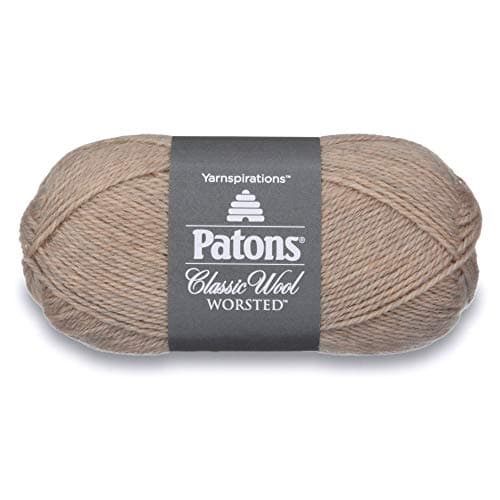
| 1 | Patons Classic Wool WorstedUntreated wool is the only fiber that can be felted into a dense, tough sole. | Slippers you intend to felt | 100% wool | Worsted (4) | $11.89 - View on Amazon#ad disclosure - price as of October 22, 2026 |
| 2 | 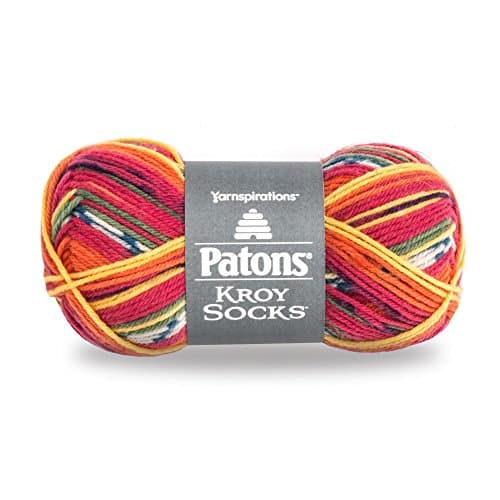 Patons Kroy SocksNylon content, which is the property that keeps a sole from wearing through. Patons Kroy SocksNylon content, which is the property that keeps a sole from wearing through. | Slipper socks worn inside shoes or around the house | 75/25 wool-nylon | Fingering (1) | $9.99 - View on Amazon#ad disclosure - price as of October 22, 2026 |
| 3 | 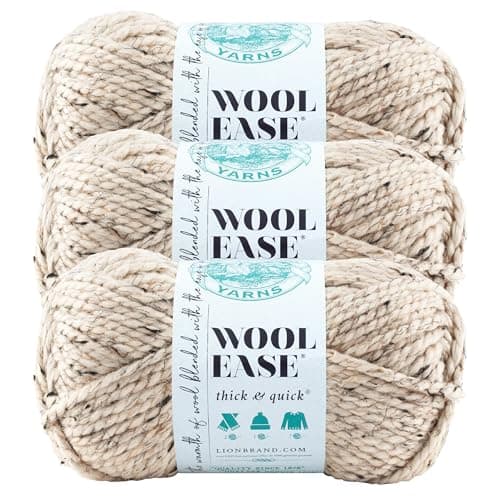 Lion Brand Wool-Ease Thick & QuickSuper bulky makes a thick slipper in one strand and finishes in two hours. Lion Brand Wool-Ease Thick & QuickSuper bulky makes a thick slipper in one strand and finishes in two hours. | A pair in an evening | 80/20 acrylic-wool | Super bulky (6) | $29.22 - View on Amazon#ad disclosure - price as of October 22, 2026 |
| 4 | 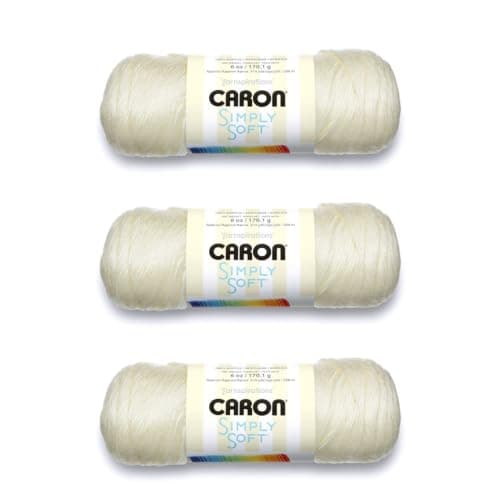 Caron Simply SoftSoft, slick and it will wear through at the ball of the foot. Caron Simply SoftSoft, slick and it will wear through at the ball of the foot. | Blankets and wraps | 100% acrylic | Worsted (4) | $14.55 - View on Amazon |
Patons Classic Wool Worsted
Patons · Best for slippers you intend to felt
100% non-superwash wool at supermarket money. It blooms when blocked, holds a cable, and it will felt if you put it in the machine.
- Fiber
- 100% wool (not superwash)
- Weight
- 4 Medium / worsted
- Ball
- 3.5oz / 100g, 194yd / 177m
- Gauge
- 20 sts x 26 rows on 4.5mm (US 7)
- Hook
- 5mm (US H/8), 14 sc x 17 rows
- Care
- Hand wash, lay flat to dry, do not machine wash
Who it suits
Anyone making slippers to last more than a season.
Why it is here
100% untreated wool, worsted weight, 194yd per 100g. Knit oversized and washed hot with agitation, untreated wool fulls into a dense fabric that is far tougher than the knit it started as - and it is the only fiber here that will do that.
What you give up
Hand wash only once finished, and felting is irreversible and hard to control. Expect to lose 20 to 30 percent of the dimensions, and check the size every few minutes.
Specifications from Yarnspirations product page. We have not handled this item - see how we pick.
Patons Kroy Socks
Patons · Best for slipper socks worn inside shoes or around the house
75/25 washable wool and nylon at fingering weight - the standard sock construction, at the cheapest price it comes in.
- Fiber
- 75% washable wool, 25% nylon
- Weight
- 1 Super Fine / fingering
- Ball
- 1.8oz / 50g, 166yd / 152m
- Gauge
- 32 sts x 40 rows on 2.75mm (US 2)
- Hook
- 3.25mm (US D/3), 22 sc x 24 rows
- Care
- Machine wash cool, dry flat
Who it suits
Anyone making a thin slipper sock rather than a thick felted clog.
Why it is here
75% washable wool, 25% nylon, fingering weight, 166yd per 50g. Nylon is added to sock yarn specifically for abrasion resistance, and a slipper sole takes the same friction a sock heel does - see [what nylon does in yarn](/fiber-guide/what-nylon-does-in-yarn).
What you give up
Fingering weight makes a thin fabric, so it is a slipper sock rather than a warm slipper. It also will not felt, because both the superwash treatment and the nylon prevent it.
Specifications from Yarnspirations product page. We have not handled this item - see how we pick.
Lion Brand Wool-Ease Thick & Quick
Lion Brand · Best for a pair in an evening
The super bulky the whole arm-knitting and chunky-blanket category is built on, at a gauge that finishes a throw in a weekend.
- Fiber
- 80% acrylic, 20% wool (fiber ratio varies on some heathered colorways)
- Weight
- 6 Super Bulky
- Skein
- 6oz / 170g, 106yd / 97m
- Gauge
- 9 sts x 12 rows on US 13 (9mm)
- Hook
- M (9mm)
- Care
- Machine wash and dry
Who it suits
Anyone making slippers as last-minute gifts, in quantity.
Why it is here
80% acrylic, 20% wool, CYC 6 super bulky, 106yd per 170g, machine wash and dry. A slipper in super bulky is a two-hour project, and the thickness gives cushioning without any felting step.
What you give up
At 20% wool it will not felt usefully, so the fabric stays as knitted and the sole wears faster than a felted one. Acrylic also compresses over time and the cushioning flattens.
Specifications from Lion Brand product page. We have not handled this item - see how we pick.
Caron Simply Soft
Caron · Best for blankets and wraps
A softer, shinier acrylic worsted with noticeable drape - which is exactly why it is a poor choice for anything that needs to hold a shape.
- Fiber
- 100% acrylic
- Weight
- 4 Medium / worsted
- Skein
- 6oz / 170g, 315yd / 288m
- Gauge
- 18 sts x 24 rows on 5mm (US 8)
- Hook
- 5mm (US H/8), 13 sc x 14 rows
- Care
- Machine wash cool, dry flat, no bleach
Who it suits
Not slipper makers. It is a good blanket yarn.
Why it is here
100% acrylic, worsted weight, 315yd per 170g, with a light twist that gives it drape.
What you give up
The loose twist that makes it soft is the same thing that makes it abrade quickly, and its slick surface is worse on a wooden floor than a matte wool. Slippers made from it develop a thin patch under the ball of the foot within a season.
Specifications from Yarnspirations product page. We have not handled this item - see how we pick.
Two problems, and they are different
Slippers fail in two ways and people usually only plan for one.
- The sole wears through. The ball of the foot and the heel take almost all the abrasion, and a thin spot becomes a hole within weeks of appearing.
- They slide on hard floors. A knitted sole on wood or tile has almost no friction, which on a staircase is genuinely dangerous rather than merely annoying.
Fiber choice addresses the first. The second needs an added sole, and no yarn solves it.
Felting, which is the traditional answer
Knit the slippers deliberately oversized in untreated wool, then wash them hot with agitation. The fiber scales interlock, the fabric shrinks and densifies, and the result is a tough, warm, wind-resistant material that can be cut without fraying.
- Knit 25 to 40 percent oversized. Patterns written for felting state the pre-felted dimensions; if yours does not, err large.
- Wash hot with agitation, in a mesh bag, with a little detergent and something abrasive like a pair of jeans.
- Check every few minutes. Felting is irreversible and it accelerates. Stop when the size is right rather than when the cycle ends.
- Shape while wet. Stuff with towels or wear them damp for a few minutes so they set to your feet.
- Dry flat, fully. A damp felted slipper stays the shape you left it in.
Unfelted slippers, and what carries the wear
If you do not want to felt - because the recipient will machine wash them, or because you want a thinner slipper - the durability has to come from the yarn instead.
That means nylon. It is added to sock yarn for exactly this reason, and a slipper sole is the same friction problem as a sock heel with more of it. A 75/25 wool-nylon yarn is roughly as durable unfelted as a plain wool one is felted.
Doubling the sole is the other standard technique: work the sole section with two strands held together, or add a second layer worked separately and seamed on - see how to seam knitting and crochet.
Grip: the part yarn cannot fix
| Method | How | Lasts |
|---|---|---|
| Non-slip fabric paint | Dots or lines of puffy paint on the sole, dried fully | Months; reapply |
| Sew-on suede or leather soles | Sold as slipper soles with pre-punched holes | Years |
| Non-slip fabric, sewn on | Rubberized shelf liner cut to shape | A season or two |
| Felting alone | Denser fabric grips slightly more | Helps a little; not enough on tile |
For anyone who uses stairs, treat this as required rather than optional. Fabric paint is the cheapest route and takes ten minutes; sewn-on soles are the durable one.
Yardage
- Adult slippers, worsted, unfelted: 200-300yd for the pair.
- Adult slippers, worsted, felted: 300-450yd, because you knit them oversized.
- Adult slippers, super bulky: 150-200yd - one or two skeins.
- Slipper socks, fingering: 300-400yd, and the sole area doubled.
- Child slippers, worsted: 100-150yd.
Care
Felted wool slippers are hand wash and dry flat - they are already felted, so a machine will simply shrink them further. Air them regularly, which wool responds to well.
Unfelted superwash or acrylic slippers go in the machine on gentle and dry flat. Never tumble a wool slipper: that is the felting process, applied to something already the right size. Caring for hand knits has the general method.
Questions people actually ask
What is the best yarn for slippers?
Untreated worsted wool, felted after knitting - it produces a dense, tough fabric that no unfelted knit matches. For unfelted slippers, a 75/25 wool-nylon sock yarn resists sole wear best.
Can you felt slippers made from superwash wool?
No. Superwash processing removes or coats the fiber scales specifically so they cannot interlock, and nylon does not felt at all. Felting needs untreated wool.
How do you stop knitted slippers from slipping?
Add a non-slip sole - dots of fabric paint for the cheap version, or sew-on suede slipper soles for the durable one. No yarn provides enough grip on wood or tile on its own.
How much yarn do I need for a pair of slippers?
200 to 300 yards of worsted for unfelted adult slippers, or 300 to 450 if you are felting them, because they are knitted oversized. Super bulky slippers take 150 to 200 yards.
Why do my slippers wear out at the ball of the foot?
That is where almost all the abrasion happens, along with the heel. Felting the fabric, using a yarn with nylon in it, or working the sole with a doubled strand all address it.