The picks
Best Yarn for Mosaic Crochet
One color per row, and a hook that keeps going back down. Both of those pick the yarn.
By Sawyer V. · Published November 19, 2026
Disclosure: we earn a commission when you buy through the links on this page, at no extra cost to you. It never decides what we recommend or how we rank it - read the full disclosure.
The short answer
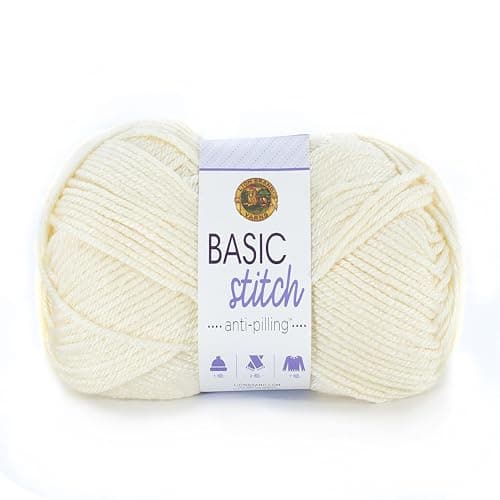
Use a smooth, firmly plied solid - Lion Brand Basic Stitch Anti-Pilling is the pick, at 185 yards to a 100g skein, published at 16 single crochets to 4 inches on a 5mm hook, machine wash and machine dry. Mosaic crochet works one color per row and makes its pattern by dropping the hook down into stitches one or two rows below, so the property that matters is that the yarn does not split when you do that repeatedly. For a full-size blanket, Red Heart Super Saver is the better buy at 364 yards a skein in no-dye-lot solids. What you cannot use is a self-striping or variegated yarn: a mosaic motif only exists while each row is one solid color against its neighbor, and a yarn that changes color mid-row dissolves the pattern.
| # | Product | Best for | Fiber | Per ball | Price |
|---|---|---|---|---|---|
| 1 | Lion Brand Basic Stitch Anti-PillingA smooth, firmly made acrylic that does not split when the hook goes back down into it - and it machine washes and dries. | Almost any mosaic project, and blankets above all | 100% acrylic | 100g / 185yd | $11.76 - View on Amazon#ad disclosure - price as of November 27, 2026 |
| 2 | 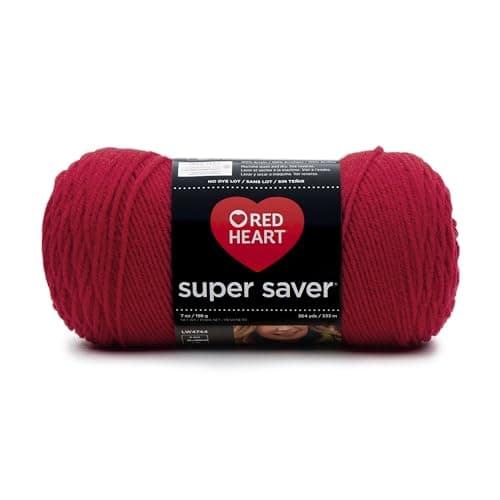 Red Heart Super Saver364 yards to a 198g skein, in no-dye-lot solids - the two things a two-color blanket actually needs. | A full-size mosaic blanket in two colors | 100% acrylic | 198g / 364yd | $4.39 - View on Amazon#ad disclosure - price as of November 27, 2026 |
| 3 | 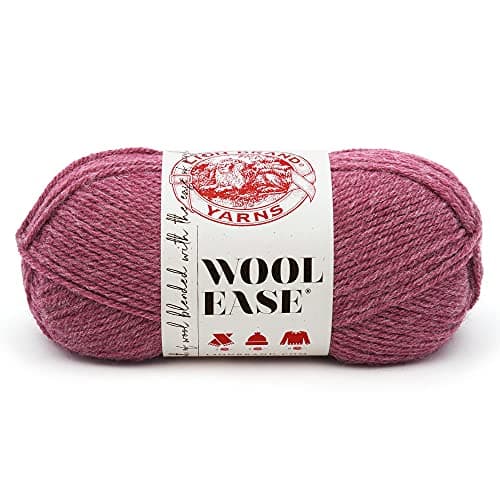 Lion Brand Wool-Ease80% acrylic and 20% wool, published machine wash and machine dry. | A mosaic blanket with some warmth that still goes in the machine | 80% acrylic / 20% wool | 85g / 197yd | $11.77 - View on Amazon#ad disclosure - price as of November 27, 2026 |
| 4 | 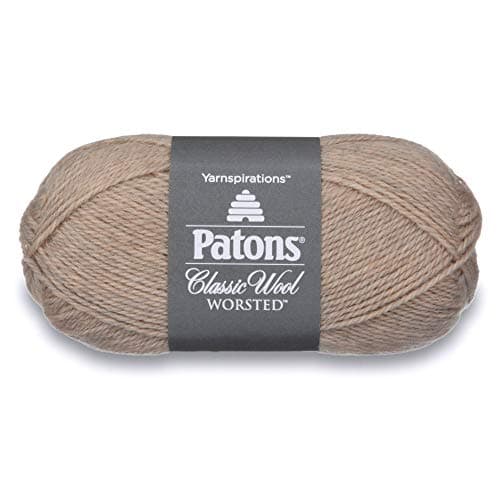 Patons Classic Wool WorstedThe yarn our tapestry crochet page refuses, working properly here because nothing is carried inside the stitch. | A mosaic piece you want to block flat and keep for years | 100% wool | 100g / 194yd | $13.28 - View on Amazon#ad disclosure - price as of November 27, 2026 |
| 5 | 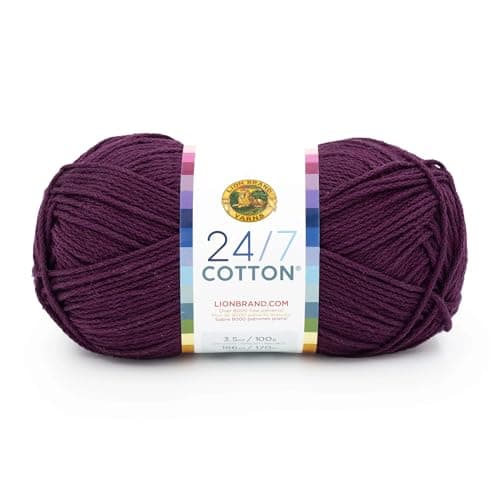 Lion Brand 24/7 CottonMercerized cotton with hard stitch definition, so the motif edges are as sharp as they get. | Bags, placemats, wall hangings - mosaic that is not a blanket | 100% mercerized cotton | 100g / 186yd | $6.99 - View on Amazon#ad disclosure - price as of November 27, 2026 |
| 6 | 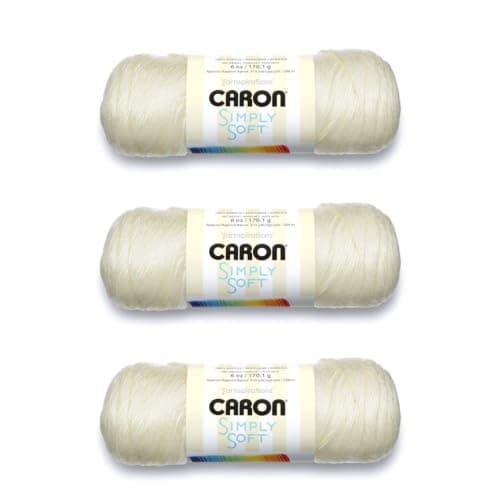 Caron Simply Soft315 yards to a 170g skein with a visible sheen - comfortable, and slightly blurrier for it. | A mosaic blanket meant to be soft above all | 100% acrylic | 170g / 315yd | $9.59 - View on Amazon |
| 7 | 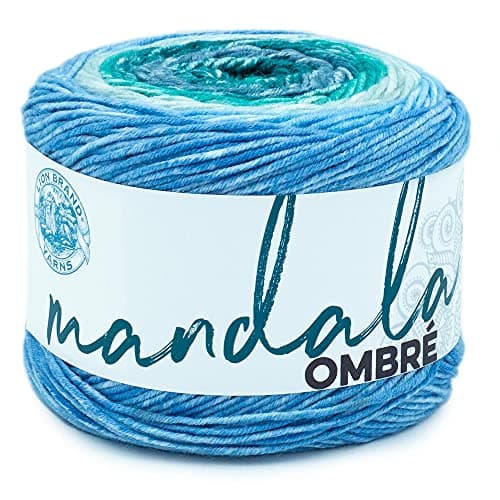 Lion Brand MandalaA self-striping cake - and a yarn that changes color on its own is the one thing mosaic cannot survive. | Shawls and one-skein projects, where the color change is the design | 100% acrylic | 150g / 590yd | $6.66 - View on Amazon |
Lion Brand Basic Stitch Anti-Pilling
Lion Brand · Best for almost any mosaic project, and blankets above all
An acrylic worsted sold specifically on its pilling behavior, which is the one complaint that ends most acrylic garments.
- Fiber
- 100% acrylic
- Weight
- 4 Medium / worsted
- Skein
- 3.5oz / 100g, 185yd
- Gauge
- 18 sts x 26 rows on US 8 (5mm)
- Hook
- H-8 (5mm), 16 sc x 18 rows
- Care
- Machine wash, machine dry
Who it suits
Anyone making a mosaic blanket, which is what most mosaic crochet turns out to be.
Why it is here
100% acrylic, category 4 medium worsted, 3.5oz/100g skeins at 185yd, published gauge 18 sts x 26 rows on US 8 (5mm) and 16 sc x 18 rows on an H-8 (5mm) hook, machine wash and machine dry. Splitting is the thing that makes or breaks a mosaic project: you are pushing the hook down into a stitch one or two rows below, at an angle, hundreds of times, and a loosely plied yarn catches and frays every time you do. A smooth extruded acrylic is about as resistant to that as worsted yarn gets. The anti-pilling construction earns its place too, because a mosaic blanket is a large flat surface that gets sat on.
What you give up
Acrylic is not warm for its weight and it has no bloom, so a mosaic blanket in it is a lighter, flatter object than the same thing in wool. 185 yards a skein is also modest for a blanket - count yards before you buy.
Specifications from Lion Brand product page. We have not handled this item - see how we pick.
Red Heart Super Saver
Red Heart · Best for a full-size mosaic blanket in two colors
The 7oz workhorse acrylic. Coarser than the softer acrylics here, and the cheapest yardage on the shelf by a distance.
- Fiber
- 100% acrylic
- Weight
- 4 Medium / worsted
- Skein
- 7oz / 198g, 364yd / 333m (no-dye-lot solids)
- Gauge
- 17 sts x 23 rows on 5mm (US 8)
- Hook
- 5.5mm (US I/9), 12 sc x 15 rows
- Care
- Machine wash warm gentle, tumble dry low, no bleach
Who it suits
Anyone working a bed-sized mosaic piece, and anyone who would rather not hunt a matching dye lot halfway through.
Why it is here
100% acrylic, category 4 medium worsted, 7oz/198g skeins at 364yd/333m in the no-dye-lot solids, published knit gauge 17 sts x 23 rows on 5mm (US 8) and 12 sc x 15 rows on a 5.5mm (US I/9) hook, machine wash warm on gentle, tumble dry low, no bleach. The no-dye-lot claim is the specific reason this ranks so high for mosaic rather than for crochet generally. A mosaic blanket eats a great deal of exactly two colors, and a dye lot change partway through one of them is visible as a band across the whole piece in a way it never is in a multicolor project.
What you give up
Firmer and rougher in the hand than the others here - wash the finished blanket once and it softens noticeably, but out of the skein it is not a luxurious yarn.
Specifications from Yarnspirations product page. We have not handled this item - see how we pick.
Lion Brand Wool-Ease
Lion Brand · Best for a mosaic blanket with some warmth that still goes in the machine
An 80/20 acrylic-wool worsted that machine washes and dries, and is the single most sensible first step away from all-acrylic.
- Fiber
- 80% acrylic, 20% wool (solids, heathers, twists)
- Weight
- 4 Medium / worsted
- Skein
- 3oz / 85g, 197yd / 180m
- Sold as
- Single skein on the listing we link
- Gauge
- 18 sts x 24 rows on US 8 (5mm)
- Hook
- J-10 (6mm), 13.2 sc x 16 rows
- Care
- Machine wash, water not above 105F; machine dry
Who it suits
Anyone who wants a mosaic piece that is genuinely warm without a hand-wash care label.
Why it is here
80% acrylic, 20% wool in the solids, heathers and twists; category 4 medium worsted; 3oz/85g skeins at 197yd/180m; published gauge 18 sts x 24 rows on US 8 (5mm) and 13.2 sc x 16 rows on a J-10 (6mm) hook; machine wash in water not above 105F and machine dry. The 20% wool adds loft and warmth that pure acrylic cannot, and because mosaic carries nothing inside the stitch, the slight fuzz wool brings costs you far less here than it would in tapestry crochet.
What you give up
197 yards to an 85g skein is the lowest yards-per-gram on this page, so a blanket takes a lot of skeins. The wool content also rules it out for anyone avoiding animal fiber.
Specifications from Lion Brand product page. We have not handled this item - see how we pick.
Patons Classic Wool Worsted
Patons · Best for a mosaic piece you want to block flat and keep for years
100% non-superwash wool at supermarket money. It blooms when blocked, holds a cable, and it will felt if you put it in the machine.
- Fiber
- 100% wool (not superwash)
- Weight
- 4 Medium / worsted
- Ball
- 3.5oz / 100g, 194yd / 177m
- Gauge
- 20 sts x 26 rows on 4.5mm (US 7)
- Hook
- 5mm (US H/8), 14 sc x 17 rows
- Care
- Hand wash, lay flat to dry, do not machine wash
Who it suits
Anyone making a wall hanging, a cushion or a blanket they will hand wash, who wants wool's body and bloom.
Why it is here
100% wool, not superwash, category 4 medium worsted, 3.5oz/100g balls at 194yd/177m, published gauge 20 sts x 26 rows on 4.5mm (US 7) and 14 sc x 17 rows on a 5mm hook, hand wash and lay flat to dry. This pick is the clearest illustration of how mosaic differs from tapestry. [Best yarn for tapestry crochet](/yarn-by-project/best-yarn-for-tapestry-crochet) makes this yarn its skip, because tapestry encases the spare color in the stitch and wool's bloom lets it fuzz through. Mosaic never carries a strand inside a stitch, so that objection disappears - and wool brings body, blocks beautifully flat, and holds a crisp fabric.
What you give up
It blooms, which still softens the edge of a motif slightly - less sharp than acrylic or mercerized cotton. Hand wash and lay flat is also a poor care label for a blanket, which is what most mosaic projects are.
Specifications from Yarnspirations product page. We have not handled this item - see how we pick.
Lion Brand 24/7 Cotton
Lion Brand · Best for bags, placemats, wall hangings - mosaic that is not a blanket
Mercerized cotton with a sheen and a stiff hand. Stitch definition is the best on this page, which is why amigurumi people keep buying it.
- Fiber
- 100% mercerized cotton
- Weight
- Worsted
- Skein
- 3.5oz / 100g, 186yd / 170m
- Gauge
- 19 sts x 26 rows on 5mm (US 8)
- Hook
- 5.5mm (US I/9), 16 sc x 18 rows
- Care
- Machine wash, water not above 105F; medium heat dryer
Who it suits
Anyone working a mosaic bag or panel where crispness matters more than drape or warmth.
Why it is here
100% mercerized cotton, worsted, 3.5oz/100g skeins at 186yd/170m, published gauge 19 sts x 26 rows on 5mm (US 8) and 16 sc x 18 rows on a 5.5mm (US I/9) hook, machine wash in water not above 105F with a medium heat dryer. Mercerizing leaves the fiber smooth and the yarn stiff, which gives the hardest motif edges available and makes the fabric stand rather than drape. It is also the least splitty yarn here, which is the other thing mosaic rewards.
What you give up
Heavy and completely inelastic. A full-size mosaic blanket in cotton is a genuinely substantial object to make and to live with, and your hands will feel it - this is a bag and panel yarn.
Specifications from Lion Brand product page. We have not handled this item - see how we pick.
Caron Simply Soft
Caron · Best for a mosaic blanket meant to be soft above all
A softer, shinier acrylic worsted with noticeable drape - which is exactly why it is a poor choice for anything that needs to hold a shape.
- Fiber
- 100% acrylic
- Weight
- 4 Medium / worsted
- Skein
- 6oz / 170g, 315yd / 288m
- Gauge
- 18 sts x 24 rows on 5mm (US 8)
- Hook
- 5mm (US H/8), 13 sc x 14 rows
- Care
- Machine wash cool, dry flat, no bleach
Who it suits
Anyone making a mosaic throw for a sofa rather than a wall, who will trade a little edge definition for softness.
Why it is here
100% acrylic, category 4 medium worsted, 6oz/170g skeins at 315yd/288m, published gauge 18 sts x 24 rows on 5mm (US 8) and 13 sc x 14 rows on a 5mm hook, machine wash cool and dry flat. The yardage is genuinely useful on a two-color blanket - 315 yards a skein means fewer balls and fewer joins per color - and it is the softest thing on this page by a clear margin.
What you give up
It is sold on drape, and drape is mildly at odds with a crisp geometric motif - the fabric relaxes and the edges soften. Dry flat rather than tumble, which is a real downgrade on a blanket.
Specifications from Yarnspirations product page. We have not handled this item - see how we pick.
Lion Brand Mandala
Lion Brand · Best for shawls and one-skein projects, where the color change is the design
A self-striping cake with long, seamless color changes - one ball produces a whole striped shawl with no ends to join.
- Fiber
- 100% acrylic
- Weight
- 3 Light / DK
- Cake
- 150g, 590yd
- Color change
- Self-striping, long seamless transitions
- Family
- Mandala Ombre is the thicker, more subtle worsted-weight sibling
Who it suits
Nobody doing mosaic crochet. It is on this page because 'mosaic crochet variegated yarn' is a question people genuinely ask, and the answer is no.
Why it is here
100% acrylic, category 3 light DK, 150g cakes at 590yd, self-striping with long seamless color transitions. The problem is structural rather than aesthetic. A mosaic motif exists only because each row is one solid color standing against the solid color of the rows around it - that contrast is the entire pattern. A yarn that shifts color partway along a row destroys the boundary the motif is made of, and the design dissolves into stripes. It is a lovely yarn doing a job it was not built for.
What you give up
Used for what it is designed for it is excellent - [best self-striping and variegated yarn](/yarn-by-project/best-self-striping-and-variegated-yarn) covers where a color-changing yarn genuinely earns its place, and a 590-yard cake is a whole shawl with no ends to weave.
Specifications from Lion Brand product page. We have not handled this item - see how we pick.
One color per row, and what follows from it
Mosaic crochet is often filed next to tapestry crochet as though they were the same problem. They are not, and the difference decides the yarn.
- Tapestry crochet uses both colors in the same row. You carry the unused one along the top of the work and crochet over it, so it ends up encased inside the stitches of the other color.
- Mosaic crochet uses one color per row. You work a whole row in color A, a whole row in color B, and the pattern appears because certain stitches reach down into the rows below to pull an earlier color up to the surface.
Nothing is carried inside a stitch in mosaic, and three things follow from that - the first of which is the reason this page exists separately at all.
- The show-through problem disappears. Tapestry's central constraint is that a fuzzy yarn lets the carried strand fuzz through the working stitch. With no carried strand there is nothing to show, which is why wool is a legitimate pick here and the skip on best yarn for tapestry crochet.
- Splitting becomes the main constraint. The hook goes down into an older stitch, at an angle, over and over. A loosely plied or splitty yarn frays and snags every time. A smooth, firmly made yarn does not.
- Contrast becomes everything. Each row is a single solid color, and the motif is nothing but the boundary between one solid and the next. Low contrast reads as mud; a color-changing yarn reads as nothing at all.
Why variegated yarn does not work here
This is the single most common mosaic mistake and it is worth being blunt about, because the yarn in question is lovely and widely recommended for other things.
A mosaic chart tells you which stitches drop down and which do not. The result is only visible as a pattern because the dropped stitches are a different color from the row they sit in. A self-striping or long-change variegated yarn shifts color partway along the row, so a dropped stitch may land in a shade almost identical to its neighbors - and at that point that part of the motif simply vanishes. You have not made a mistake; the yarn has erased the design.
The same logic rules out low-contrast color pairs even in solids. Two mid-tone shades that look clearly different in the ball can read as one color in a finished fabric. Photograph the two balls together and convert the picture to black and white - if they look the same in grayscale, the motif will not show.
The published numbers, side by side
| Yarn | Fiber | Ball | Yards | Care label |
|---|---|---|---|---|
| Red Heart Super Saver | 100% acrylic | 198g | 364 | Machine wash warm, tumble dry low |
| Caron Simply Soft | 100% acrylic | 170g | 315 | Machine wash cool, dry flat |
| Lion Brand Wool-Ease | 80% acrylic, 20% wool | 85g | 197 | Machine wash + machine dry |
| Patons Classic Wool | 100% wool | 100g | 194 | Hand wash, dry flat |
| Lion Brand 24/7 Cotton | 100% mercerized cotton | 100g | 186 | Machine wash + dry medium |
| Lion Brand Basic Stitch Anti-Pilling | 100% acrylic | 100g | 185 | Machine wash + machine dry |
Three of the six publish machine dry, which is the shortlist for a blanket that gets used. Note also how far apart the yards-per-ball figures sit: at 364 yards against 185, a Super Saver skein is nearly two Basic Stitch skeins, which on a project needing a great deal of two colors is a real difference in both cost and the number of joins.
Buying two colors, not twelve
Mosaic alternates rows, so unlike tapestry crochet - where the background color dominates and goes several times faster than any accent - your two colors are consumed at broadly similar rates. That changes what to buy.
- Buy both colors in the same put-up. Two 364-yard skeins, or four 185-yard ones. Matching the format keeps the arithmetic simple and the joins even.
- Buy both colors in one dye lot each, or buy a no-dye-lot line. A lot change shows as a band across the whole blanket.
- Buy a little more than the arithmetic says. The dropped stitches in mosaic consume slightly more yarn than a plain row of the same length, and running short on one of exactly two colors stops the project dead.
- Check contrast before you commit, in grayscale, not by eye in the shop.
- Both colors from the same yarn line. Two lines at the same nominal weight differ enough in thickness to make the rows uneven, and in a grid-based design that shows.
How much yarn do I need has the area method and the published yardage-per-skein table if you want to work it out properly rather than guess.
Overlay mosaic and inset mosaic
There are two versions of this technique and the difference matters mainly for how many ends you end up weaving in.
- Overlay mosaic works every row from the same side, which means cutting the yarn at the end of each row and rejoining. The fabric has a clear right side and a great many ends.
- Inset mosaic turns the work and carries the unused color up the side of the piece, so there is far less cutting - this is what people mean when they search for mosaic crochet without cutting yarn.
Neither changes which yarn to buy, but overlay makes the care you take over ends much more important - a blanket with hundreds of ends is a blanket that will shed them unless they are woven in properly. How to weave in ends covers doing it so it holds, and a set of bent-tip darning needles makes the job tolerable at that volume.
Hook size, and why it goes the other way from tapestry
Tapestry crochet wants a tight fabric, because a tight stitch is a thicker sheath around the carried strand. Mosaic wants the opposite tendency, for a mechanical reason: you have to be able to get the hook down into a stitch one or two rows below, and a fabric worked very tight fights you every time.
Work at the ball band gauge rather than tightening it, and if your hand is naturally tight, go up rather than down. For a worsted that lands around 5mm to 5.5mm - best crochet hook for worsted weight yarn covers the band, and best size I crochet hook covers 5.5mm specifically, which is the size three of the yarns on this page name on their own labels.
What mosaic crochet is good for
- Blankets, overwhelmingly - the technique produces a dense, flat, reversible-ish fabric that suits a large rectangle. Best yarn for a blanket covers the general blanket question.
- Wall hangings and panels, where a wool worked flat and blocked hard looks its best.
- Bags, where mercerized cotton's stiffness is a feature.
- Cushion covers, which is the smallest sensible first project in the technique.
- Not garments. A mosaic fabric is thick, dense and has almost no stretch, which is a poor brief for anything worn.
What we would buy
- The default: Basic Stitch Anti-Pilling in two high-contrast solids.
- A full-size blanket: Red Heart Super Saver, 364 yards and no dye lot.
- Warmth that still machine washes: Lion Brand Wool-Ease.
- A wall hanging to block flat: Patons Classic Wool.
- A bag or a panel: 24/7 Cotton, for the hardest motif edges.
- Softest throw: Caron Simply Soft, accepting slightly softer edges.
How we picked
Ranked on three published specifications - fiber content, published crochet gauge and yards per ball - against what this technique actually demands: a yarn that does not split when a hook is pushed back into it, and a solid color with enough contrast against its partner. We have not crocheted any of these and we make no claim about how a finished motif looks that we measured; the splitting and edge-definition arguments are reasoned from each yarn's published fiber and construction, not from testing. Every figure is from the manufacturer's specification, cited below. Prices come from the live price layer with the date they were checked.
Questions people actually ask
What is the best yarn for mosaic crochet?
A smooth, firmly plied solid. Lion Brand Basic Stitch Anti-Pilling is the pick - 100% acrylic at 185 yards to a 100g skein, published at 16 single crochets to 4 inches on a 5mm hook, machine wash and machine dry. The property that matters is that it does not split when you push the hook down into a stitch from an earlier row.
Can you use variegated yarn for mosaic crochet?
No, and this is the most common mosaic mistake. The motif exists only because each row is one solid color against the solid color of its neighbors. A self-striping or variegated yarn changes color partway along a row, so dropped stitches land in a shade close to their surroundings and that part of the pattern disappears.
What is the difference between mosaic and tapestry crochet?
Where the spare color goes. Tapestry crochet uses both colors in the same row, carrying the unused one inside the stitches. Mosaic uses one color per row and builds the pattern from stitches that drop down into rows below. That difference inverts the yarn advice: tapestry needs a smooth mercerized cotton so the carried strand does not show, where mosaic can happily use wool.
Can you use wool for mosaic crochet?
Yes - and this is one of the few colorwork techniques where you can. Because nothing is carried inside the stitch, wool's bloom has no strand to fuzz through. Patons Classic Wool blocks flat and gives the fabric real body. The honest caveats are that bloom still softens motif edges slightly, and its published care label is hand wash and dry flat.
What yarn weight is best for mosaic crochet?
Worsted, for almost every project. Every yarn on this page is category 4 medium except the self-striping one we would avoid, and worsted gives enough stitches for a motif to read while still finishing a blanket in reasonable time. Both colors must be the same weight and ideally the same yarn line.
How much yarn do I need for a mosaic crochet blanket?
Work it out by area rather than taking a number, and remember you need roughly similar amounts of both colors - mosaic alternates rows, so unlike tapestry crochet there is no single dominant background. Buy both colors in the same put-up, in one dye lot each, and buy a little extra: dropped stitches use slightly more yarn than plain rows.
Do you have to cut the yarn in mosaic crochet?
In overlay mosaic, yes - every row is worked from the same side, so the yarn is cut and rejoined each row and you finish with a great many ends. Inset mosaic turns the work and carries the unused color up the side instead, which is what people are looking for when they search for mosaic crochet without cutting yarn.
What hook size should I use for mosaic crochet?
At the ball band gauge, or slightly looser if your tension is tight - the opposite of tapestry crochet. You have to get the hook down into a stitch one or two rows below, and a very tight fabric makes that a fight. For a worsted that usually means 5mm to 5.5mm.
Sources
- Craft Yarn Council - Standard Yarn Weight System
- Lion Brand - Basic Stitch Anti-Pilling specification
- Yarnspirations - Red Heart Super Saver specification
- Lion Brand - Wool-Ease specification
- Yarnspirations - Patons Classic Wool Worsted specification
- Lion Brand - 24/7 Cotton specification
- Yarnspirations - Caron Simply Soft specification
- Lion Brand - Mandala specification