The picks
Best Yarn for Tapestry Crochet
The spare color rides inside the stitch. Use a yarn that will not let it show.
By Sawyer V. · Published November 16, 2026
Disclosure: we earn a commission when you buy through the links on this page, at no extra cost to you. It never decides what we recommend or how we rank it - read the full disclosure.
The short answer
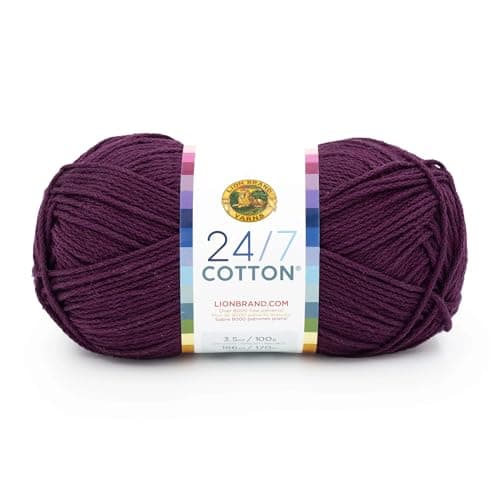
Use mercerized cotton. Lion Brand 24/7 Cotton is the pick - 100% mercerized cotton at 186 yards to a 100g skein, published at 16 single crochets to 4 inches on a 5.5mm hook - and the six-skein assortment is the sensible way to buy it, because every color in a tapestry piece has to come from the same yarn line. Mercerized cotton wins on three properties that all point the same way: it is smooth, so there is no halo to blur the line between two colors; it is stiff, so the stitch holds a square shape and the chart reads as a grid; and it has hard stitch definition. What not to use is untreated wool - the yarn our stranded-knitting page ranks first - because the bloom that makes it great there lets the carried color show through here.
| # | Product | Best for | Fiber | Per ball | Price |
|---|---|---|---|---|---|
| 1 | Lion Brand 24/7 CottonMercerized cotton with a sheen and a stiff hand - the best stitch definition of anything this site lists. | Any tapestry project where the pattern has to read clearly | 100% mercerized cotton | 100g / 186yd | $6.99 - View on Amazon#ad disclosure - price as of November 28, 2026 |
| 2 | 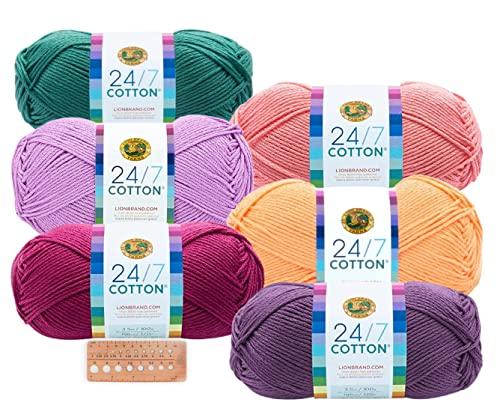 Lion Brand 24/7 Cotton, 6-Skein AssortmentSix coordinated skeins of the yarn above - one line, one gauge, six colors. | Starting a tapestry project without mixing two yarn lines | 100% mercerized cotton | 6 x 100g / 186yd | $42.97 - View on Amazon#ad disclosure - price as of November 28, 2026 |
| 3 | 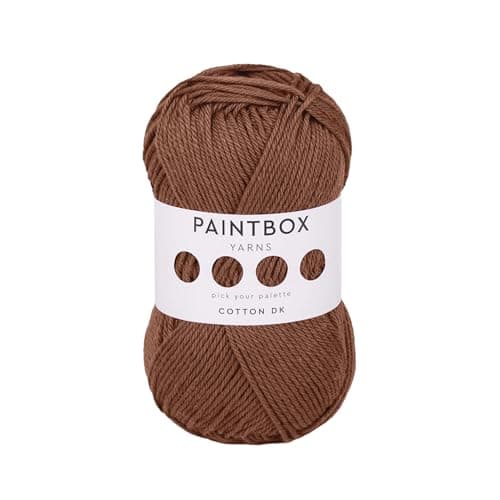 Paintbox Yarns Cotton DKPlain cotton at DK weight in a 50g ball - more stitches per inch means more resolution. | Charts with small motifs, lettering or fine gradients | 100% cotton | 50g / 137yd | $4.75 - View on Amazon#ad disclosure - price as of November 28, 2026 |
| 4 | 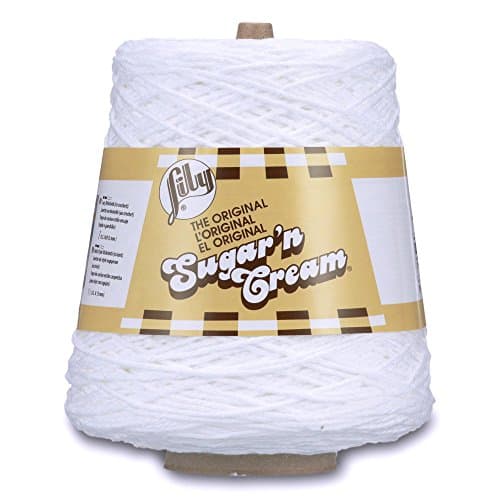 Lily Sugar'n CreamUnmercerized cotton - no sheen, so the color is the color. | Colors that should read flat and saturated rather than glossy | 100% cotton | 71g / 120yd | $17.78 - View on Amazon#ad disclosure - price as of November 28, 2026 |
| 5 | 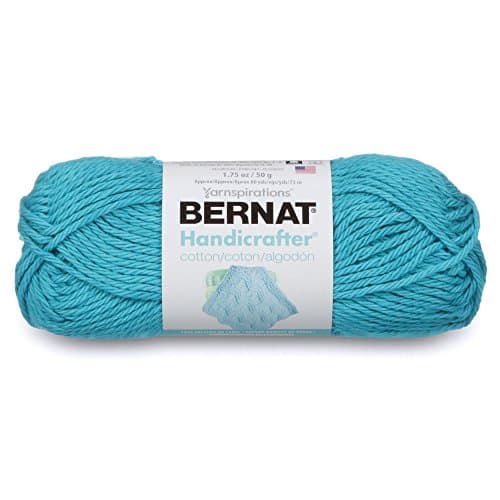 Bernat Handicrafter CottonThe same unmercerized cotton job in a 50g ball, which is the point when a pattern needs four colors. | A chart that wants six or eight colors and a small amount of each | 100% cotton | 50g / 80yd | $5.61 - View on Amazon#ad disclosure - price as of November 28, 2026 |
| 6 | 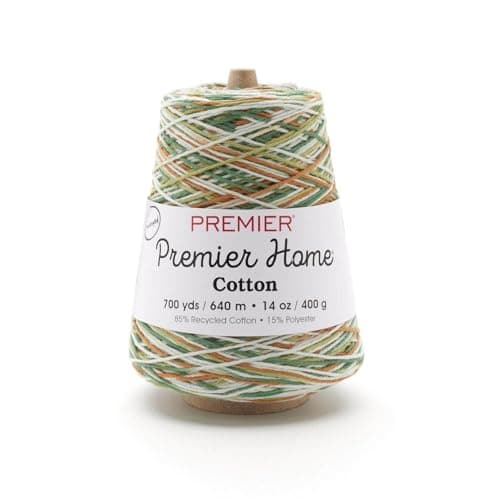 Premier Home Cotton ConeSeven hundred yards on a cone - enough background for a bag and its strap with no dye-lot join. | The one color a tapestry chart burns through | 85% cotton / 15% polyester | 397g / 700yd | $19.99 - View on Amazon#ad disclosure - price as of November 28, 2026 |
| 7 | 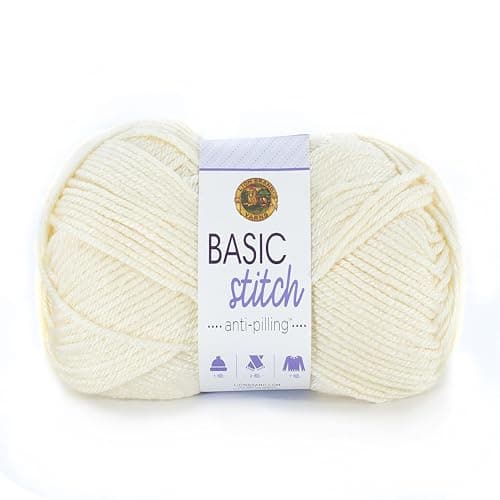 Lion Brand Basic Stitch Anti-PillingA smooth acrylic that washes and dries - and smooth is the property that matters here. | A tapestry blanket that has to go in a machine and a dryer | 100% acrylic | 100g / 185yd | $11.76 - View on Amazon#ad disclosure - price as of November 28, 2026 |
| 8 | 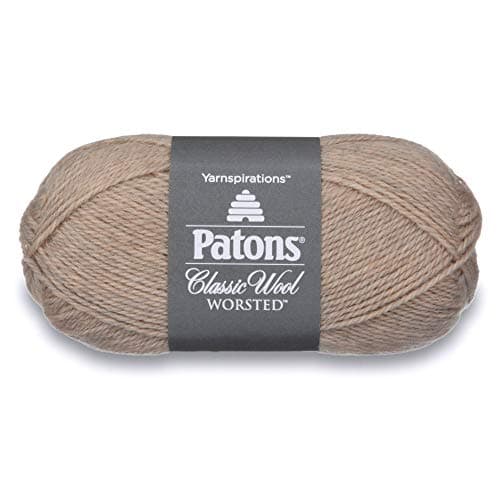 Patons Classic Wool WorstedThe yarn our colorwork page ranks first - and the reason it wins there is the reason it loses here. | Stranded knitting, where it is our top pick | 100% wool | 100g / 194yd | $13.28 - View on Amazon#ad disclosure - price as of November 28, 2026 |
Lion Brand 24/7 Cotton
Lion Brand · Best for any tapestry project where the pattern has to read clearly
Mercerized cotton with a sheen and a stiff hand. Stitch definition is the best on this page, which is why amigurumi people keep buying it.
- Fiber
- 100% mercerized cotton
- Weight
- Worsted
- Skein
- 3.5oz / 100g, 186yd / 170m
- Gauge
- 19 sts x 26 rows on 5mm (US 8)
- Hook
- 5.5mm (US I/9), 16 sc x 18 rows
- Care
- Machine wash, water not above 105F; medium heat dryer
Who it suits
Anyone working a tapestry bag, wall hanging or blanket who wants hard edges between colors.
Why it is here
100% mercerized cotton, worsted, 3.5oz/100g skeins at 186yd/170m, published gauge 19 sts x 26 rows on 5mm (US 8) and 16 sc x 18 rows on a 5.5mm (US I/9) hook, machine wash in water not above 105F with a medium heat dryer. Mercerizing is a treatment that swells and straightens the cotton fiber, which is why this yarn is smooth, slightly glossy and stiff rather than fuzzy. All three properties serve this technique: a smooth yarn has no halo to blur the boundary between two colors, and a stiff one holds a square stitch, which is what makes a crocheted grid look like the chart.
What you give up
Stiff in the hand and hard on the fingers over a long session - cotton has no give at all. The sheen also makes colors read slightly lighter than they look in the ball.
Specifications from Lion Brand product page. We have not handled this item - see how we pick.
Lion Brand 24/7 Cotton, 6-Skein Assortment
Lion Brand · Best for starting a tapestry project without mixing two yarn lines
Six coordinated skeins of the same mercerized cotton - the way to buy a colorwork palette without mixing two yarn lines.
- Set contents
- 6 skeins, coordinated palette (Jelly Beans on the listing we link)
- Fiber
- 100% mercerized cotton
- Weight
- Worsted
- Per skein
- 3.5oz / 100g, 186yd / 170m
- Gauge
- 19 sts x 26 rows on 5mm (US 8)
- Hook
- 5.5mm (US I/9), 16 sc x 18 rows
- Care
- Machine wash, water not above 105F; medium heat dryer
Who it suits
Anyone beginning their first tapestry piece, and anyone who has learned the hard way what happens when colors come from different ranges.
Why it is here
Six skeins of 24/7 Cotton in a coordinated palette, each 3.5oz/100g at 186yd/170m, same published gauge of 19 sts x 26 rows on 5mm and 16 sc x 18 rows on a 5.5mm hook, same care. The reason to buy a set rather than six single balls is the single most practical rule in this technique: **every color has to be the same yarn line.** Two lines at nominally the same weight will not be identical in thickness, and in tapestry crochet that difference shows up as a grid that distorts partway across a row.
What you give up
You get the palette the mill chose, which may not be the palette your chart wants - and six colors is a lot for a first project, where three is usually plenty.
Specifications from Lion Brand 24/7 Cotton 6-skein assortment - retail listing. We have not handled this item - see how we pick.
Paintbox Yarns Cotton DK
Paintbox Yarns · Best for charts with small motifs, lettering or fine gradients
Plain 100% cotton at DK weight in a 50g ball - the cheapest way to buy a known cotton gauge in a lot of colors.
- Fiber
- 100% cotton
- Weight
- DK / light worsted
- Ball
- 50g (1.76oz), 137yd (125m)
- Needle
- US 6 (4mm)
- Gauge
- 22 sts x 30 rows to 4in
- Hook
- F (4.00mm)
- Care
- Machine wash 40C/105F, no bleach, do not tumble dry, iron medium
Who it suits
Anyone working a chart with detail, and anyone who wants a lot of colors without a lot of leftover yarn.
Why it is here
100% cotton, DK/light worsted, 50g (1.76oz) balls at 137yd (125m), published gauge 22 sts x 30 rows to 4in on a US 6 (4mm) needle, crochet hook F (4.00mm), machine wash at 40C/105F, no bleach, do not tumble dry. Resolution is the argument. A tapestry chart is a grid of stitches, so a finer yarn gives more stitches across the same width and therefore a less pixelated image - 22 stitches to 4in against the worsted's 19 is a meaningful jump. The 50g ball also means buying eight colors does not mean owning eight large balls of cotton afterward.
What you give up
Do not tumble dry, which the mercerized worsted above will take. A finer yarn is also slower: more stitches per inch is more stitches.
Specifications from LoveCrafts - Paintbox Yarns Cotton DK specification. We have not handled this item - see how we pick.
Lily Sugar'n Cream
Lily · Best for colors that should read flat and saturated rather than glossy
Unmercerized cotton in a small 2.5oz ball. Absorbent, hard-wearing, and the reason every dishcloth pattern ever written specifies it.
- Fiber
- 100% cotton
- Weight
- 4 Medium / worsted
- Ball
- 2.5oz / 71g, 120yd / 109m
- Gauge
- 20 sts x 26 rows on 4.5mm (US 7)
- Hook
- 5mm (US H/8), 13 sc x 14 rows
- Care
- Machine wash not above 86F delicate, tumble dry low
Who it suits
Anyone whose chart depends on flat blocks of color, and anyone who finds mercerized cotton too shiny.
Why it is here
100% cotton, category 4 medium worsted, 2.5oz/71g balls at 120yd/109m, published gauge 20 sts x 26 rows on 4.5mm (US 7) and 13 sc x 14 rows on a 5mm (US H/8) hook, machine wash not above 86F on delicate and tumble dry low. The difference from the winner is the treatment, and it is a real design decision rather than a quality ranking: mercerized cotton reflects light and reads lighter, unmercerized absorbs it and reads flatter. [Best cotton yarn](/yarn-by-project/best-cotton-yarn) covers the split in full. Unmercerized is also the more absorbent of the two, which matters if the finished piece is a potholder rather than a wall hanging.
What you give up
Fuzzier than mercerized cotton, and that fuzz is working against you here - the color edge is slightly softer. It is also the lowest yardage per gram on this page.
Specifications from Yarnspirations product page. We have not handled this item - see how we pick.
Bernat Handicrafter Cotton
Bernat · Best for a chart that wants six or eight colors and a small amount of each
The other dishcloth cotton - the same job as Sugar'n Cream in a smaller ball, which matters when a pattern wants four colors.
- Fiber
- 100% cotton
- Weight
- 4 Medium / Worsted
- Ball
- 50g (1.8oz), 80yd (73m)
- Knit gauge
- 20 sts x 26 rows to 4in on 4.5mm (US 7)
- Crochet gauge
- 13 sc x 14 rows to 4in on 5mm (US H/8)
- Care
- Machine wash cool, dry flat, no bleach, no dry clean, no iron
Who it suits
Anyone buying a lot of accent colors, where a large ball of each is money sitting in a basket.
Why it is here
100% cotton, category 4 medium worsted, 50g (1.8oz) balls at 80yd (73m), published knit gauge 20 sts x 26 rows to 4in on 4.5mm (US 7) and crochet gauge 13 sc x 14 rows to 4in on a 5mm (US H/8) hook, machine wash cool, dry flat, no bleach. Tapestry charts are usually one background color and several small accents, and the accents need very little yarn. Buying those in the smallest ball a line offers is simply cheaper, and this is the smallest worsted cotton ball here.
What you give up
Eighty yards is not much - fine for an accent, wrong for the background, and you will be joining more often. Dry flat rather than tumble.
Specifications from Yarnspirations - Bernat Handicrafter Cotton specification. We have not handled this item - see how we pick.
Premier Home Cotton Cone
Premier Yarns · Best for the one color a tapestry chart burns through
Seven hundred yards of worsted cotton-poly on one cone - enough for a bag and its strap without a dye-lot join.
- Fiber
- 85% cotton, 15% polyester
- Weight
- 4 Medium worsted
- Cone
- 14oz (397g), 700yd (640m)
- Gauge
- 18 sts x 24 rows to 4in (10cm)
- Needle
- 5.0mm (US 8)
- Care
- Machine wash, tumble dry
Who it suits
Anyone working a large tapestry piece, where the background color runs out long before the accents do.
Why it is here
85% cotton, 15% polyester, category 4 medium worsted, 14oz/397g cones at 700yd/640m, published gauge 18 sts x 24 rows to 4in on a 5.0mm (US 8) needle, machine wash and tumble dry. This is a tapestry-specific problem that catches people out: a chart is mostly background, so one color is consuming several times what any accent does. Running out of the background halfway through and having to match a dye lot is the worst version of that, and 700 yards on a single cone removes it.
What you give up
The 15% polyester makes it slightly less crisp than a pure mercerized cotton, and a cone is awkward to work from without a yarn holder. It also comes in far fewer shades than the ball ranges here.
Specifications from Mary Maxim - Premier Home Cotton Blend Yarn Cone specification. We have not handled this item - see how we pick.
Lion Brand Basic Stitch Anti-Pilling
Lion Brand · Best for a tapestry blanket that has to go in a machine and a dryer
An acrylic worsted sold specifically on its pilling behavior, which is the one complaint that ends most acrylic garments.
- Fiber
- 100% acrylic
- Weight
- 4 Medium / worsted
- Skein
- 3.5oz / 100g, 185yd
- Gauge
- 18 sts x 26 rows on US 8 (5mm)
- Hook
- H-8 (5mm), 16 sc x 18 rows
- Care
- Machine wash, machine dry
Who it suits
Anyone making a tapestry blanket for a child or a sofa, where cotton's weight and care label are a problem.
Why it is here
100% acrylic, category 4 medium worsted, 3.5oz/100g skeins at 185yd, published gauge 18 sts x 26 rows on US 8 (5mm) and 16 sc x 18 rows on an H-8 (5mm) hook, machine wash and machine dry. Acrylic gets dismissed for colorwork, but the property this technique actually needs is smoothness rather than fiber type - a yarn with no halo holds a clean color edge, and a filament-extruded acrylic has about as little halo as yarn gets. The anti-pilling construction matters more than usual too, because a pilled surface blurs exactly the boundaries you worked hard to make sharp.
What you give up
Less crisp than mercerized cotton and it goes limp in a large piece - a tapestry wall hanging in acrylic will not hold its shape the way cotton does. It is the right answer for blankets and the wrong one for anything structural.
Specifications from Lion Brand product page. We have not handled this item - see how we pick.
Patons Classic Wool Worsted
Patons · Best for stranded knitting, where it is our top pick
100% non-superwash wool at supermarket money. It blooms when blocked, holds a cable, and it will felt if you put it in the machine.
- Fiber
- 100% wool (not superwash)
- Weight
- 4 Medium / worsted
- Ball
- 3.5oz / 100g, 194yd / 177m
- Gauge
- 20 sts x 26 rows on 4.5mm (US 7)
- Hook
- 5mm (US H/8), 14 sc x 17 rows
- Care
- Hand wash, lay flat to dry, do not machine wash
Who it suits
Nobody working tapestry crochet. It is on this page because it is the most natural wrong answer: colorwork means wool to most people, and in crochet it does not.
Why it is here
100% wool, not superwash, category 4 medium worsted, 3.5oz/100g balls at 194yd/177m, published gauge 20 sts x 26 rows on 4.5mm (US 7) and 14 sc x 17 rows on a 5mm hook, hand wash and lay flat. Untreated wool blooms when blocked - the fibers relax and fuzz into one another. In stranded knitting that is the whole point, because it closes the gaps between colors and evens out tension, which is why [best yarn for colorwork](/yarn-by-project/best-yarn-for-colorwork) ranks it first. Tapestry crochet puts the carried color inside the stitch instead, so the same bloom lets the spare color fuzz through the working one.
What you give up
If you are knitting Fair Isle rather than crocheting a chart, this is genuinely the right yarn and the colorwork page makes that case. The hand-wash care label is also a poor match for a bag or a blanket.
Specifications from Yarnspirations product page. We have not handled this item - see how we pick.
Where the spare color goes, and why it changes everything
Tapestry crochet and stranded knitting look like the same craft problem and are not. The difference is one sentence long and it decides the entire yarn choice.
- Stranded knitting floats the spare color behind the fabric. It sits on the back, untouched by the working stitch, and you see it only on the inside.
- Tapestry crochet carries the spare color inside the stitch. You lay it along the top of the row and work over it, so it is encased in the stitches of the other color.
That second arrangement is what produces the single most common complaint about this technique, and it is the thing people search for: the carried color showing through. A stitch worked over a contrasting strand is a thin sheath of one color wrapped around another, and anything that makes that sheath less opaque - a loose gauge, a thin yarn, or a fuzzy one - lets the color underneath come through as a shadow or a fleck.
What this technique actually asks of a yarn
- Smooth, with no halo. The property that keeps a color edge sharp and stops the carried strand showing. This rules out mohair, alpaca, brushed yarns and untreated wool that blooms.
- Hard stitch definition. A tapestry chart is a grid, and it only looks like the chart if each stitch is a distinct, square-ish block. Mercerized cotton is the best on the site for this; chenille is the worst.
- Identical weight in every color. The one rule with no exceptions - all colors from one yarn line. Two lines at the same nominal weight differ enough to warp the grid.
- Enough stitches to render the image. Finer yarn gives more resolution. A chunky yarn turns a detailed motif into a blur, which is why nothing above super bulky appears on this page.
- A background color you will not run out of. Charts are mostly background, so that color goes three or four times as fast as any accent.
The published numbers, side by side
| Yarn | Fiber | Ball | Yards | Published crochet gauge |
|---|---|---|---|---|
| Lion Brand 24/7 Cotton | 100% mercerized cotton | 100g | 186 | 16 sc x 18 rows on 5.5mm |
| Paintbox Cotton DK | 100% cotton | 50g | 137 | Hook F (4.00mm) |
| Lily Sugar'n Cream | 100% cotton | 71g | 120 | 13 sc x 14 rows on 5mm |
| Bernat Handicrafter Cotton | 100% cotton | 50g | 80 | 13 sc x 14 rows on 5mm |
| Premier Home Cotton Cone | 85% cotton, 15% polyester | 397g | 700 | Not published |
| Lion Brand Basic Stitch Anti-Pilling | 100% acrylic | 100g | 185 | 16 sc x 18 rows on 5mm |
| Patons Classic Wool | 100% wool | 100g | 194 | 14 sc x 17 rows on 5mm |
Two things fall out of that table. The mercerized cotton and the anti-pilling acrylic both publish 16 single crochets to 4 inches - the tightest crochet gauge here, and tight is what hides a carried strand. And the Premier cone publishes a knit gauge but no crochet gauge, which is recorded as not published rather than guessed at.
Hook size: go down, not up
Every yarn above publishes a hook size, and for this technique you want to be at or below it rather than above it. A loose stitch is a thin sheath around the carried strand, which is precisely when the spare color shows.
Single crochet is the standard tapestry stitch for the same reason - it is the shortest, densest basic stitch, so it encases the carry most completely and produces the squarest grid. Taller stitches leave more room for the strand to appear and stretch the chart vertically. For the hook itself, a worsted cotton worked tight lands around 5mm: best size H crochet hook covers 5mm and best hook for cotton yarn covers why cotton is hard on the hands at any size.
Buying the colors
This is where tapestry projects go wrong before a single stitch is made, so it is worth being blunt about it.
- All colors from one line. Not one brand - one line. Two worsted cottons from the same manufacturer can differ in thickness, and the grid will show it.
- Work out which color is the background and buy that one in the largest format the line offers. It will consume several times what any accent does.
- Buy accents small. A motif color might need thirty yards. A 50g ball is plenty and a cone is money in a basket.
- Check contrast, not just color. Two shades of similar value read as mud at small stitch counts, however different they look in the ball. Photograph the balls together in black and white if you are unsure - if they look the same in grayscale, the motif will not show.
- Buy the background in one dye lot, because a lot change mid-background is visible in a way it is not in an accent.
What tapestry crochet is good for
- Bags and purses, the classic application - though structure matters as much as color there, and best yarn for a crochet bag covers the stiffness side of that decision.
- Wall hangings, where a flat, stiff cotton fabric hangs properly instead of sagging.
- Blankets, usually in acrylic for the care label rather than cotton for the crispness.
- Baskets, where the same stiffness that makes a clean grid also makes the thing stand up - see best yarn for a crochet basket.
- Not garments, mostly. A tapestry fabric is dense, heavy and has no stretch in either direction, which is a poor brief for anything worn.
If the colorwork you have in mind is knitted rather than crocheted, best yarn for colorwork is the page you want, and its answer is genuinely the opposite of this one. For crochet in many colors without carrying any of them, best yarn for granny squares covers the join-as-you-go approach instead.
If it is mosaic crochet, not tapestry
The two get filed together and the yarn advice is nearly opposite. Mosaic crochet works one color per row and builds its pattern from stitches that drop into rows below, so nothing is carried inside a stitch and the show-through problem on this page simply does not arise - which is why wool is a legitimate choice there and the skip here. Best yarn for mosaic crochet covers that case.
What we would buy
- The default: Lion Brand 24/7 Cotton, or the six-skein assortment to get a palette on one line.
- A detailed chart: Paintbox Cotton DK, for the extra stitches per inch.
- Flat, matte color: Lily Sugar'n Cream.
- Lots of accent colors: Bernat Handicrafter Cotton in 50g balls.
- The background: a 700-yard cone.
- A washable blanket: Basic Stitch Anti-Pilling.
How we picked
Ranked on three published specifications - fiber content, published crochet gauge, and yards per ball - against what carrying a color inside the stitch demands. We have not crocheted any of these and we make no claim about how a finished piece looks that we measured; the stitch-definition and halo arguments are reasoned from each yarn's published fiber and treatment, not from testing. Every figure is from the manufacturer's specification or, where a maker publishes none, the retail listing, all cited below, and the cells marked not published are cells where no figure exists. Prices come from the live price layer with the date they were checked.
Questions people actually ask
What is the best yarn for tapestry crochet?
Mercerized cotton. Lion Brand 24/7 Cotton is the pick - 100% mercerized cotton, 186 yards to a 100g skein, published at 16 single crochets to 4 inches on a 5.5mm hook. Mercerizing leaves the yarn smooth, slightly glossy and stiff, which keeps the color edge sharp and the stitch square.
Why does my carried yarn show through in tapestry crochet?
Because the stitch around it is too thin or too fuzzy. The spare color is encased inside the working stitch, so a loose gauge, a thin yarn or a yarn with a halo all let it come through. Work tighter, use single crochet, and switch to a smooth yarn - mercerized cotton is the usual fix.
Can you use wool for tapestry crochet?
You can, but it is the wrong tool. Untreated wool blooms and fuzzes when blocked, which is exactly what stranded knitting wants and exactly what blurs a crocheted color edge. Our colorwork page ranks Patons Classic Wool first for knitting; for tapestry crochet it is the one yarn on this page we would avoid.
What weight yarn is best for tapestry crochet?
Worsted for most projects, DK when the chart has detail. A tapestry image is a grid of stitches, so a finer yarn gives more resolution - Paintbox Cotton DK publishes 22 stitches to 4 inches against a worsted's 19. Anything bulkier than worsted pixelates a detailed motif.
Do all the colors have to be the same yarn?
The same yarn line, yes - this is the one rule with no exceptions. Two lines at the same nominal weight are not identical in thickness, and in a grid-based technique that difference shows up as a chart that distorts partway across a row. Buying a coordinated set of one line is the simplest way to guarantee it.
Is cotton or acrylic better for tapestry crochet?
Cotton for crispness, acrylic for care. Mercerized cotton gives the hardest stitch definition and holds its shape, which is what a bag or a wall hanging needs. A smooth anti-pilling acrylic is the better choice for a blanket, because it machine washes and dries and cotton at blanket size is heavy.
What hook size should I use for tapestry crochet?
At or below the ball band figure, never above. A loose stitch is a thin sheath around the carried strand, which is when the spare color shows through. For a worsted cotton that usually means about 5mm, and single crochet rather than any taller stitch.
How much yarn do I need for a tapestry crochet project?
Work it out per color rather than in total, because the split is uneven - a chart is mostly background, so that color goes several times faster than any accent. Buy the background in the largest format the line offers and in one dye lot; buy accents in the smallest ball available.
Sources
- Craft Yarn Council - Standard Yarn Weight System
- Lion Brand - 24/7 Cotton specification
- Lion Brand 24/7 Cotton 6-skein assortment - retail listing
- Paintbox Yarns 100% Cotton DK - retail listing
- Yarnspirations - Lily Sugar'n Cream specification
- Yarnspirations - Bernat Handicrafter Cotton specification
- Premier Yarns Home Cotton Cone - retail listing
- Lion Brand - Basic Stitch Anti-Pilling specification
- Yarnspirations - Patons Classic Wool Worsted specification