The picks
Best Self-Striping and Variegated Yarn
The same ball stripes on one project and pools into blotches on another. Here is what decides it.
By Sawyer V. · Published September 9, 2026
Disclosure: we earn a commission when you buy through the links on this page, at no extra cost to you. It never decides what we recommend or how we rank it - read the full disclosure.
The short answer
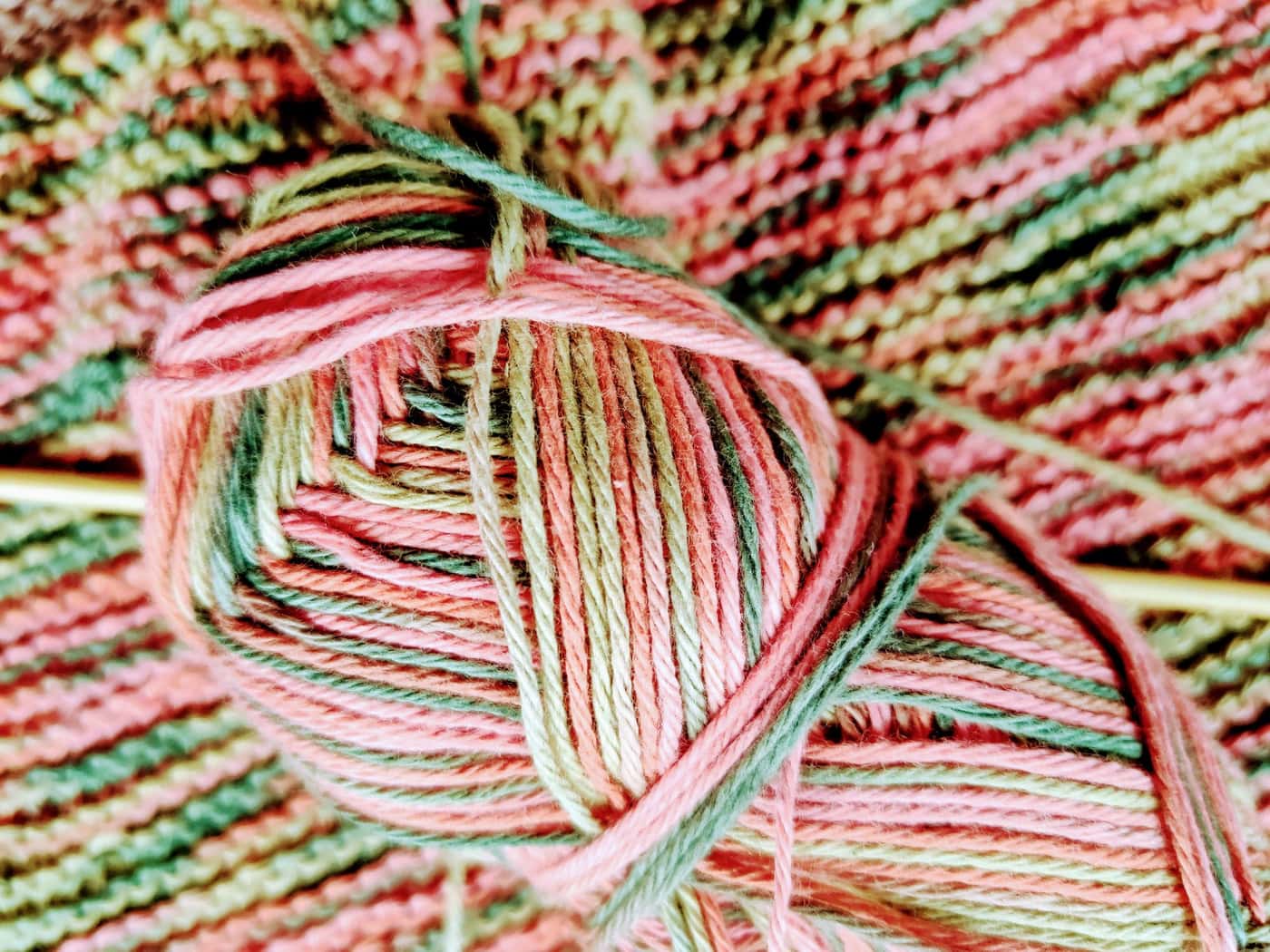
Self-striping yarn has long color runs and produces bands; variegated yarn has short runs and produces speckles or pooling. Which one you get depends on the length of each color section against how many stitches are in your row - so the same ball stripes on a sock and pools on a shawl.
| # | Product | Best for | Weight | Price |
|---|---|---|---|---|
| 1 | No photoLion Brand MandalaLong color runs, so it stripes rather than speckles - and one cake finishes a shawl. | Shawls, scarves and blankets with long clean stripes | DK (3) | Check price on Amazon#ad disclosure |
| 2 | No photoRed Heart Super SaverVariegated and ombre shades at the lowest cost per yard here. | Blankets and quantity projects | Worsted (4) | Check price on Amazon#ad disclosure |
| 3 | No photoPatons Kroy SocksFingering weight with nylon, in the stripe repeats sock knitters buy it for. | Self-striping socks, which is where the format started | Fingering (1) | Check price on Amazon#ad disclosure |
| 4 | No photoCaron Simply SoftA good yarn, and multi-color plus texture is a combination that erases both. | Solid shades, where its drape is the point | Worsted (4) | Check price on Amazon#ad disclosure |
Lion Brand Mandala
Lion Brand · Best for shawls, scarves and blankets with long clean stripes
A self-striping cake with long, seamless color changes - one ball produces a whole striped shawl with no ends to join.
- Fiber
- 100% acrylic
- Weight
- 3 Light / DK
- Cake
- 150g, 590yd
- Color change
- Self-striping, long seamless transitions
- Family
- Mandala Ombre is the thicker, more subtle worsted-weight sibling
Who it suits
Anyone who wants stripes without joining a single new ball.
Why it is here
100% acrylic, CYC 3 light/DK, 150g cake with 590yd, with long seamless color transitions. Long runs are the whole difference between self-striping and variegated: at 590 yards a cake, each color band lasts many rows, so the stripe reads as a stripe.
What you give up
You get the designer's color sequence, not yours - and if the project is wider than the colorway suits, a long run can produce a band that feels too wide. DK also limits you to finer projects.
Specifications from Lion Brand product page. We have not handled this item - see how we pick.
Red Heart Super Saver
Red Heart · Best for blankets and quantity projects
The 7oz workhorse acrylic. Coarser than the softer acrylics here, and the cheapest yardage on the shelf by a distance.
- Fiber
- 100% acrylic
- Weight
- 4 Medium / worsted
- Skein
- 7oz / 198g, 364yd / 333m (no-dye-lot solids)
- Gauge
- 17 sts x 23 rows on 5mm (US 8)
- Hook
- 5.5mm (US I/9), 12 sc x 15 rows
- Care
- Machine wash warm gentle, tumble dry low, no bleach
Who it suits
Anyone making something large in multi-color without buying a dozen solid balls.
Why it is here
100% acrylic, worsted weight, 364yd per 198g in the solid range, with variegated, print and ombre colorways alongside. On a blanket the large stitch count means color changes distribute rather than pool, which is where variegated yarn looks its best.
What you give up
Variegated colorways carry dye lots even where the solids do not, so buy the whole project at once. It is also the firmest yarn here.
Specifications from Yarnspirations product page. We have not handled this item - see how we pick.
Patons Kroy Socks
Patons · Best for self-striping socks, which is where the format started
75/25 washable wool and nylon at fingering weight - the standard sock construction, at the cheapest price it comes in.
- Fiber
- 75% washable wool, 25% nylon
- Weight
- 1 Super Fine / fingering
- Ball
- 1.8oz / 50g, 166yd / 152m
- Gauge
- 32 sts x 40 rows on 2.75mm (US 2)
- Hook
- 3.25mm (US D/3), 22 sc x 24 rows
- Care
- Machine wash cool, dry flat
Who it suits
Anyone knitting socks who wants stripes without carrying two balls.
Why it is here
75% washable wool, 25% nylon, fingering weight, 166yd per 50g, 32 stitches by 40 rows on 2.75mm. Sock circumference is a narrow, consistent stitch count, which is the condition under which a striping colorway produces even bands rather than drifting spirals.
What you give up
The two socks of a pair will not match unless you start both at the same point in the colorway, and doing that wastes yarn. Many knitters accept fraternal socks instead.
Specifications from Yarnspirations product page. We have not handled this item - see how we pick.
Caron Simply Soft
Caron · Best for solid shades, where its drape is the point
A softer, shinier acrylic worsted with noticeable drape - which is exactly why it is a poor choice for anything that needs to hold a shape.
- Fiber
- 100% acrylic
- Weight
- 4 Medium / worsted
- Skein
- 6oz / 170g, 315yd / 288m
- Gauge
- 18 sts x 24 rows on 5mm (US 8)
- Hook
- 5mm (US H/8), 13 sc x 14 rows
- Care
- Machine wash cool, dry flat, no bleach
Who it suits
Not people pairing a variegated colorway with cables or lace. Buy it in a solid.
Why it is here
100% acrylic, worsted weight, 315yd per 170g, with a light twist and a slight sheen. It is genuinely one of the better-draping worsted acrylics.
What you give up
Variegated yarn competes with stitch pattern. Cables, bobbles and lace all disappear into busy color, and the color reads as noise rather than design. Use multi-color with plain fabric and solids with texture.
Specifications from Yarnspirations product page. We have not handled this item - see how we pick.
Three different things with one name
| Type | Colorway length | Result |
|---|---|---|
| Self-striping | Very long runs - many rows per color | Clean horizontal bands |
| Ombre / gradient | One very long transition | A slow fade end to end |
| Variegated | Short runs - inches per color | Speckles, flashing or pooling |
| Speckled / hand-dyed | Very short, irregular | Scattered dots of color |
| Marled / heathered | Continuous, plied together | A blended tweed, no color change |
Shops use the words loosely, so the reliable signal is the ball itself: unwind a yard and look at how far one color runs before the next begins.
Why pooling happens
This is the thing that frustrates people, and it is entirely predictable once you see the mechanism.
Suppose a colorway runs six inches of red, then six of blue, repeating. If a row of your fabric happens to use almost exactly twelve inches of yarn, then every row starts on red at the same place - and the reds stack into a vertical column. That is pooling. Shift the stitch count slightly and the colors drift sideways instead, producing diagonal flashing.
Matching yarn type to project
- Socks: self-striping. A narrow consistent circumference is the ideal condition for even bands - see best yarn for socks.
- Shawls: self-striping or gradient. A triangular shawl changes stitch count every row, which breaks up pooling naturally - see best yarn for a shawl.
- Blankets: variegated works well. The stitch count is high enough that color distributes rather than stacking.
- Garments: be careful. A sweater body and its sleeves have very different stitch counts, so the stripes will not line up.
- Amigurumi: avoid. Small pieces at tiny stitch counts pool aggressively, and color changes distract from shaping - see best yarn for amigurumi.
- Anything textured: avoid, and use a solid instead.
Three ways to control the result
- Alternate two balls every two rows. The single most effective technique. It breaks up pooling completely and blends the colorways into each other, and it is the same method used for a dye lot mismatch.
- Change the stitch count. Add or remove a few stitches and the pooling shifts to flashing or disappears.
- Change the stitch height. Single crochet uses less yarn per stitch than double crochet, so switching stitch changes how far a colorway travels per row.
- Plan pooling deliberately. Argyle pooling is a real technique - matched stitch count to colorway on purpose, producing a repeating pattern. It takes swatching and it is genuinely impressive.
Buying notes
- Dye lots matter more, not less. Two balls of the same variegated colorway from different lots differ in both shade and run length.
- Buy the whole project at once, including the border.
- Wind the cake, do not pull from the center, on gradient yarns - center-pull reverses the color sequence.
- Check the ball band photo against the ball. Shop lighting flatters multi-color yarn more than any other kind.
What we would buy
- Long clean stripes: Lion Brand Mandala - one cake, one shawl.
- Multi-color on a budget, at blanket scale: Red Heart Super Saver.
- Self-striping socks: Patons Kroy Socks.
- Anything with cables or lace: a solid, such as Cascade 220 Superwash Merino.
Questions people actually ask
What is the difference between self-striping and variegated yarn?
Colorway length. Self-striping yarn has very long runs of each color, so it produces clean horizontal bands. Variegated yarn changes every few inches, so it speckles, flashes or pools.
Why does my variegated yarn pool?
Because the yarn used per row happens to match the colorway repeat, so each row starts on the same color and they stack into columns. Change the stitch count or hook size slightly and it shifts or disappears.
How do you stop yarn from pooling?
Alternate two balls every two rows - it breaks the repeat completely and is the most reliable method. Changing the stitch count or the stitch height also works.
Should you use variegated yarn for cables?
No. Busy color and stitch texture compete, and both lose - the cables vanish into the color and the color reads as noise. Use multi-color with plain fabric and solids with texture.
Will self-striping socks match?
Only if you start both socks at the same point in the colorway, which wastes some yarn. Many sock knitters deliberately make fraternal pairs instead.