The picks
Best Yarn for a Cardigan
A cardigan has a front edge that has to hang straight. That is harder than it sounds.
By Sawyer V. · Published September 4, 2026
Disclosure: we earn a commission when you buy through the links on this page, at no extra cost to you. It never decides what we recommend or how we rank it - read the full disclosure.
The short answer
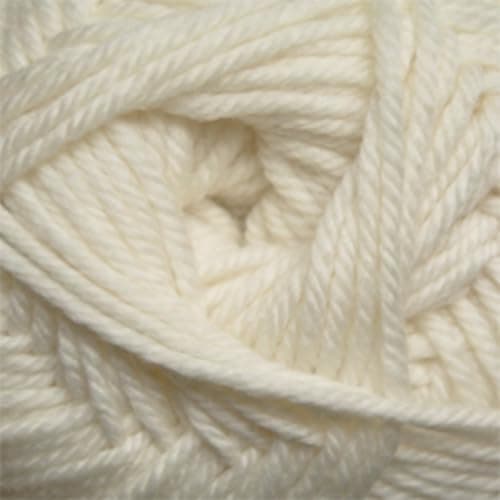
A cardigan needs more memory than a pullover, because the front opening and the button band carry weight and must hang straight. Cascade 220 Superwash Merino is the best all-round choice; untreated wool like Patons Classic Wool is better still for a structured or cabled cardigan, at the cost of hand washing.
| # | Product | Best for | Fiber | Yards/skein | Price |
|---|---|---|---|---|---|
| 1 | Cascade 220 Superwash MerinoMerino with the memory to hold a button band, and machine washable. | A cardigan that keeps its shape | 100% superwash merino | 220 | $19.00 - View on Amazon |
| 2 | 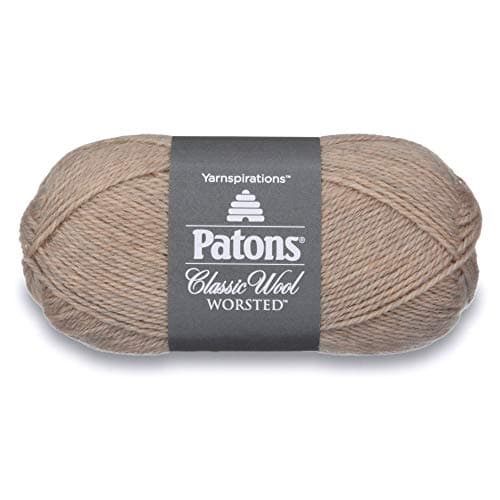 Patons Classic Wool WorstedUntreated wool blocks into shape and stays there - including the band. Patons Classic Wool WorstedUntreated wool blocks into shape and stays there - including the band. | A cardigan with cables or a crisp band | 100% wool | 194 | $11.79 - View on Amazon#ad disclosure - price as of October 19, 2026 |
| 3 | 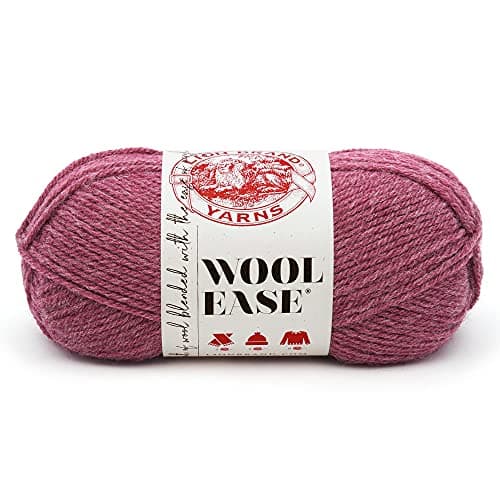 Lion Brand Wool-Ease80/20 acrylic-wool with enough spring for the band, machine wash and dry. Lion Brand Wool-Ease80/20 acrylic-wool with enough spring for the band, machine wash and dry. | A washable everyday cardigan | 80% acrylic, 20% wool | 197 | $11.77 - View on Amazon#ad disclosure - price as of October 19, 2026 |
| 4 | 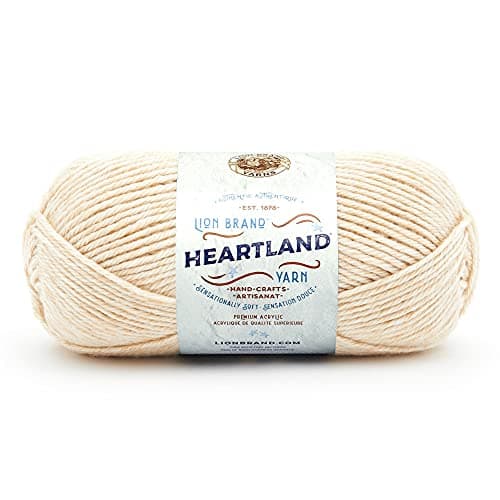 Lion Brand HeartlandSoft acrylic with drape, and no button band to sag. Lion Brand HeartlandSoft acrylic with drape, and no button band to sag. | A no-button, open-front cardigan | 100% acrylic (solids) | 251 | Check price on Amazon#ad disclosure |
| 5 | 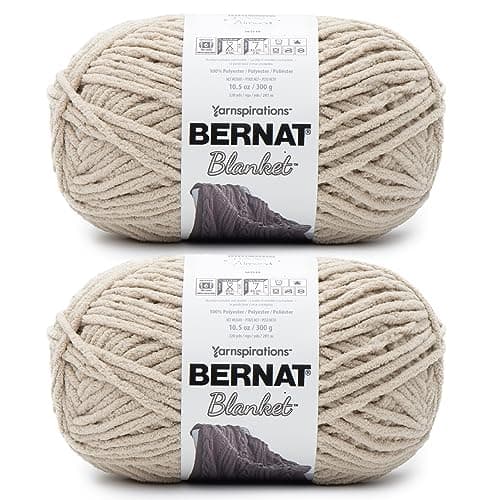 Bernat BlanketChenille makes a garment that is heavy, shapeless and shows nothing. Bernat BlanketChenille makes a garment that is heavy, shapeless and shows nothing. | Not cardigans | 100% polyester | 108 | $20.96 - View on Amazon#ad disclosure - price as of October 19, 2026 |
Cascade 220 Superwash Merino
Cascade Yarns · Best for a cardigan that keeps its shape
Machine-washable merino at 220 yards to the 100g skein - the standard answer when a sweater pattern says worsted and you want to be able to wash it.
- Fiber
- 100% superwash merino wool
- Skein
- 3.5oz / 100g, 220yd / 200m
- Gauge
- 20 sts x 28 rows in stockinette on US 7
- Weight class
- DK to light worsted
- Care
- Superwash treated - machine washable
Who it suits
Anyone knitting a cardigan they will wear weekly, which is the usual point of a cardigan.
Why it is here
100% superwash merino at 220 yards per 100g skein, 20 sts x 28 rows on US 7. Wool memory is what keeps a button band from sagging under the weight of buttons and a front opening.
What you give up
Superwash grows when blocked, and a long cardigan is the worst case for that - the weight is all vertical. Knit the body shorter than the pattern says and let the first wash bring it to length.
Specifications from Cascade Yarns product page. We have not handled this item - see how we pick.
Patons Classic Wool Worsted
Patons · Best for a cardigan with cables or a crisp band
100% non-superwash wool at supermarket money. It blooms when blocked, holds a cable, and it will felt if you put it in the machine.
- Fiber
- 100% wool (not superwash)
- Weight
- 4 Medium / worsted
- Ball
- 3.5oz / 100g, 194yd / 177m
- Gauge
- 20 sts x 26 rows on 4.5mm (US 7)
- Hook
- 5mm (US H/8), 14 sc x 17 rows
- Care
- Hand wash, lay flat to dry, do not machine wash
Who it suits
Anyone knitting a structured or cabled cardigan who is willing to hand wash it.
Why it is here
100% untreated wool, 194 yards per 100g ball, 20 sts x 26 rows on 4.5mm. Untreated wool keeps its scale grip, which is what lets a blocked button band hold a straight line.
What you give up
Hand wash and lay flat to dry. A full-size cardigan is a large thing to dry flat.
Specifications from Yarnspirations product page. We have not handled this item - see how we pick.
Lion Brand Wool-Ease
Lion Brand · Best for a washable everyday cardigan
An 80/20 acrylic-wool worsted that machine washes and dries, and is the single most sensible first step away from all-acrylic.
- Fiber
- 80% acrylic, 20% wool (solids, heathers, twists)
- Weight
- 4 Medium / worsted
- Skein
- 3oz / 85g, 197yd / 180m
- Sold as
- Single skein on the listing we link
- Gauge
- 18 sts x 24 rows on US 8 (5mm)
- Hook
- J-10 (6mm), 13.2 sc x 16 rows
- Care
- Machine wash, water not above 105F; machine dry
Who it suits
Anyone making a knockabout cardigan, or a first one where the cost of a mistake matters.
Why it is here
80% acrylic, 20% wool, 197 yards per 3oz skein, machine wash and machine dry. The wool fraction gives enough recovery that a ribbed band holds for a season or two.
What you give up
The band will relax faster than in pure wool. Work the button band tightly and consider a woven ribbon backing on the buttonhole side.
Specifications from Lion Brand product page. We have not handled this item - see how we pick.
Lion Brand Heartland
Lion Brand · Best for a no-button, open-front cardigan
A soft all-acrylic worsted in a 5oz skein - a lot of yardage per skein, which matters when a blanket needs eight of them.
- Fiber
- 100% acrylic (solids); 94% acrylic, 6% rayon (tweeds)
- Weight
- 4 Medium / worsted
- Skein
- 5oz / 142g, 251yd / 230m (solids)
- Gauge
- 16 sts x 22 rows on US 9 (5.5mm)
- Hook
- J-10 (6mm), 12 sc x 15 rows
- Care
- Machine wash gentle, tumble dry low, no bleach
Who it suits
Anyone making a long, open, no-closure cardigan where drape is the design.
Why it is here
100% acrylic at 251 yards per 142g skein and a looser published gauge of 16 sts x 22 rows on US 9 - a drapey fabric that hangs rather than stands.
What you give up
No memory at all, so this only works when there is nothing structural to hold. Put buttons on it and the band will sag.
Specifications from Lion Brand product page. We have not handled this item - see how we pick.
Bernat Blanket
Bernat · Best for not cardigans
Polyester chenille at 108 yards to a 150g ball. Fast, warm, machine washable, and it will shed and worm if the tension is loose.
- Fiber
- 100% polyester (chenille)
- Weight
- 6 Super Bulky
- Ball
- 5.3oz / 150g, 108yd / 98m
- Gauge
- 8 sts x 13 rows on 8mm (US 11)
- Hook
- 8mm (US L/11), 7 sc x 8 rows
- Care
- Machine wash delicate, tumble dry gentle
Who it suits
Nobody. Chunky chenille cardigans look appealing in a photo and behave badly as clothing.
Why it is here
Super bulky polyester chenille at 8 sts x 13 rows on 8mm. The fabric is heavy, has no memory, and shows no stitch definition at all.
What you give up
A chenille cardigan grows lengthwise under its own weight, the band cannot hold a button, and every design detail disappears into the pile.
Specifications from Yarnspirations product page. We have not handled this item - see how we pick.
Why a cardigan is harder than a pullover
A pullover is a closed tube. A cardigan is that tube cut down the front, with two vertical edges that must hang straight, meet cleanly and - usually - carry buttons.
Those edges are where cardigans fail. A band knitted in a yarn with no memory stretches under the weight of the fabric and the buttons, and once it has stretched it stays stretched: the fronts gape, the buttons pull, and the hem dips at the corners. No amount of blocking fixes it afterwards if the yarn has nothing to recover with.
That is why this page ranks wool and wool-blends above the pure acrylics, where the scarf page does the opposite. The project decides, not the fiber.
Getting the button band right
- Work the band tighter than the body. Most patterns pick up fewer stitches along the edge than there are rows, which is a deliberate compression - follow the ratio the pattern gives.
- Block the band flat and let it dry completely before sewing on buttons. Buttons on an unblocked band will sit wrong forever.
- Back the buttonhole band with grosgrain ribbon if the yarn has limited memory. It is a standard tailoring trick and it saves an acrylic cardigan.
- Choose lighter buttons than you want to. Weight is what pulls a band out of shape, and it is the one variable entirely under your control.
Weight and drape
Cardigans are worn open more often than closed, so drape matters more than in a pullover - but only below the band. The ideal is a fabric that drapes in the body and holds at the edges, which is why merino works so well: fine enough to hang, springy enough to hold.
If you want a genuinely drapey, flowing cardigan, the honest answer is to design out the problem: no buttons, no closure, a wide flat front band, and a soft acrylic or a cotton blend. That is what the Heartland pick above is for.
Yardage
A cardigan takes slightly more yarn than the equivalent pullover - the bands and the overlap add up. Take the pattern's stated yardage, convert it with the method in how to substitute yarn, and add one extra skein. Buy the whole garment in one dye lot; a cardigan shows a dye-lot change across the fronts more obviously than a pullover shows it anywhere.
How we picked
Specifications are the manufacturers' published figures, and the ranking weights memory heavily because the button band is where cardigans fail. We have not knitted or worn any of these. How we pick is the method; best yarn for a sweater covers the pullover version of this decision.
Questions people actually ask
What is the best yarn for a cardigan?
Superwash merino for an everyday washable cardigan, or untreated wool for a structured or cabled one. Both have the memory a button band needs; pure acrylic does not.
Why does my cardigan button band stretch out?
The yarn has no memory, or the band was knitted too loosely. Work the band tighter than the body, use a yarn with wool in it, choose lighter buttons, and back the buttonhole band with ribbon if needed.
Can I knit a cardigan in acrylic?
Yes, and it will be warm and washable. Expect the band and cuffs to relax. An open, no-button cardigan avoids the problem entirely and is a genuinely good use of soft acrylic.
How much yarn does a cardigan need?
Slightly more than a pullover of the same size, because of the bands and the front overlap. Take the pattern's yardage, convert to your yarn's skein count, and add one extra skein.
Should a cardigan be knitted in one piece or in panels?
That is a construction question rather than a yarn one, but seams add structure - a seamed cardigan holds its shape better in a yarn with weak memory, which can partly compensate for an acrylic.