The picks
Best Yarn for a Sweater Vest
No sleeves to hide behind. The fabric and the edges are the entire garment.
By Sawyer V. · Published October 11, 2026
Disclosure: we earn a commission when you buy through the links on this page, at no extra cost to you. It never decides what we recommend or how we rank it - read the full disclosure.
The short answer
Use a springy worsted wool. A sweater vest has no sleeves, which means the fabric and the finished edges are the entire garment and there is nowhere to hide an uneven stitch or a flaring armhole. Superwash merino is the best overall pick because its elasticity keeps the armhole and neck ribbing crisp and makes cables read clearly. Use untreated wool for stranded colorwork, where the floats need to grip and the pattern needs to block flat. A vest also takes roughly 40 percent less yarn than the same sweater, which makes a good yarn affordable.
| # | Product | Best for | Fiber | Price |
|---|---|---|---|---|
| 1 | Cascade 220 Superwash MerinoSuperwash merino - springy enough that the armhole and neck ribbing stays crisp, and it shows a cable properly. | A fitted vest with cables or texture, worn over a shirt | 100% superwash merino | $21.00 - View on Amazon#ad disclosure - price as of October 11, 2026 |
| 2 | 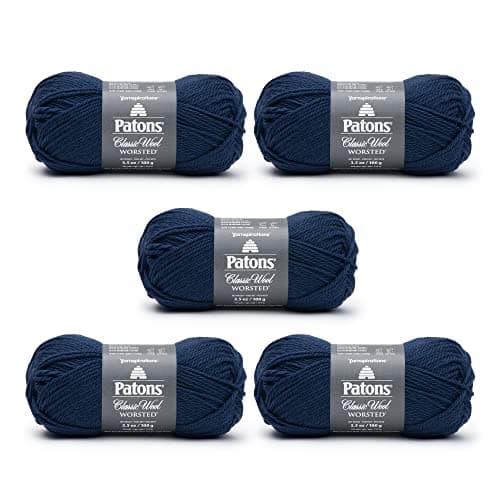 Patons Classic Wool WorstedUntreated wool - floats grip each other and the pattern blocks crisp, which is the whole point of a patterned vest. Patons Classic Wool WorstedUntreated wool - floats grip each other and the pattern blocks crisp, which is the whole point of a patterned vest. | A Fair Isle or argyle vest | 100% wool | $43.20 - View on Amazon#ad disclosure - price as of October 11, 2026 |
| 3 | 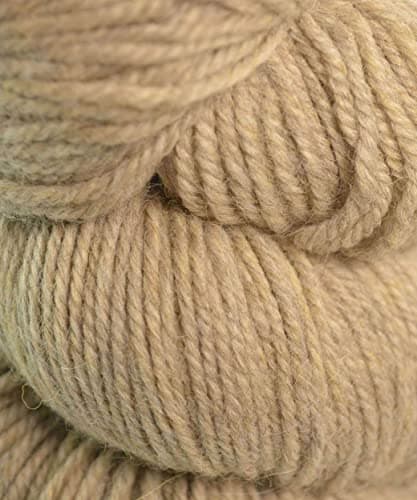 Berroco Ultra AlpacaWool-alpaca - softer and more fluid than pure wool, for a vest meant to hang rather than fit. Berroco Ultra AlpacaWool-alpaca - softer and more fluid than pure wool, for a vest meant to hang rather than fit. | A longline or relaxed vest worn as a layer | Wool and alpaca blend | $17.00 - View on Amazon#ad disclosure - price as of October 11, 2026 |
| 4 | 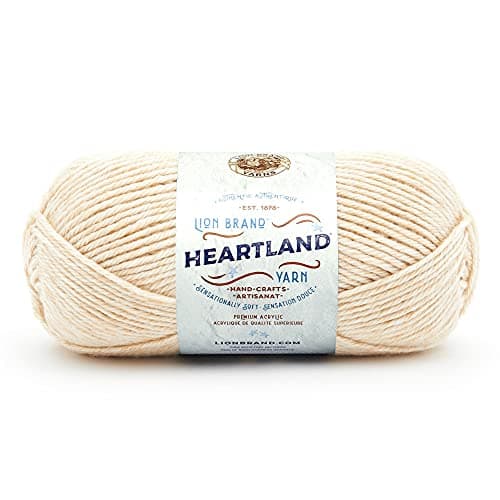 Lion Brand HeartlandHeathered acrylic that looks like a tweedy wool and goes in the machine. Lion Brand HeartlandHeathered acrylic that looks like a tweedy wool and goes in the machine. | A first vest, or one you want to machine wash | 100% acrylic, heathered | $13.57 - View on Amazon#ad disclosure - price as of October 11, 2026 |
| 5 | 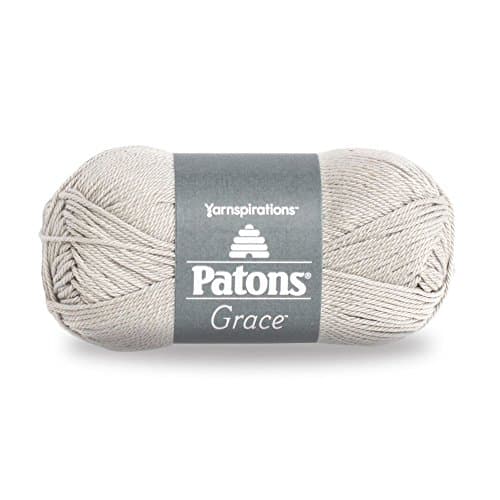 Patons GraceA hard-twist DK cotton - cool, crisp and with the stitch definition a textured vest needs. Patons GraceA hard-twist DK cotton - cool, crisp and with the stitch definition a textured vest needs. | A lightweight layering vest for spring or a warm office | 100% cotton | $7.99 - View on Amazon#ad disclosure - price as of October 11, 2026 |
| 6 | 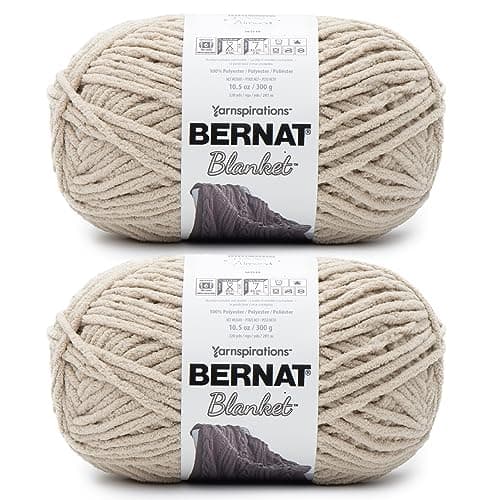 Bernat BlanketA super-bulky chenille vest is heavy, shapeless, and the armholes stretch into holes. Bernat BlanketA super-bulky chenille vest is heavy, shapeless, and the armholes stretch into holes. | Blankets | 100% polyester chenille | $20.96 - View on Amazon#ad disclosure - price as of October 11, 2026 |
Cascade 220 Superwash Merino
Cascade Yarns · Best for a fitted vest with cables or texture, worn over a shirt
Machine-washable merino at 220 yards to the 100g skein - the standard answer when a sweater pattern says worsted and you want to be able to wash it.
- Fiber
- 100% superwash merino wool
- Skein
- 3.5oz / 100g, 220yd / 200m
- Gauge
- 20 sts x 28 rows in stockinette on US 7
- Weight class
- DK to light worsted
- Care
- Superwash treated - machine washable
Who it suits
Anyone making a classic fitted vest, and anyone working cables or a textured panel.
Why it is here
100% superwash merino, 220yd per 100g, 20 sts x 28 rows on US 7, machine washable. A vest is judged on two things: how the fabric reads and how the edges sit. Merino's crimp gives the ribbing at the armholes and neck genuine recovery so they lie flat instead of flaring, and its springiness pushes cables and texture forward crisply.
What you give up
Merino pills, and a vest rubs under the arms against a shirt all day, which is one of the worst places for it. Superwash also grows a little when wet, so block to measurement rather than stretching.
Specifications from Cascade Yarns product page. We have not handled this item - see how we pick.
Patons Classic Wool Worsted
Patons · Best for a fair isle or argyle vest
100% non-superwash wool at supermarket money. It blooms when blocked, holds a cable, and it will felt if you put it in the machine.
- Fiber
- 100% wool (not superwash)
- Weight
- 4 Medium / worsted
- Ball
- 3.5oz / 100g, 194yd / 177m
- Gauge
- 20 sts x 26 rows on 4.5mm (US 7)
- Hook
- 5mm (US H/8), 14 sc x 17 rows
- Care
- Hand wash, lay flat to dry, do not machine wash
Who it suits
Anyone making the traditional patterned vest, which is most of what a vest is for.
Why it is here
100% wool, worsted weight, 194yd per 100g, 20 sts x 26 rows on 4.5mm. Stranded colorwork depends on the floats staying where you put them and on blocking locking the fabric into an even grid, and untreated wool does both better than any treated or synthetic yarn. A vest is also the classic colorwork garment precisely because there are no sleeves to knit twice.
What you give up
Hand wash only, and it felts if it goes in a machine. Untreated worsted wool can also prickle, which matters on a garment worn over a short-sleeved shirt where it touches bare arms at the armholes.
Specifications from Yarnspirations product page. We have not handled this item - see how we pick.
Berroco Ultra Alpaca
Berroco · Best for a longline or relaxed vest worn as a layer
Half alpaca, half Peruvian wool - the blend that gives alpaca's warmth and halo the structure alpaca on its own does not have.
- Fiber
- 50% super fine alpaca, 50% Peruvian wool
- Weight
- Worsted
- Hank
- 3.5oz / 100g, 219yd / 200m
- Gauge
- 5 sts to 1in; 20 sts x 26 rows over 4in on US 8 (5mm)
- Care
- Hand wash in cool water, lay flat to dry
- Made in
- Peru
Who it suits
Anyone making a longline, oversized or waistcoat-style vest rather than a fitted one.
Why it is here
A wool and alpaca blend. Alpaca has very little crimp, which gives the fabric a heavier, more fluid drape than pure wool - wrong for a fitted vest, right for one that hangs. The wool content keeps enough elasticity that the edges still behave.
What you give up
The extra drape means more growth under the garment's own weight, so a long vest will lengthen. Alpaca also sheds slightly and is warmer than wool, which is a lot for a layering piece.
Specifications from Berroco - Ultra Alpaca. We have not handled this item - see how we pick.
Lion Brand Heartland
Lion Brand · Best for a first vest, or one you want to machine wash
A soft all-acrylic worsted in a 5oz skein - a lot of yardage per skein, which matters when a blanket needs eight of them.
- Fiber
- 100% acrylic (solids); 94% acrylic, 6% rayon (tweeds)
- Weight
- 4 Medium / worsted
- Skein
- 5oz / 142g, 251yd / 230m (solids)
- Gauge
- 16 sts x 22 rows on US 9 (5.5mm)
- Hook
- J-10 (6mm), 12 sc x 15 rows
- Care
- Machine wash gentle, tumble dry low, no bleach
Who it suits
Anyone making their first garment, and anyone who will not hand wash a vest.
Why it is here
100% acrylic, worsted weight, machine wash and dry. A vest is the right first garment - no sleeves, no sleeve caps, far less yarn - and doing it in an inexpensive yarn means a fitting mistake is not expensive. The heathering also hides minor tension unevenness, which a first garment will have.
What you give up
Acrylic has poor recovery, so the armhole and neck ribbing will relax and can flare over time. It also does not block: whatever shape comes off the needles is permanent.
Specifications from Lion Brand product page. We have not handled this item - see how we pick.
Patons Grace
Patons · Best for a lightweight layering vest for spring or a warm office
A smooth DK cotton with a hard twist and a sheen - the drapey cotton most crochet garment patterns are written for.
- Fiber
- 100% cotton
- Weight
- 3 DK (light)
- Ball
- 50g (1.8oz), 136yd (125m)
- Knit gauge
- 24 sts x 32 rows on 3.75mm (US 5)
- Crochet gauge
- 21 sc x 24 rows on 3.75mm (US F/5)
- Care
- Hand wash cool, dry flat, no bleach, no iron
Who it suits
Anyone making a vest to wear indoors year-round rather than for warmth.
Why it is here
100% cotton, DK weight, 50g at 136yd, 24 sts x 32 rows on 3.75mm. The hard twist is why this works where soft cotton would not: it resists the elongation that makes cotton garments sag, and it holds a stitch pattern crisply. A cotton vest is also genuinely wearable in a heated office where a wool one is not.
What you give up
Cotton has no recovery, so the armhole and neck edges need a firm finish or they will stretch out. Hand wash and dry flat, and it is a slower knit at DK weight.
Specifications from Yarnspirations - Patons Grace specification. We have not handled this item - see how we pick.
Bernat Blanket
Bernat · Best for blankets
Polyester chenille at 108 yards to a 150g ball. Fast, warm, machine washable, and it will shed and worm if the tension is loose.
- Fiber
- 100% polyester (chenille)
- Weight
- 6 Super Bulky
- Ball
- 5.3oz / 150g, 108yd / 98m
- Gauge
- 8 sts x 13 rows on 8mm (US 11)
- Hook
- 8mm (US L/11), 7 sc x 8 rows
- Care
- Machine wash delicate, tumble dry gentle
Who it suits
Nobody. The weight problem that makes chenille wrong for garments is worst where there are cut edges.
Why it is here
100% polyester chenille at super bulky. A vest's armholes and neck are unsupported edges carrying the garment's weight, and chenille has no recovery to resist that - the openings widen permanently. At super bulky the fabric is also thick enough that a vest reads as a sandwich board rather than a layer.
What you give up
None here. Make the blanket.
Specifications from Yarnspirations product page. We have not handled this item - see how we pick.
What losing the sleeves changes
A vest looks like an easier sweater and in construction terms it is. In materials terms it is slightly harder, because two things the sleeves were hiding are now exposed.
- The armhole edges carry load with nothing supporting them. On a sweater the sleeve stabilizes the armhole. On a vest the edge is free, and a yarn without recovery lets it stretch and flare within a season.
- The fabric is the design. No sleeve detail, no cuffs - just a body panel. Uneven tension and poor stitch definition show in a way they do not on a sleeved garment.
- It is worn against bare arms. Over a short-sleeved shirt, the armhole edge touches skin. A wool that is fine over long sleeves can prickle here.
- It rubs under the arms constantly, which is the worst case for pilling, and it is the first place a vest looks tired.
- It uses far less yarn, which changes what you can afford - see below.
How much yarn it saves
| Garment | Yardage | Relative to a sweater |
|---|---|---|
| Sweater vest, fitted | 700-900yd | About 60% |
| Sweater vest, longline | 900-1,100yd | About 75% |
| Pullover, long sleeve | 1,200-1,500yd | 100% |
| Cardigan, long sleeve | 1,300-1,600yd | About 110% |
| Vest in DK | 900-1,200yd | More stitches, finer yarn |
Saving 40 percent of the yarn is the practical argument for making a vest in a yarn you would not buy a sweater quantity of. It is also why vests are the traditional colorwork garment - a Fair Isle vest is an achievable project where a Fair Isle pullover with two sleeves is a winter's work.
Fit notes that depend on the yarn
- Choose your ease before your yarn. A fitted vest worn over a shirt wants an inch or two of positive ease; a longline layering vest wants six or more. The drape you need differs completely between those.
- Swatch and hang the swatch. A vest is a vertical panel carrying its own weight. Hang a washed swatch with a weight on it for a day and measure - that is your real row gauge.
- Check the armhole depth against a shirt you actually wear. Vests are commonly made too shallow, and it is the one thing you cannot fix afterwards.
- Block to measurement, not bigger. Superwash wool especially will take whatever size you block it to and keep it.
- In cotton, build in negative ease at the bust and accept it will grow into the right size.
If you decide you want sleeves after all, best yarn for a sweater and best needles for a sweater carry on from here, and best yarn for colorwork covers the stranded side in depth.
Questions people actually ask
What is the best yarn for a sweater vest?
A springy worsted wool. Superwash merino is the best all-round pick because its elasticity keeps the armhole and neck ribbing crisp - the edges are exposed on a vest in a way they are not on a sweater - and it shows cables and texture clearly.
How much yarn do I need for a sweater vest?
Roughly 700 to 900 yards in worsted weight for a fitted adult vest, and 900 to 1,100 for a longline one. That is about 60 percent of what the same sweater with sleeves would take, which is why a vest is a good way to use a yarn you could not afford a sweater quantity of.
What yarn for a Fair Isle or argyle vest?
Untreated wool. Stranded colorwork depends on the floats gripping each other and on blocking locking the fabric into an even grid, and untreated wool does both better than superwash or synthetic yarn. A vest is the classic colorwork garment because there are no sleeves to knit twice.
Why do my vest armholes stretch out?
The edge is unsupported and the yarn has poor recovery. Pick up and knit a ribbed or i-cord band rather than leaving a rolled edge, work it a needle size down, and in cotton or acrylic add a row of crochet slip stitch inside the band to stop it growing.
Can you make a sweater vest in cotton?
Yes, and it is the right choice for a vest worn indoors year-round. Use a hard-twist cotton rather than a soft-spun one - the tight twist resists the sagging that makes cotton garments drop - and finish the armhole and neck edges firmly, because cotton has no recovery.
Is a sweater vest a good first garment?
It is one of the best. There are no sleeves, no sleeve caps and no second sleeve to lose interest in, and it uses about 40 percent less yarn, so a fitting mistake costs much less. Make the first one in an inexpensive heathered acrylic, which also hides early tension unevenness.
Sources
- Craft Yarn Council - Standard Yarn Weight System
- Cascade Yarns - 220 Superwash Merino specification
- Yarnspirations - Patons Classic Wool Worsted specification
- Berroco - Ultra Alpaca specification
- Lion Brand - Heartland specification
- Yarnspirations - Patons Grace specification
- Yarnspirations - Bernat Blanket specification