Guide
Best Crochet Hook for Wool Yarn
Wool is sticky, superwash is not, and the same hook cannot be right for both.
By Sawyer V. · Published September 4, 2026
Disclosure: we earn a commission when you buy through the links on this page, at no extra cost to you. It never decides what we recommend or how we rank it - read the full disclosure.
The short answer
For untreated wool, buy a smooth metal hook: aluminum is slick enough to move through a fiber that grips by nature. For superwash wool the opposite applies - the coating makes it slippery, so a hook with more grip and a slightly more positive head helps. Start at the ball band size and go down half a size if the fabric is floppy.
Wool grips the hook. That is the whole problem
Wool fiber has a scaled surface. Those scales are why wool felts, why it holds a shape after blocking, and why it clings to itself in a way cotton and acrylic do not.
In crochet that clinginess is mostly an advantage: the fabric holds together, the stitches sit where you put them, and mistakes are easy to unpick without the whole row escaping. It becomes a problem at exactly one moment - when you are pulling a loop through a stitch that does not want to let go.
So the fix is a slick hook. Polished aluminum moves through wool with less drag than bamboo or resin, which is why our lead pick for untreated wool is a plain aluminum hook rather than the more comfortable ergonomic one.
Superwash reverses the advice
Superwash wool has been treated to stop it felting - typically by stripping or coating the scales. Our superwash versus non-superwash page covers what that does to the fiber.
For hook choice, the consequence is simple: superwash is slippery where untreated wool is grabby. Stitches slide, the fabric grows, and a very slick hook makes it worse.
| Yarn | Behavior | Hook to reach for |
|---|---|---|
| Untreated wool | Grabby, springy, felts | Polished aluminum, any head shape |
| Superwash wool | Slick, drapes, grows | Bamboo or a cushioned aluminum hook; go down half a size |
| Wool blends with acrylic | Between the two, less spring | Aluminum or the mid-profile rounded head |
| Merino, untreated | Soft, weak plies, splits | Tapered head - it gathers the strand rather than splitting it |
Head shape for wool
Untreated wool is usually plied firmly enough that splitting is not the main risk, so either geometry works. Soft merino singles are the exception - they split readily and a tapered head handles them better, as in-line vs tapered explains.
The bigger factor with wool is that it forgives you. A stitch worked slightly wrong in wool can be eased into shape by blocking, which is not true of cotton or acrylic. That is a genuine reason to learn on wool despite the price.
Sizes: start at the band, then adjust
Wool ball bands quote a knitting gauge more often than a crochet one, and crochet consumes more yarn per square inch than knitting - roughly a third more for the same fabric area.
- Worsted wool (CYC 4): the band says 5.0-5.5mm. Start at 5.0mm for a garment, 4.5mm for anything that needs to hold its shape.
- DK wool (CYC 3): start at 4.0mm.
- Aran and chunky (CYC 5): start at 6.0-6.5mm and expect the fabric to be quite dense.
- Fingering (CYC 1): 3.0-3.5mm for shawls, 2.5mm if you want a firm fabric.
Those weight bands come from the Craft Yarn Council standard, and the yardage arithmetic is on our how much yarn do I need page.
Blocking is not optional with wool
This is the part that most changes a finished piece. Wool responds to wet blocking in a way acrylic simply cannot: the fibers relax, the stitches even out, and a piece that looked uneven off the hook becomes flat and regular.
If you have crocheted only in acrylic and been unimpressed by your own stitch consistency, a wool project plus a proper block is the cheapest improvement available. Our blocking mats page covers the surface, and blocking superwash wool covers the treated case, which behaves differently.
What we would buy
- Untreated wool: a Susan Bates Silvalume hook, because slick beats sticky here.
- A long project in wool: the Clover Amour set, for the grip in your hand rather than on the yarn.
- The yarn itself: Patons Classic Wool Worsted is the standard untreated worsted, and Cascade 220 Superwash Merino is the standard treated one.
- For finishing: blocking mats. With wool, blocking does more for the result than the hook does.
What we would buy for wool
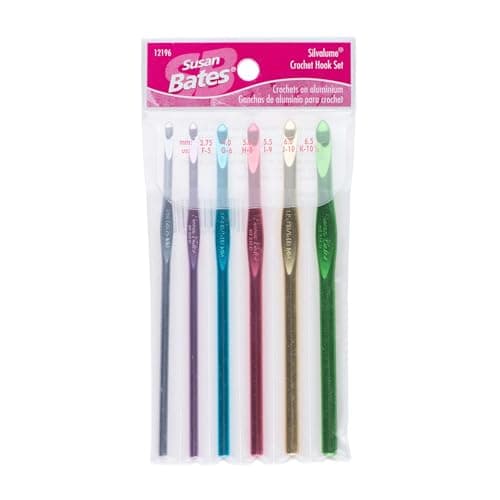
Susan Bates Silvalume Aluminum Crochet Hooks
Polished aluminum with an in-line head - slick enough to move through sticky untreated wool without fighting it.
$11.64 - View on Amazon#ad disclosure - price as of October 19, 2026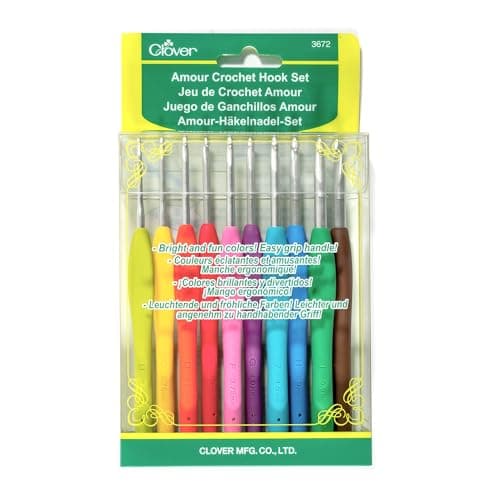
Clover Amour Crochet Hook Set
The comfortable default for a long project in wool, with a rounded head that handles both treated and untreated.
$52.41 - View on Amazon#ad disclosure - price as of October 19, 2026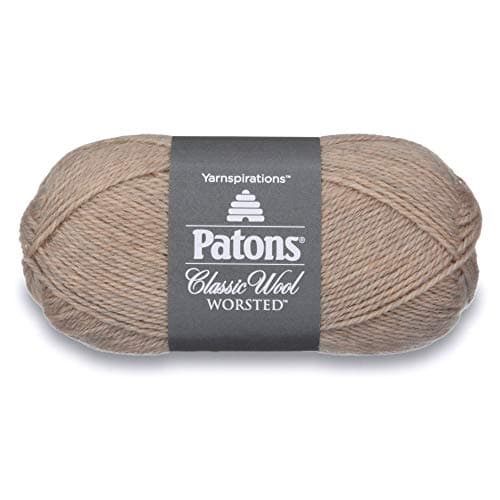
Patons Classic Wool Worsted
The untreated worsted wool most of this page is written about - 100% wool, worsted weight, widely stocked.
$11.79 - View on Amazon#ad disclosure - price as of October 19, 2026
Questions people actually ask
What hook is best for wool yarn?
A polished aluminum hook for untreated wool, because wool grips by nature and a slick hook moves through it. For superwash wool, which is slippery, a bamboo or cushioned hook and a half size down works better.
What size crochet hook for worsted weight wool?
5.0mm as a starting point, or 4.5mm if the piece needs to hold its shape. Wool ball bands usually quote a knitting gauge, so swatch before committing to a garment.
Does wool split when you crochet it?
Firmly plied wool rarely does. Soft merino singles split readily, and a tapered head - Boye rather than Susan Bates - gathers the strand instead of pushing between plies.
Is wool good for beginners to crochet with?
Yes, apart from the price. Wool grips itself so stitches stay put, mistakes unpick cleanly, and blocking evens out uneven tension in a way acrylic cannot.
Do I need to block crocheted wool?
For anything that should lie flat or hold a shape, yes. Wet blocking relaxes the fibers and evens the stitches, and it is the single biggest visible improvement available on a wool piece.