Reference
Knitting Abbreviations Explained
A pattern is a notation system. Once you can read it, the knitting is the easy part.
By Sawyer V. · Published September 6, 2026
Disclosure: we earn a commission when you buy through the links on this page, at no extra cost to you. It never decides what we recommend or how we rank it - read the full disclosure.
The short answer
Knitting abbreviations fall into five groups: basic stitches (k, p), increases (m1, kfb, yo), decreases (k2tog, ssk, sk2p), shaping and placement (pm, sm, w&t), and punctuation - asterisks and brackets, which mark what to repeat. Learn the punctuation first; it is what makes a pattern readable.
The basics
| Abbr. | Means |
|---|---|
| k | Knit |
| p | Purl |
| st, sts | Stitch, stitches |
| CO | Cast on |
| BO | Bind off (UK: cast off) |
| RS / WS | Right side / wrong side of the fabric |
| rep | Repeat |
| rnd | Round - knitting in a circle rather than a row |
| tbl | Through the back loop - twists the stitch |
| sl | Slip a stitch without working it |
| wyif / wyib | With yarn in front / with yarn in back |
| beg | Beginning |
| cont | Continue |
| patt | Pattern |
Increases
There is more than one way to add a stitch, and they look different in the fabric. Patterns specify which because the choice is visible.
| Abbr. | Means | Appearance |
|---|---|---|
| yo | Yarn over | Leaves a deliberate hole - the basis of lace |
| kfb | Knit front and back | A small bar; easy, slightly visible |
| m1 | Make one | Nearly invisible; lifts the bar between stitches |
| m1l / m1r | Make one left / right | Leans in the direction named |
| inc | Increase | Generic - the pattern should say which |
| kll / krl | Knit left loop / right loop | Lifts from the row below; very tidy |
If a pattern just says inc and gives no method, kfb is the safe default for a beginner and m1 is the tidier choice once you are comfortable.
Decreases, and which way they lean
This is the group worth learning properly, because paired decreases mirroring each other is what makes shaping look deliberate rather than accidental.
| Abbr. | Means | Leans | Stitches lost |
|---|---|---|---|
| k2tog | Knit two together | Right | 1 |
| ssk | Slip, slip, knit | Left | 1 |
| p2tog | Purl two together | Right on the knit side | 1 |
| k3tog | Knit three together | Right | 2 |
| sk2p | Slip 1, k2tog, pass slipped stitch over | Left | 2 |
| cdd / s2kp | Centered double decrease | Neither - stands upright | 2 |
| dec | Decrease | Generic - the pattern should say which | 1 |
Shaping, placement and short rows
| Abbr. | Means |
|---|---|
| pm | Place marker |
| sm | Slip marker - move it from one needle to the other |
| rm | Remove marker |
| w&t | Wrap and turn - a short row technique |
| pu / pick up | Pick up and knit stitches along an edge |
| MC / CC | Main color / contrast color |
| EOR | Every other row |
| rem | Remaining |
| foll | Following |
| alt | Alternate |
| approx | Approximately |
Markers are the most-used item on that list, which is why we treat them as required equipment rather than an accessory - see best stitch markers.
The punctuation, which is the actual skill
Abbreviations are vocabulary and you can look them up. The brackets and asterisks are grammar, and they are what makes a pattern dense.
- Asterisks. `*k2, p2; rep from * to end` means work k2, p2 over and over until the row runs out.
- Square brackets. `[k2, yo, k2tog] 5 times` means work everything inside the brackets, five times.
- Round brackets after a number. `k10 (12, 14, 16)` gives the count for each size, smallest first. Circle your size on the pattern before you start.
- Semicolons inside a repeat separate the steps; the repeat ends where the instruction after the asterisk tells it to.
- A stitch count at the end of a row, often in brackets or italics, tells you what you should have. Check it every time.
That third one causes more ruined garments than every abbreviation combined. Highlight your size throughout the pattern before you cast on.
How to read a pattern the first time
- Read it all the way through before starting. Including the finishing section, which is where the surprises live.
- Circle your size everywhere it appears.
- Write out any unfamiliar abbreviation in the margin in plain words.
- Note the gauge and swatch to it. See gauge and swatching.
- Check the finished measurements against standard garment measurements and against a garment you already own.
- Check the stitch count at the end of every shaped row. Catching a mistake takes a minute; finding it twenty rows later costs an evening.
US and UK knitting terms barely differ
Unlike crochet, where the two traditions use the same words for different stitches, knitting terminology is almost identical across both. The differences are small.
- Bind off (US) is cast off (UK).
- Gauge (US) is tension (UK).
- Stockinette (US) is stocking stitch (UK).
- Yarn weight names differ - worsted and DK are not the same thing.
- Needle sizing differs - US numbers against UK numbers, and they run in opposite directions. See the needle size chart.
The crochet situation is genuinely dangerous by comparison, and it has its own page: crochet abbreviations, US vs UK.
What makes a pattern easier to follow
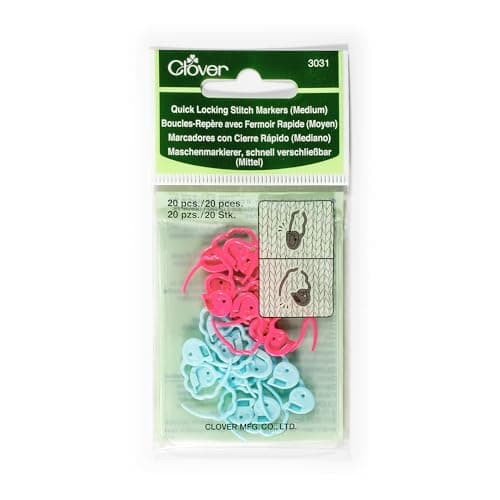
Clover Quick Locking Stitch Markers, Medium
Markers at every pattern repeat catch a mistake within one repeat instead of at the end of the row.
$8.00 - View on Amazon#ad disclosure - price as of October 21, 2026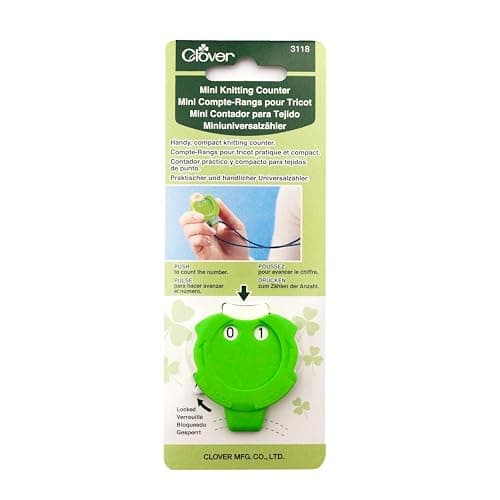
Clover Knitting Counter (Kacha-Kacha)
For patterns whose shaping is given in rows - decrease every 6th row, twelve times.
$9.62 - View on Amazon#ad disclosure - price as of October 21, 2026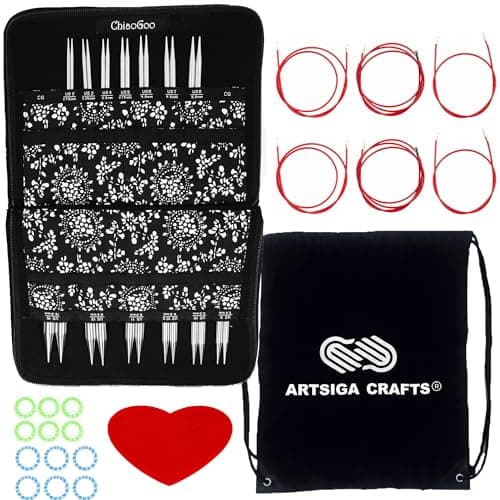
ChiaoGoo TWIST Red Lace Interchangeable Set (Complete, 5in tips)
Sharp tips, because ssk, k2tog and k3tog are where a blunt needle costs you time.
$216.80 - View on Amazon#ad disclosure - price as of October 21, 2026
Questions people actually ask
What does k2tog mean in knitting?
Knit two together - a decrease that removes one stitch and leans to the right. Its mirror is ssk, which removes one stitch and leans left; patterns pair them so shaping mirrors itself.
What is the difference between k2tog and ssk?
The direction they lean. k2tog leans right and ssk leans left. On a raglan or sleeve cap you use one at each edge, and swapping them is the usual reason home-knitted shaping looks wrong.
What do the brackets in a knitting pattern mean?
Square brackets group instructions to repeat a stated number of times. Round brackets after a number give the count for each size, smallest first - circle your size throughout before you cast on.
What does m1 mean in knitting?
Make one - an almost invisible increase that lifts the bar between two stitches and knits into it. m1l and m1r specify which way it leans.
Are US and UK knitting abbreviations different?
Barely. Bind off is cast off, gauge is tension, stockinette is stocking stitch, and needle sizing and yarn weight names differ. Crochet is the craft where the two traditions genuinely conflict.