Reference
Crochet Abbreviations: US vs UK
The same six words mean two different sets of stitches. This is the table that stops the disaster.
By Sawyer V. · Published September 6, 2026
Disclosure: we earn a commission when you buy through the links on this page, at no extra cost to you. It never decides what we recommend or how we rank it - read the full disclosure.
The short answer
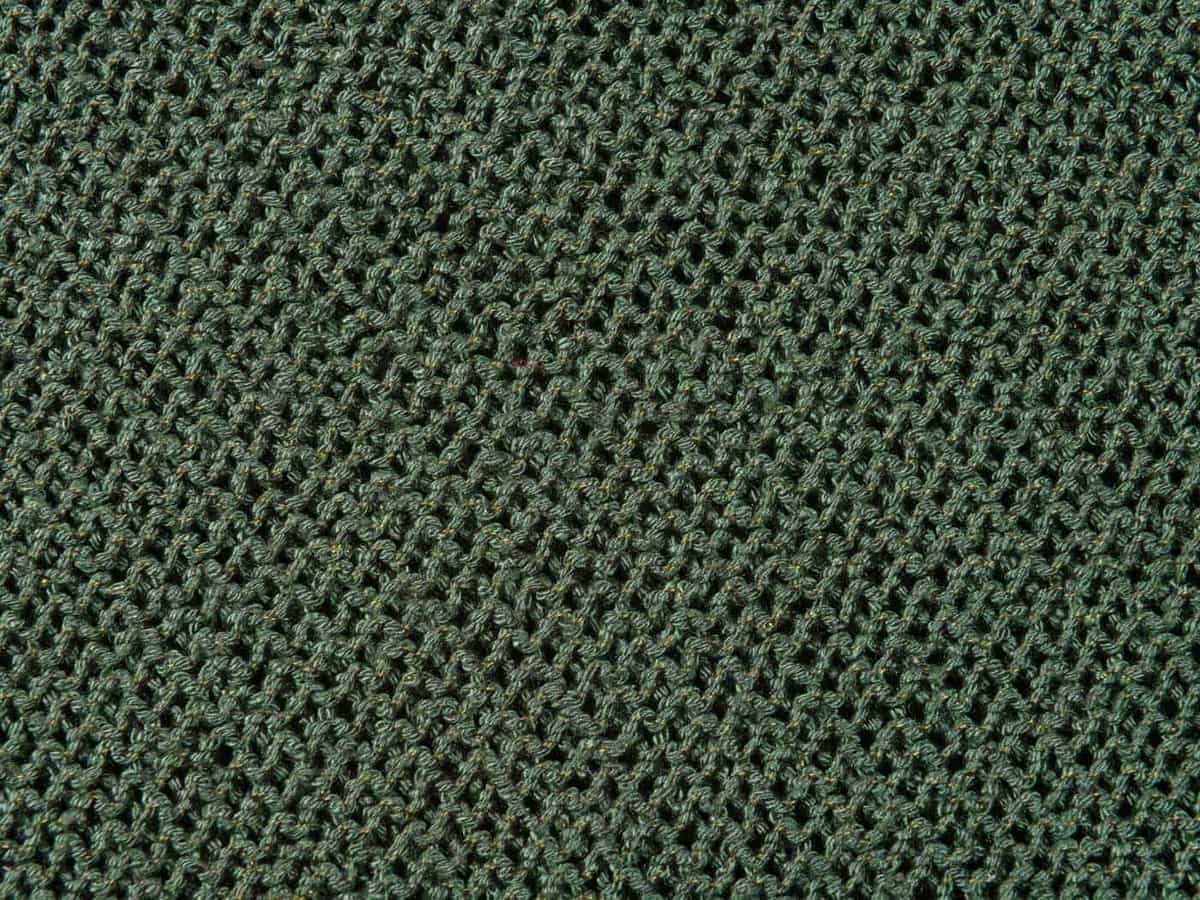
US and UK crochet terms use the same words for different stitches. Every UK term names the stitch one taller than the US term of the same name: UK double crochet is US single crochet, UK treble is US double, and so on. UK terminology has no equivalent of the US word single crochet at all.
The conversion table
| US term | US abbr. | UK term | UK abbr. |
|---|---|---|---|
| Slip stitch | sl st | Slip stitch | sl st or ss |
| Single crochet | sc | Double crochet | dc |
| Half double crochet | hdc | Half treble | htr |
| Double crochet | dc | Treble | tr |
| Treble crochet | tr | Double treble | dtr |
| Double treble | dtr | Triple treble | trtr |
| Triple treble | trtr | Quadruple treble | quadtr |
How to tell which system a pattern uses
Most patterns state it. When one does not, there are four reliable tells.
- Look for the abbreviation sc. If it appears anywhere, the pattern is US. There is no UK stitch abbreviated sc.
- Look for the word treble. If trebles appear early and often but there is no sc, it is almost certainly UK.
- Check the hook size units. A pattern quoting hook sizes as letters (H-8, J-10) is American. Millimeters alone are used everywhere and tell you nothing.
- Check the yarn weight name. Aran, DK and 4-ply are British usage; worsted, sport and fingering are American. See the yarn weight chart.
One more clue: if the pattern says gauge it is American, and if it says tension it is British. They mean the same thing, and how to measure it is on our gauge and swatching page.
What happens when you get it wrong
You do not get a broken pattern. You get a fabric that is roughly half or double the height it should be, with the stitch counts still correct - which is why people get several inches in before something feels wrong.
A US double crochet is about three times the height of a US single crochet. Work a UK pattern's dc as a US dc and every row is three times too tall: a blanket comes out enormously long and thin, and a garment does not fit anything.
The abbreviations both systems share
Everything below is common ground. These mean the same thing in both traditions.
| Abbr. | Means | Note |
|---|---|---|
| ch | Chain | The foundation and the turning stitch |
| st, sts | Stitch, stitches | |
| sp | Space | As in ch-1 sp - the gap made by a chain |
| rep | Repeat | |
| yo | Yarn over | UK patterns sometimes write yoh |
| blo / flo | Back loop only / front loop only | Which of the two top loops to work into |
| inc / dec | Increase / decrease | |
| 2tog | Two together | Attached to a stitch name: sc2tog, dc2tog |
| rnd | Round | As opposed to a row |
| RS / WS | Right side / wrong side | |
| beg | Beginning | |
| tch | Turning chain | The chains at the start of a row that stand in for a stitch |
| magic ring | Adjustable loop start | Also magic circle, MR, MC |
Turning chains, which differ by stitch height
A turning chain lifts the hook to the height of the row you are about to work. The number of chains depends on the stitch, which is one more reason a US/UK mix-up compounds.
- Single crochet (US): 1 chain, and it does not count as a stitch.
- Half double crochet (US): 2 chains.
- Double crochet (US): 3 chains, and it usually does count as a stitch.
- Treble (US): 4 chains.
Whether the turning chain counts as a stitch is the single most common source of a stitch count drifting by one per row. The pattern should say; if it does not, count your stitches after row three and again after row six.
Symbol charts sidestep the whole problem
International crochet symbol charts use a picture for each stitch - a cross for single crochet, a T with one bar for half double, and so on. Because the symbol shows the stitch height directly, a chart is unambiguous regardless of which country wrote it.
If you work from charts you never have to worry about US versus UK again. Learning to read one takes an afternoon and is worth doing before any large project from an unfamiliar source.
Converting a pattern safely
- Establish the system before you buy yarn. Different stitch heights mean different yardage.
- Write the conversion at the top of the pattern. dc = sc, tr = dc, and so on, in your own handwriting.
- Work a swatch of ten stitches and five rows. If the fabric height looks wrong for the stitch name, you have the systems crossed.
- Check the finished measurements against the stitch count. If the pattern says 40 stitches makes 8 inches and yours makes 12, stop.
The Craft Yarn Council publishes the American abbreviation standard that most US patterns follow, and it is the reference this table uses on the US side.
What you need alongside a pattern
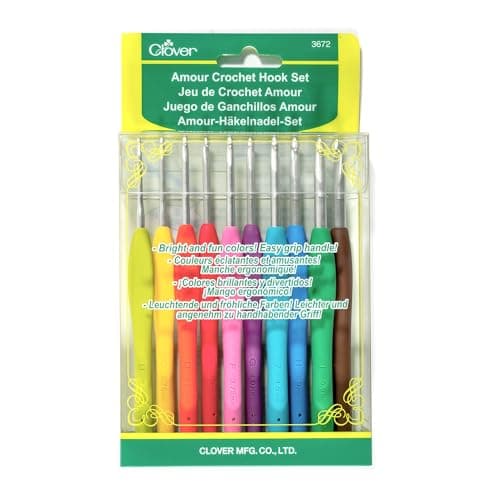
Clover Amour Crochet Hook Set
Ten hooks from B/2.25mm to J/6.0mm, so whichever size the pattern names, you own it.
$49.67 - View on Amazon#ad disclosure - price as of October 22, 2026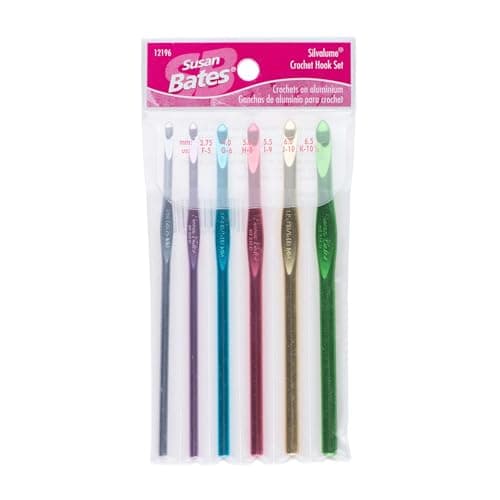
Susan Bates Silvalume Aluminum Crochet Hooks
The budget way to cover 2.25mm to 10mm, and the in-line head that handles a tight stitch.
$11.57 - View on Amazon#ad disclosure - price as of October 22, 2026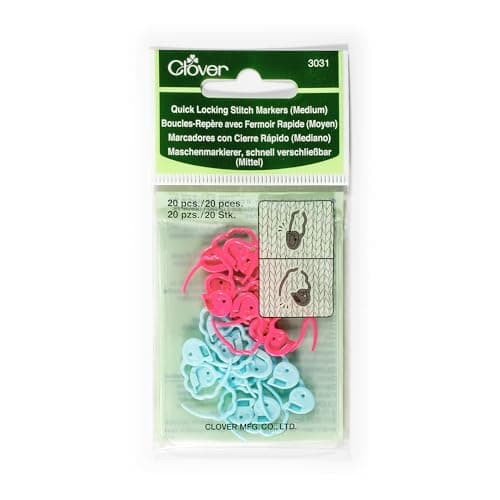
Clover Quick Locking Stitch Markers, Medium
Locking markers, which crochet needs rather than prefers - there is no needle to hang a ring on.
$8.00 - View on Amazon#ad disclosure - price as of October 22, 2026
Questions people actually ask
What is the difference between US and UK crochet terms?
Every UK term names the stitch one taller than the US term of the same name. UK double crochet is US single crochet, UK treble is US double crochet, and UK terminology has no equivalent of the US phrase single crochet.
How do I know if a pattern is US or UK terms?
Look for the abbreviation sc - if it appears, the pattern is US, because no UK stitch is abbreviated sc. Trebles early and often with no sc means UK. Letter hook sizes and the word gauge are American; tension is British.
What is dc in UK crochet?
Double crochet in UK terms is the shortest basic stitch - the same stitch Americans call single crochet. In US terms, dc means double crochet, which is about three times taller.
What happens if I use the wrong crochet terms?
The stitch counts stay correct but every row is the wrong height, so the fabric comes out roughly half or three times the intended length. It usually takes several inches before it feels wrong.
Do crochet symbol charts avoid the US/UK problem?
Yes. International symbol charts draw each stitch at its own height, so the chart shows what to do regardless of which country wrote the pattern.