Reference
Yarn Weight Names Around the World
Aran, worsted, 10-ply and category 4 are four names for one yarn. Here they are side by side.
By Sawyer V. · Published September 7, 2026
Disclosure: we earn a commission when you buy through the links on this page, at no extra cost to you. It never decides what we recommend or how we rank it - read the full disclosure.
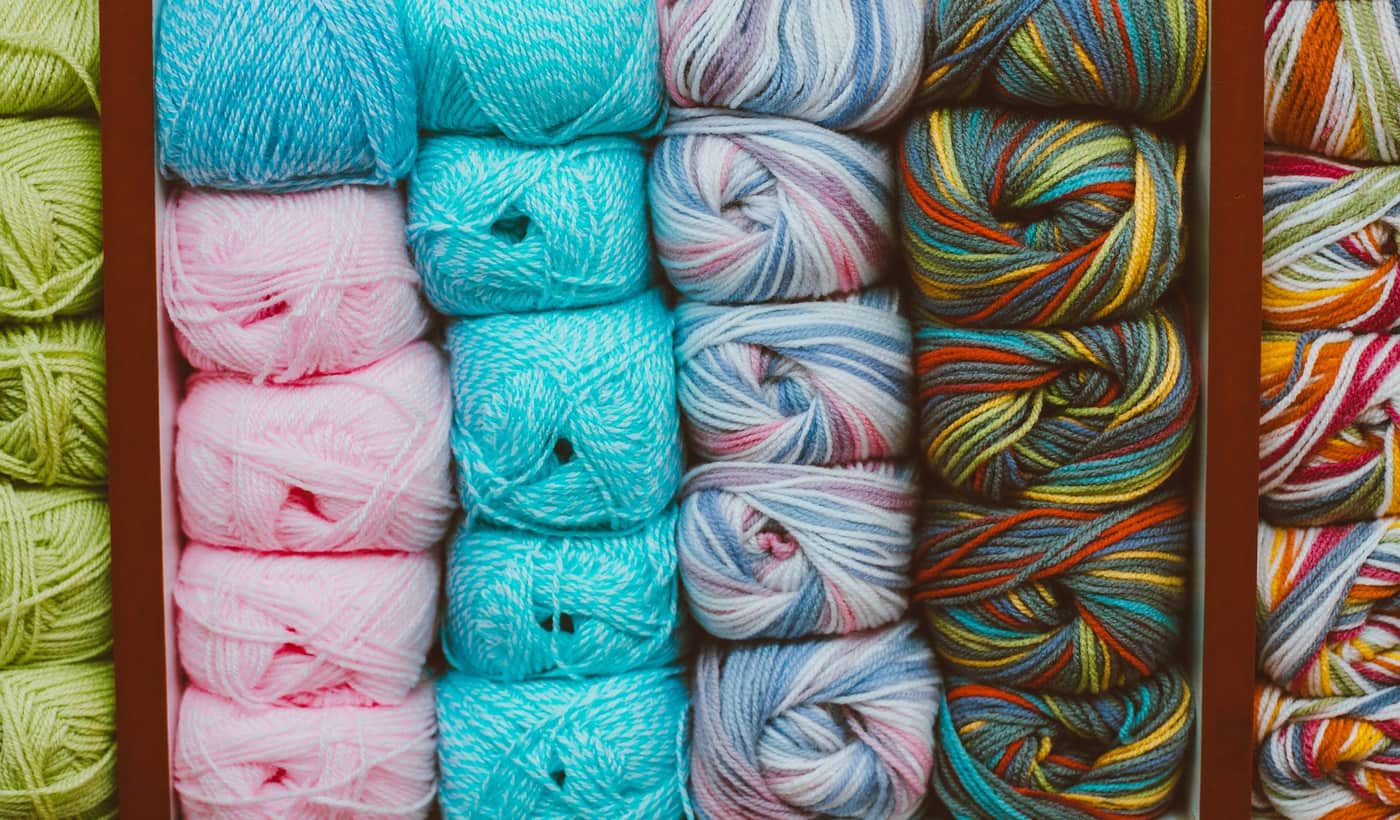
The short answer
American, British and Australian yarn weight names do not match. UK aran is roughly US worsted; UK DK is between US sport and worsted; UK and Australian ply numbers count strands historically rather than describing thickness now. The Craft Yarn Council number, printed on most American ball bands, is the reliable common reference.
The conversion table
| CYC | United States | United Kingdom | Australia / NZ | Knit gauge per 4in |
|---|---|---|---|---|
| 0 | Lace | 1-ply, 2-ply, lace | 1-ply, 2-ply | 33-40 sts |
| 1 | Super fine, fingering, sock | 4-ply | 4-ply | 27-32 sts |
| 2 | Fine, sport, baby | 5-ply, light DK | 5-ply | 23-26 sts |
| 3 | Light, DK | DK, 8-ply | 8-ply | 21-24 sts |
| 4 | Medium, worsted, afghan | Aran, 10-ply | 10-ply | 16-20 sts |
| 5 | Bulky, chunky | Chunky, 12-ply | 12-ply | 12-15 sts |
| 6 | Super bulky | Super chunky | 14-ply and up | 7-11 sts |
| 7 | Jumbo, roving | Jumbo | Jumbo | 6 sts and fewer |
Why ply numbers do not mean plies
This is the confusion underneath the whole table, and it is historical rather than logical.
British and Australian weight names come from a time when yarn was spun from a standard-thickness single, and a 4-ply yarn genuinely had four of those singles twisted together. The thickness of the finished yarn followed from the count.
That is no longer how yarn is made. A modern yarn labeled 4-ply may have two plies, or five, or be a single. The number survives as a weight name and has stopped describing construction. Our yarn ply and twist explained page covers what ply actually means structurally.
Why the equivalences are approximate
It is worth being honest about the limits of a table like the one above.
- Bands are ranges, not points. Category 4 spans 16 to 20 stitches over four inches. Two yarns at opposite ends of that range are noticeably different.
- Different traditions divide the range differently. UK DK straddles the boundary between American sport and worsted; there is no single correct mapping.
- Fiber changes apparent thickness. A lofty woolen-spun wool and a dense mercerized cotton at the same gauge feel like different weights.
- Manufacturers self-declare. The Craft Yarn Council number is assigned by the yarn company, not by an independent test.
Which is why every page on this site defers to gauge rather than to a name - see gauge and swatching.
How to convert a pattern safely
- Find the gauge, not the weight name. A pattern that says 20 stitches to 4in on 4.5mm has told you everything.
- Match your yarn's band gauge to the pattern's. If they agree, the weight names do not matter.
- If only a weight name is given, use the table above and then swatch. The name gets you to the right shelf; the swatch confirms it.
- Check the yardage per gram, not just the weight class. Two category 4 yarns can differ by 30 percent in yards per 100g, which changes how many balls you need - see how much yarn do I need.
Other regional differences worth knowing
- Gauge and tension mean the same thing - the first is American usage, the second British.
- Bind off and cast off are the same instruction.
- Needle sizes use different scales, and UK numbering runs backwards relative to US. See the needle size chart.
- Hook sizes are lettered in the US and metric almost everywhere else - see the hook size chart.
- Crochet stitch names differ outright, which is a far more dangerous divergence than yarn weights - see crochet abbreviations US vs UK.
Yardage, which is the number that survives translation
If you are substituting across a weight name you do not recognize, the most robust check is yards per gram.
A yarn with roughly the same yards per 100g as the one the pattern used will behave similarly regardless of what either is called. That is the principle behind yarn substitution, and it is immune to naming conventions entirely.
One yarn per band, for reference
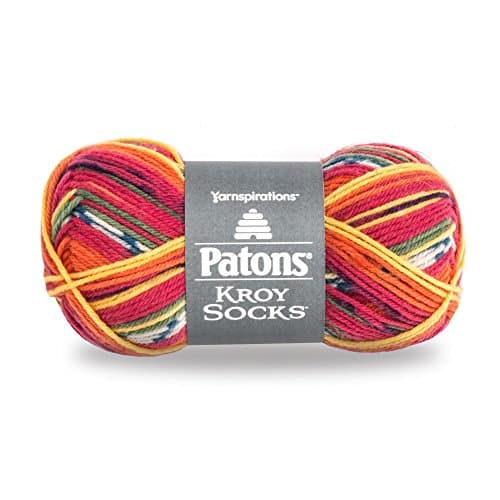
Patons Kroy Socks
Category 1, super fine - US fingering, UK 4-ply, AU 4-ply. 32 sts x 40 rows on 2.75mm.
$9.99 - View on Amazon#ad disclosure - price as of October 22, 2026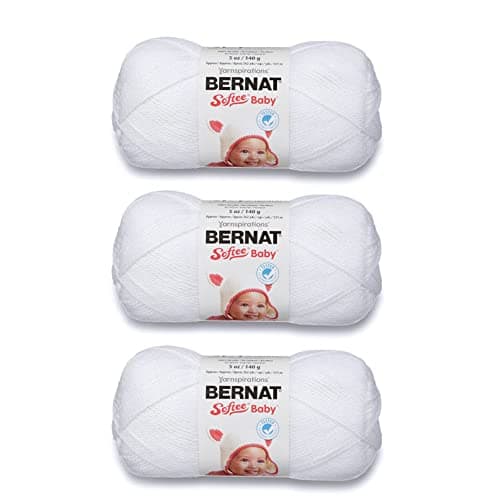
Bernat Softee Baby
Category 3, light - US DK, UK DK, AU 8-ply. 22 sts x 30 rows on 4mm.
$23.48 - View on Amazon#ad disclosure - price as of October 22, 2026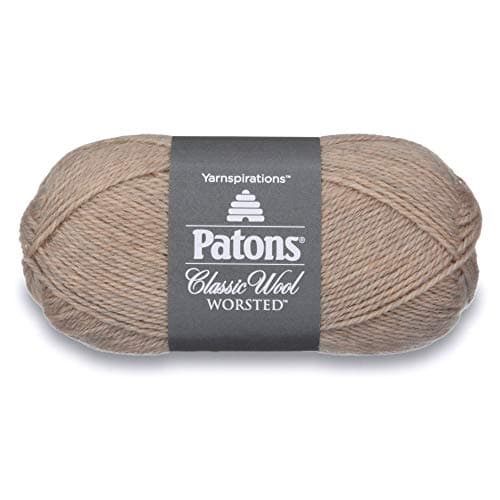
Patons Classic Wool Worsted
Category 4, medium - US worsted, UK aran, AU 10-ply. 20 sts x 26 rows on 4.5mm.
$11.89 - View on Amazon#ad disclosure - price as of October 22, 2026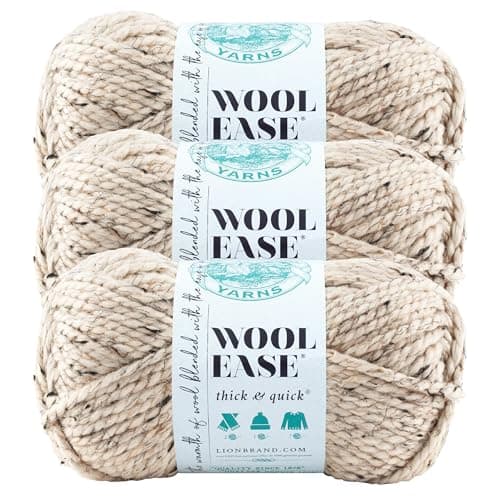
Lion Brand Wool-Ease Thick & Quick
Category 6, super bulky - US super bulky, UK super chunky. 9 sts x 12 rows on 9mm.
$29.22 - View on Amazon#ad disclosure - price as of October 22, 2026
Questions people actually ask
Is aran the same as worsted?
Approximately, yes. UK aran maps to US worsted - both sit in Craft Yarn Council category 4, around 16 to 20 stitches over four inches. Check the gauge rather than trusting the name.
What is DK weight in American terms?
DK is Craft Yarn Council category 3, light - between American sport and worsted. It is the standard baby garment weight and is called 8-ply in Australia.
Does 4-ply mean four plies?
Not any more. British and Australian ply numbers come from a time when yarn was spun from standard-thickness singles, and they survive as weight names. A modern 4-ply yarn may have two plies, five, or be a single.
What is 10-ply yarn in US terms?
Worsted weight, Craft Yarn Council category 4 - the same band as UK aran. 8-ply is DK, 12-ply is chunky.
How do I substitute a yarn when the weight names do not match?
Compare gauge first and yards per 100g second. A yarn with similar yardage per gram behaves similarly regardless of what either yarn is called, and it is the check that survives every naming convention.
Sources
- Craft Yarn Council - Standard Yarn Weight System
- Craft Yarn Council - Standards and Guidelines for Crochet and Knitting
- Yarnspirations - Patons Kroy Socks specification
- Yarnspirations - Bernat Softee Baby specification
- Yarnspirations - Patons Classic Wool Worsted specification
- Lion Brand - Wool-Ease Thick & Quick specification
- Louet Euroflax linen yarn - retail specification