Guide
Best Needles for Sleeves
A sleeve is a cone. Whatever needle starts it will be wrong by the time you reach the cuff.
By Sawyer V. · Published September 12, 2026
Disclosure: we earn a commission when you buy through the links on this page, at no extra cost to you. It never decides what we recommend or how we rank it - read the full disclosure.
The short answer
Knit sleeves with magic loop on a 32in or longer circular. It handles the whole sleeve - upper arm down to cuff - with no needle change, which is what keeps the two sleeves identical. Double points also work and mean switching mid-sleeve; a 9in circular works for the upper arm only and is uncomfortable for many people.
Why sleeves are awkward
A sleeve is a cone worked in the round. The upper arm might be 14 to 16in around; the cuff might be 7 to 9in. That is a halving of the circumference over one piece, and it happens gradually.
Every other in-the-round project has one circumference or two. A sleeve has a continuously changing one, which is why no fixed circular is right for the whole thing.
The three routes
| Method | Needle changes | Comfort | Best for |
|---|---|---|---|
| Magic loop, 32in+ | None | Good | Almost everyone |
| Double points | One switch | Fiddly at the top | Traditionalists, and small sizes |
| 9in circular then DPNs | One switch | Cramped tips | People who like 9in circulars |
| Two circulars | None | Fine | People who already do this |
| Flat, then seamed | None | Easiest | Anyone who dislikes all of the above |
Magic loop and two circulars are the two that require no change. Of those, magic loop needs one needle rather than two. Best needles for magic loop has the technique side.
Cable length for magic loop
- 32in is the practical minimum. Shorter and the loops are too tight to pull through comfortably.
- 40in is more comfortable and makes the loops easier to manage.
- A memory-free cable matters more here than anywhere else. A cable that coils fights you at every turn.
- A smooth, flexible join is essential - stitches have to slide over it dozens of times per round.
Keeping the pair identical
- Write down the row counts. Every increase and decrease row, as you work the first sleeve.
- Knit them at the same time on one long cable if you can. Two balls, both sleeves, every round worked twice - which guarantees they match.
- Do not change needles between sleeves. Not the size, not the brand, not the material.
- Do not knit them months apart. Your tension moves.
- Measure both against each other, not against the pattern, before binding off.
Knitting both at once is the same idea as best needles for two at a time socks, and it solves exactly the same problem.
Top down or cuff up
| Top down | Cuff up | |
|---|---|---|
| Starts at | Widest point | Narrowest point |
| Shaping | Decreases | Increases |
| Try on as you go? | Yes | Only near the end |
| Adjust length easily? | Yes - stop when it fits | No - it is fixed at the cast-on |
| Awkward needle part | The cuff, at the end | The cuff, at the start |
Top down is more forgiving because you can try the sleeve on and stop when the length is right. Either way the cuff is the difficult circumference; the difference is whether you meet it first or last.
Material, for the cuff
The cuff is the smallest circumference in the whole garment, which makes it the place ladders appear. Grip helps: a wood or bamboo tip holds the stitch where you put it rather than letting it slide to the loosest position.
Against that, steel is faster and many people knit ribbing more evenly on a slick needle. If your cuffs ladder, change the material before you change the technique - see bamboo vs metal knitting needles.
Or knit it flat
Sleeves worked flat and seamed are a completely legitimate construction, and they remove every problem on this page - one straight needle, no small circumferences, no ladders.
The cost is a seam, and a seam under the arm is barely visible. If small-circumference knitting is genuinely unpleasant for you, this is the answer rather than a compromise - see how to seam knitting and crochet.
What we would knit sleeves on
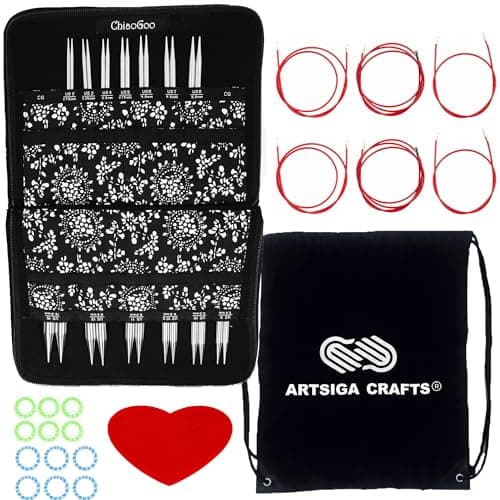
ChiaoGoo TWIST Red Lace Interchangeable Set (Complete, 5in tips)
13 pairs, US 2-15, on memory-free cables in 14in, 22in and 30in pairs - the 30in is the magic loop cable.
$216.80 - View on Amazon#ad disclosure - price as of September 21, 2026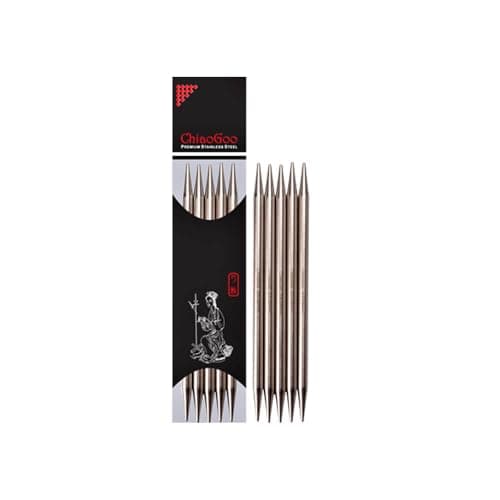
ChiaoGoo 6in Stainless Steel Double Point Needles
6in stainless double points, for anyone who prefers to finish a cuff the traditional way.
$13.36 - View on Amazon#ad disclosure - price as of September 21, 2026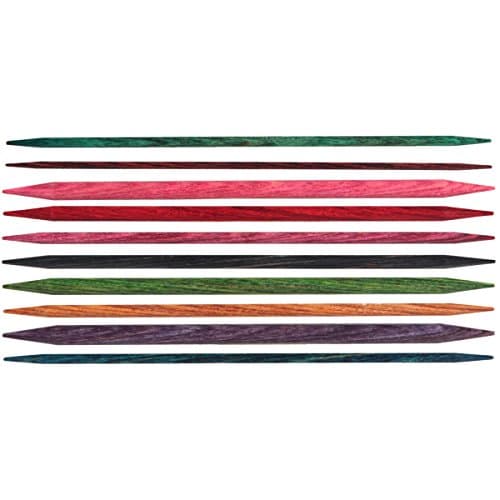
Knitter's Pride Dreamz 6in Double Pointed Needle Set
The wood alternative in double points - grip instead of speed, which matters at cuff circumference.
$13.34 - View on Amazon$15.7015% off · #ad disclosure - price as of September 21, 2026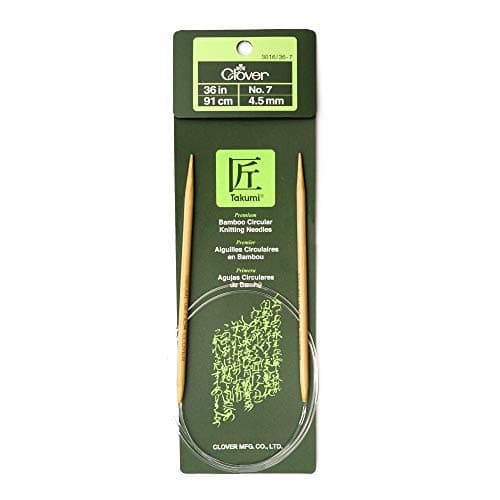
Clover Takumi Bamboo Circular Needles
Fixed bamboo circulars, 2.00mm to 15.00mm, in 9in through 36in, if you would rather buy one length at a time.
$9.14 - View on Amazon#ad disclosure - price as of September 21, 2026
Questions people actually ask
What needles do you use for sleeves?
A 32in or longer circular using magic loop is the best single answer - it handles the whole sleeve from upper arm to cuff with no needle change. Double points work and mean switching part way; a 9in circular covers only the upper arm.
How do I make both sleeves the same?
Knit them at the same time on one long cable if you can, write down every shaping row as you work the first one, never change needles between them, and measure the two against each other rather than against the pattern.
Is it better to knit sleeves top down or cuff up?
Top down is more forgiving, because you can try the sleeve on as you go and stop when the length is right. Cuff up fixes the length at the cast-on. The cuff is the awkward circumference either way.
Why do my sleeve cuffs have loose columns of stitches?
Those are ladders, and they appear where you change from one needle to the next. Pull the first two stitches after each join firmly, move the join point regularly, and try a wood or bamboo tip - grip stops stitches sliding to the loosest position.
Can I knit sleeves flat instead?
Yes, and it is a completely legitimate construction. It removes every small-circumference problem at the cost of one seam under the arm, which is barely visible. If magic loop and double points are both unpleasant for you, knit flat.