The picks
Best Weaving Loom for Beginners
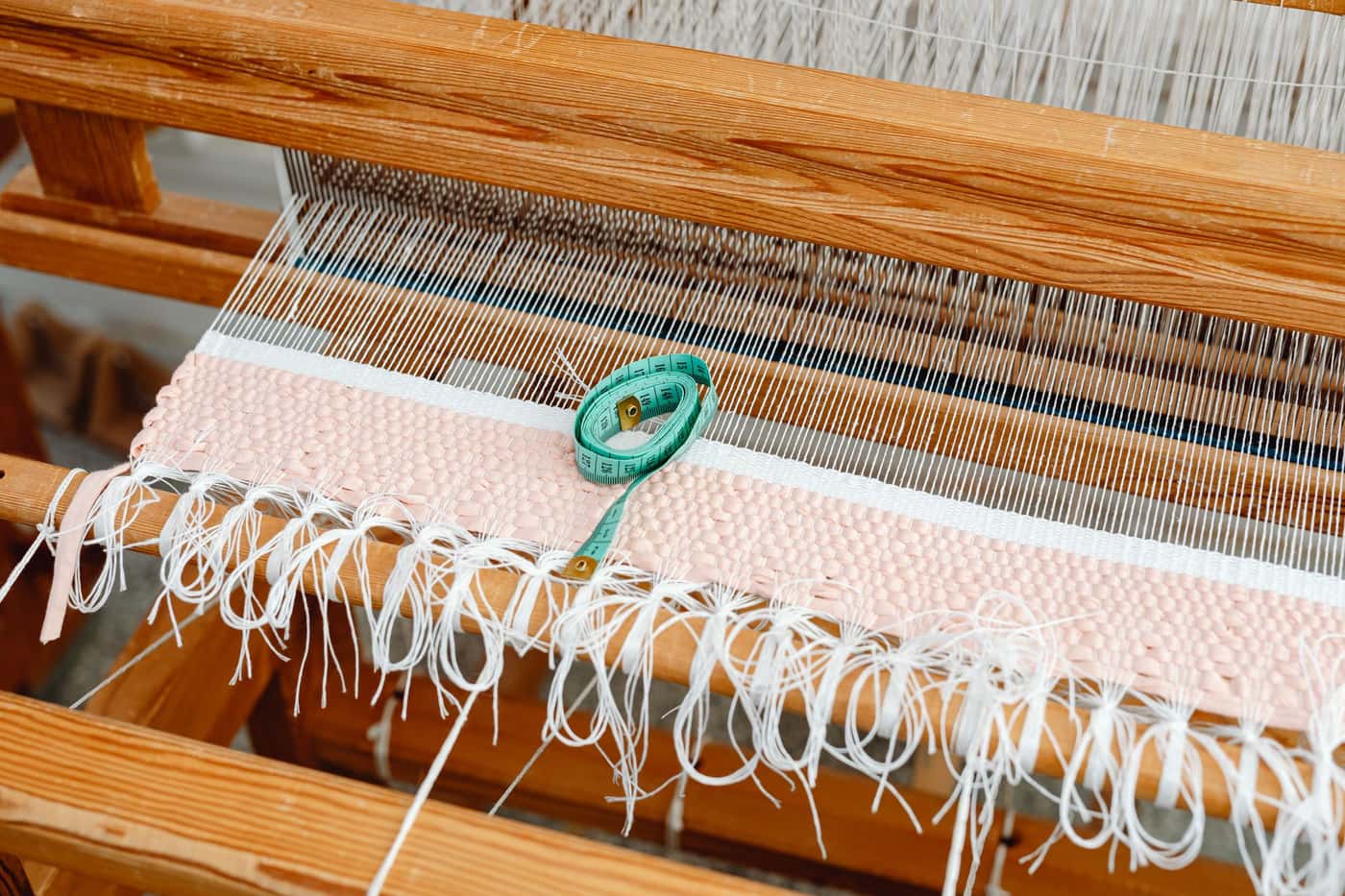
A rigid heddle loom is the smallest thing that weaves real cloth. Everything below it is a wall hanging.
By Sawyer V. · Published September 9, 2026
Disclosure: we earn a commission when you buy through the links on this page, at no extra cost to you. It never decides what we recommend or how we rank it - read the full disclosure.
The short answer
Buy a rigid heddle loom, in a 16in to 20in weaving width, that comes with a heddle, shuttles, a threading hook and a warping peg. That is the smallest and cheapest equipment that weaves genuine cloth. A frame loom costs less and cannot make anything with a finished edge on all four sides.
| # | Product | Best for | Format | Price |
|---|---|---|---|---|
| 1 | No photoAshford Rigid Heddle Loom (16in)The loom most weaving classes teach on, complete in the box, in the smallest useful width. | Someone who wants to weave scarves and cloth | Rigid heddle | Check price on Amazon#ad disclosure |
| 2 | No photoBeka SG Rigid Heddle Loom (20in)Solid cherry, 20in wide, with beams that take a five-yard warp. | Someone who already knows they want width | Rigid heddle | Check price on Amazon#ad disclosure |
| 3 | No photoLion Brand Wool-Ease Thick & QuickSuper bulky covers ground fast, which is what a first weave needs. | Weft on a chunky first project | Yarn | Check price on Amazon#ad disclosure |
| 4 | No photoPatons Classic Wool WorstedA warp has to survive being pulled tight and rubbed for the whole project. | The threads under tension | Yarn | Check price on Amazon#ad disclosure |
| 5 | No photoBernat BlanketChenille sheds through a heddle and abrades itself to pieces. | Crochet blankets | Yarn | Check price on Amazon#ad disclosure |
Ashford Rigid Heddle Loom (16in)
Ashford · Best for someone who wants to weave scarves and cloth
The rigid heddle loom most weaving classes teach on, and the smallest one that still weaves a real scarf.
- Weaving width
- 16in; also made in 24in, 32in and 48in
- Footprint
- About 20in wide by 24in deep for the 16in model
- Heddle supplied
- Nylon reed, 7.5 dents per inch
- Also included
- Two stick shuttles, second heddle block, threading hook, warping peg and clamp
- Instructions
- Step-by-step booklet in the box
Who it suits
Anyone who has decided to try weaving properly rather than to make one wall hanging.
Why it is here
16in weaving width, with 24in, 32in and 48in also made. The 16in model has a footprint of roughly 20in wide by 24in deep, so it fits on a dining table. It ships with a 7.5 dents-per-inch nylon reed, two stick shuttles, a second heddle block, a threading hook, a warping peg and clamp, and a step-by-step booklet - which is the whole first project, not a partial kit.
What you give up
16in is narrow. It weaves scarves, table runners and cloth for sewing, but not a blanket in one piece - and a wider loom is a much larger object to store.
Specifications from Ashford rigid heddle loom - retail specification. We have not handled this item - see how we pick.
Beka SG Rigid Heddle Loom (20in)
Beka · Best for someone who already knows they want width
A solid cherry lap loom made in the United States, with rotating beams that take a project five yards long.
- Weaving width
- 20in; also made in 24in
- Material
- Solid cherry, finished with Danish oil
- Heddle supplied
- 10 dent; 8 and 12 dent sold separately
- Also included
- Pick-up stick, two shuttles, pair of heddle blocks, no. 8 steel threading hook
- Warp length
- Rotating beams accommodate projects up to five yards
- Tensioning
- Ratchet and pawl
Who it suits
Anyone whose first project idea is wider than a scarf, and anyone who wants a loom to keep.
Why it is here
20in weaving width with a 24in also made, in solid cherry finished with Danish oil. It comes with a 10 dent heddle - 8 and 12 dent sold separately - a pick-up stick, two shuttles, a pair of heddle blocks and a no. 8 steel threading hook. The rotating beams accommodate projects up to five yards long, on ratchet and pawl tensioning.
What you give up
A 10 dent heddle is finer than the usual beginner recommendation, so it suits thinner yarn than a first project probably wants. Budget for an 8 dent heddle alongside.
Specifications from Beka SG-series rigid heddle loom specification. We have not handled this item - see how we pick.
Lion Brand Wool-Ease Thick & Quick
Lion Brand · Best for weft on a chunky first project
The super bulky the whole arm-knitting and chunky-blanket category is built on, at a gauge that finishes a throw in a weekend.
- Fiber
- 80% acrylic, 20% wool (fiber ratio varies on some heathered colorways)
- Weight
- 6 Super Bulky
- Skein
- 6oz / 170g, 106yd / 97m
- Gauge
- 9 sts x 12 rows on US 13 (9mm)
- Hook
- M (9mm)
- Care
- Machine wash and dry
Who it suits
Anyone warping a loom for the first time who wants to see progress in an evening.
Why it is here
80% acrylic, 20% wool, Craft Yarn Council category 6 super bulky, 106yd per 170g. Weaving is measured in inches per hour and a thick weft is the fastest way to get there - a chunky scarf comes off a 16in loom in an evening or two rather than a fortnight.
What you give up
Super bulky suits a low dent count. It is a weft yarn rather than a warp yarn - a warp has to take tension, and a smooth strong yarn does that better.
Specifications from Lion Brand product page. We have not handled this item - see how we pick.
Patons Classic Wool Worsted
Patons · Best for the threads under tension
100% non-superwash wool at supermarket money. It blooms when blocked, holds a cable, and it will felt if you put it in the machine.
- Fiber
- 100% wool (not superwash)
- Weight
- 4 Medium / worsted
- Ball
- 3.5oz / 100g, 194yd / 177m
- Gauge
- 20 sts x 26 rows on 4.5mm (US 7)
- Hook
- 5mm (US H/8), 14 sc x 17 rows
- Care
- Hand wash, lay flat to dry, do not machine wash
Who it suits
Anyone warping a loom, which is everyone weaving.
Why it is here
100% untreated wool, worsted weight, 194yd per 100g. Warp threads are held under tension and rubbed by the heddle on every pass, so they need strength and a smooth, firmly plied surface. Wool has enough grip to hold a weave together without being fragile.
What you give up
Untreated wool is hand wash only, which sets the care instructions for the whole finished piece. It also needs to be plied firmly - a soft single will pill against the heddle.
Specifications from Yarnspirations product page. We have not handled this item - see how we pick.
Bernat Blanket
Bernat · Best for crochet blankets
Polyester chenille at 108 yards to a 150g ball. Fast, warm, machine washable, and it will shed and worm if the tension is loose.
- Fiber
- 100% polyester (chenille)
- Weight
- 6 Super Bulky
- Ball
- 5.3oz / 150g, 108yd / 98m
- Gauge
- 8 sts x 13 rows on 8mm (US 11)
- Hook
- 8mm (US L/11), 7 sc x 8 rows
- Care
- Machine wash delicate, tumble dry gentle
Who it suits
Not weavers. It is a reasonable blanket yarn on a hook.
Why it is here
100% polyester chenille, super bulky, 108yd per 150g. Its thickness makes it look like a natural weaving yarn.
What you give up
Weaving drags every thread through a heddle hundreds of times. A pile yarn loses its pile to that friction, sheds continuously into the loom, and as a warp it will not hold tension - see [chenille yarn explained](/fiber-guide/chenille-yarn-explained).
Specifications from Yarnspirations product page. We have not handled this item - see how we pick.
The three kinds of loom, and which one you want
| Type | Makes | Footprint | Verdict for a beginner |
|---|---|---|---|
| Frame or lap loom | Wall hangings, small mats | Tiny | Cheap; you outgrow it in weeks |
| Rigid heddle | Scarves, runners, cloth, blankets in panels | Table-sized | The right first loom |
| Table loom, 4+ shaft | Complex structured weaves | Large | Later, if you get serious |
| Floor loom | Everything, fast | Furniture | Not a first purchase |
The frame loom is where most people start and it is why most people stop. It has no tensioning system and no way to advance the work, so the piece can only ever be as long as the frame - and the edges are finished by hand rather than woven. It makes decorations, not cloth.
Which width to buy
Weaving width is the loom's one specification that cannot be changed later, so it is worth getting right.
- 16in weaves scarves, runners, towels and cloth to cut and sew. It fits on a dining table and stores against a wall.
- 20in to 24in adds shawls, wider wraps and cushion fronts. Noticeably bigger to store.
- 32in and up weaves blankets and yardage in one piece, and is a piece of furniture.
Almost everyone should start at 16in to 20in. Wider looms are harder to warp, harder to store, and the extra width goes unused on a first dozen projects. A blanket can always be woven in panels and seamed - see how to seam knitting and crochet.
Dents per inch, which is the other number
The heddle - also called the reed - has slots at a fixed spacing, quoted in dents per inch. That spacing sets how thick a yarn the loom takes.
| Dents per inch | Suits | Fabric |
|---|---|---|
| 5 dpi | Bulky and super bulky | Loose, fast, very forgiving |
| 7.5 dpi | Worsted and aran | The standard beginner setup |
| 8 dpi | Worsted, DK doubled | Slightly finer |
| 10 dpi | DK and sport | Finer cloth; more threads to warp |
| 12.5 dpi | Fingering | Fine cloth; slow to set up |
A 7.5 or 8 dent heddle with worsted weight yarn is the standard first setup, and it is what most looms ship with. If your loom comes with a 10 dent, budget for an 8 alongside - it is a cheap part and it makes the first project much easier. Yarn weight bands are on the Craft Yarn Council chart.
What a starter loom must include
- A heddle or reed. Some looms are sold without one. Check.
- At least one shuttle. Two is better - one for each color in a stripe.
- A threading hook. Threading a heddle by hand is possible and miserable.
- A warping peg and clamp, or a warping board. Warping is the setup step, and you cannot skip it.
- Instructions. Weaving has a genuine setup procedure, and a loom without a booklet means learning it from video.
Both looms above include all five. A loom sold as the bare frame is cheaper and will need every one of these bought separately.
The part nobody warns you about
Warping - measuring and threading the warp threads - takes longer than weaving on a short project. A first warp is realistically an hour or two, and it is fiddly rather than difficult.
This is the honest reason people bounce off weaving: they expect to sit down and weave, and the first session is entirely setup. It gets much faster with practice, and a long warp amortises it - warping once for three scarves rather than three times for one each.
How it compares to knitting and crochet
- Much faster once running. A scarf is an evening, not a fortnight.
- Much slower to start. Warping has no equivalent in knitting.
- Less portable. A loom does not go on a bus.
- Different fabric. Woven cloth has no stretch, which is why weaving makes scarves and towels rather than sweaters.
- Same yarn, mostly. Most of the yarn on this site works as weft; warp wants something stronger.
Our types of yarn crafts page sets weaving alongside the rest of the family.
What we would buy
- First loom: a 16in rigid heddle, complete with heddle, shuttles and warping peg.
- If you want width: a 20in cherry loom, plus an 8 dent heddle.
- Warp yarn: firmly plied worsted wool.
- Weft for a fast first project: super bulky.
- Not on a loom: chenille.
Questions people actually ask
What is the best loom for a beginner?
A rigid heddle loom in a 16in to 20in weaving width, sold complete with a heddle, shuttles, a threading hook and a warping peg. It is the smallest equipment that weaves genuine cloth rather than wall hangings.
Is a frame loom good enough to start with?
For wall hangings, yes. It has no tensioning system and no way to advance the work, so the piece can only be as long as the frame and the edges are finished by hand. Most people outgrow one within weeks.
What width weaving loom should I buy?
16in to 20in. That weaves scarves, runners, towels and cloth to sew, fits on a dining table and stores easily. Wider looms are harder to warp and store, and a blanket can be woven in panels and seamed.
What does dents per inch mean on a loom?
The spacing of the slots in the heddle, which sets how thick a yarn the loom takes. 7.5 or 8 dents per inch with worsted weight yarn is the standard beginner setup; 10 or 12.5 suits finer yarn.
How long does it take to set up a loom?
A first warp is realistically an hour or two, and it takes longer than weaving a short project. It gets much faster with practice, and warping one long warp for several scarves spreads the setup across all of them.