Head to head
Hook Sets vs Single Hooks
A set covers ten sizes. Most people use three. That is the whole calculation.
By Sawyer V. · Published September 7, 2026
Disclosure: we earn a commission when you buy through the links on this page, at no extra cost to you. It never decides what we recommend or how we rank it - read the full disclosure.
The short answer
Buy singles until you know which sizes you reach for, then buy a set if the answer is more than four. Most crocheters use 3.5mm, 4mm and 5mm for the great majority of patterns, and a ten-hook set costs roughly what four good ergonomic singles cost - so the set wins only once you genuinely need the range.
The comparison
| A set | Singles | |
|---|---|---|
| Cost per hook | Lower | Higher for ergonomic; lowest for bare aluminum |
| Cost up front | Higher | Lower |
| Size coverage | Usually 2.25-6.0mm | Whatever you buy, including 10mm+ |
| Consistency | Same grip and head across every size | Varies unless you rebuy the same line |
| Trying a head shape | Expensive - you buy ten of one geometry | Cheap - buy one and find out |
| Storage | Comes with a case | Loose unless you buy one |
| Large sizes for blankets | Rarely included | Buy exactly the size you need |
| Steel/thread sizes | Never in a yarn set | Sold as a separate steel set |
| Replacing a lost hook | Awkward - a gap in the case | Buy another |
Which sizes people actually use
This is the fact the whole decision turns on, and it is worth being concrete.
| Hook | Yarn | How often |
|---|---|---|
| 2.25-2.75mm | Fingering, sock, thread-adjacent | Occasional |
| 3.5mm | Amigurumi in worsted; DK fabric | Very often |
| 4.0mm | DK; tight worsted; amigurumi | Very often |
| 5.0mm | Worsted - the default | Constantly |
| 5.5-6.0mm | Worsted loose; aran | Often |
| 6.5-10mm | Bulky and blankets | Occasional, and rarely in a set |
| Below 2mm | Crochet thread | Only for thread work; a separate steel set |
Three sizes - 3.5mm, 4mm and 5mm - cover the overwhelming majority of patterns written for the yarns most people buy. Those weight bands come from the Craft Yarn Council standard.
When a set is clearly right
- You already know you are staying. Past a couple of finished projects, the range pays for itself.
- You want one grip across every size. This is the underrated argument - a consistent handle means your hand does not relearn the tool when the pattern changes size.
- You crochet garments. Garments need gauge adjustment, and adjusting gauge means owning the size above and below.
- More than one person is crocheting. A set is a shared resource; singles get lost between people.
- You want the case. A set arrives organized, which is not nothing - see best crochet hook case.
When singles are clearly right
- You have not decided you like crochet. One 5mm hook is the cheapest possible test.
- You are testing a head shape. Buying ten in-line hooks to discover you prefer tapered is an expensive way to find out - see in-line vs tapered.
- You need a size sets do not include. 8mm for a blanket, or steel for thread.
- You want one premium hook. A hand-poured resin hook is sold singly because the handle is the product.
- You already own most of a range. Filling two gaps is cheaper than duplicating eight hooks.
The sequence we would actually follow
- One 5mm hook, aluminum, to find out whether you like crochet at all.
- A second hook in a different head geometry, still cheap, to settle in-line against tapered.
- A set in the geometry that won, once you have finished two or three projects.
- One large hook - 8mm or 10mm - the first time you make a blanket.
- A steel set, only if you take up thread work - see best steel crochet hooks.
That path costs slightly more in total than buying a set on day one, and it means you never own ten hooks with a handle you dislike. Our best crochet hooks roundup ranks the sets; this page is about whether you need one yet.
The mistake worth avoiding
Buying a very cheap unbranded set as a first purchase. It looks like the low-risk option and it is the opposite: ten hooks with rough finishes and inconsistent head shapes will teach you that crochet is uncomfortable, when what is actually uncomfortable is the tool.
One good hook beats ten poor ones, and it costs less. That is the whole argument for starting with singles.
Both sides of this comparison
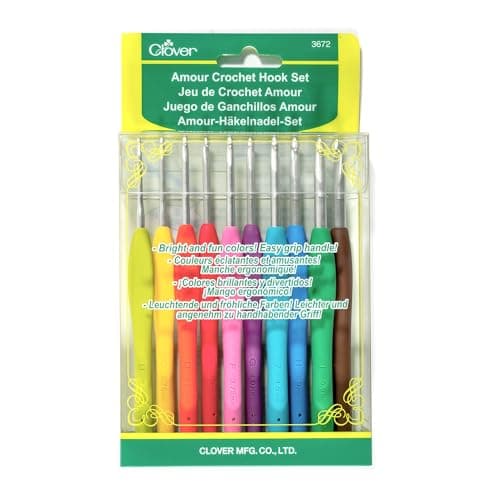
Clover Amour Crochet Hook Set
The set case: ten hooks, B/2.25mm to J/6.0mm, one molded grip standard across every size.
$49.67 - View on Amazon#ad disclosure - price as of October 22, 2026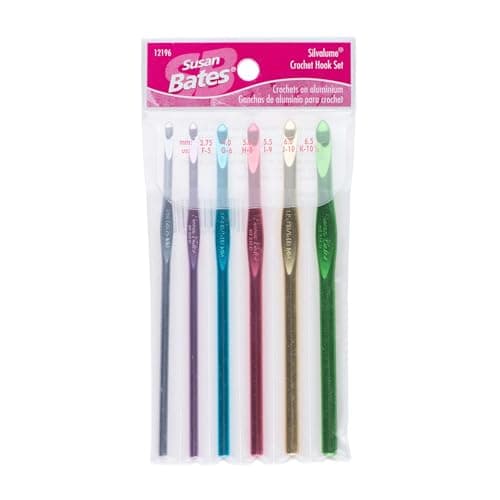
Susan Bates Silvalume Aluminum Crochet Hooks
The singles case: individual aluminum hooks from 2.25mm to 10mm, at a fraction of a set's price each.
$11.57 - View on Amazon#ad disclosure - price as of October 22, 2026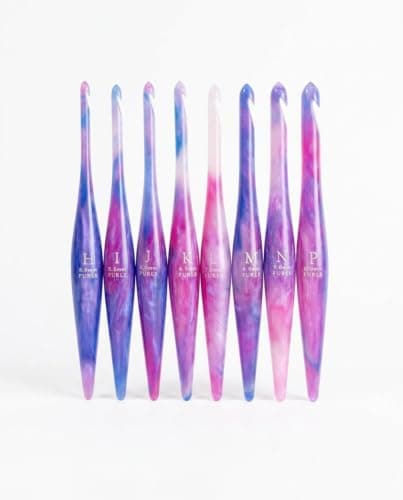
Furls Streamline Resin Crochet Hook
The other singles case: a hook sold one size at a time because the handle is the product.
$34.99 - View on Amazon#ad disclosure - price as of October 22, 2026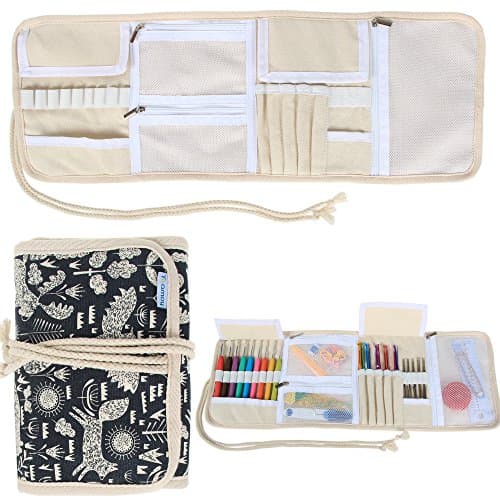
Teamoy Crochet Hook Roll Case
If you buy singles, buy this too - loose hooks are hooks you cannot find.
$13.99 - View on Amazon#ad disclosure - price as of October 22, 2026
Questions people actually ask
Should I buy a crochet hook set or single hooks?
Singles until you know which sizes you reach for. Most crocheters use 3.5mm, 4mm and 5mm for the great majority of patterns, and a set only wins once you genuinely need more than about four sizes.
What crochet hook sizes do I actually need?
3.5mm, 4mm and 5mm cover most patterns for the yarns people commonly buy. Add an 8mm or 10mm for blankets, and a steel set only if you take up thread work.
Are cheap crochet hook sets worth it?
Rarely as a first purchase. Rough finishes and inconsistent head shapes teach a beginner that crochet is uncomfortable, when it is the tool that is. One good single hook costs less and works better.
What sizes are missing from a standard hook set?
Anything above 6.0mm and anything below 2.25mm. Blanket yarn wants 8mm to 10mm and crochet thread wants sub-2mm steel hooks - both are separate purchases whichever set you buy.
Is it worth having one grip across every hook size?
More than people expect. A consistent handle means your hand does not have to relearn the tool when a pattern changes size, which is the strongest practical argument for a set once you are past the trial stage.