Head to head
Magic Loop vs Double Pointed Needles
Same stitches, same fabric, same result. What changes is how many things you are holding and where the ladders appear.
By Sawyer V. · Published September 24, 2026
Disclosure: we earn a commission when you buy through the links on this page, at no extra cost to you. It never decides what we recommend or how we rank it - read the full disclosure.
The short answer
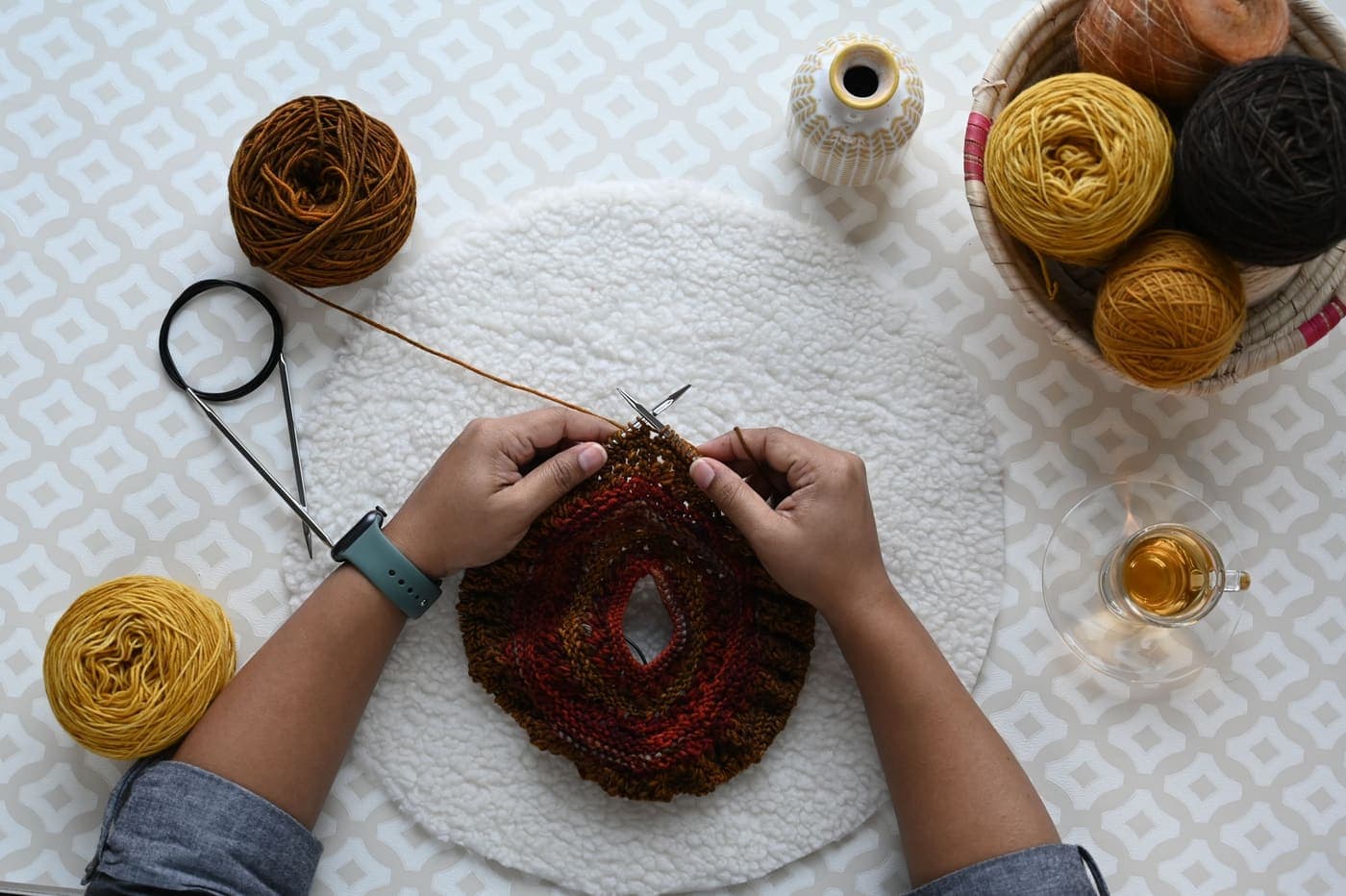
They produce identical fabric, so this is a handling preference rather than a quality decision. Magic loop needs one circular with a 32in or longer cable and keeps everything on one needle; double points need a set of five short needles and no long cable. Learn magic loop if you already own long circulars or travel with your knitting; learn double points if you dislike pulling cable loops through every half round.
The comparison
| Magic loop | Double points | |
|---|---|---|
| What you hold | One circular needle | Four or five short needles |
| Cable needed | 32in or longer | None |
| Stitches per section | Half at a time | Divided across three or four |
| Ladders appear | At two turn points | At every needle join |
| Drops in a bag | Safe - stitches sit on the cable | Needles can slide out |
| Works at any circumference | Yes, down to a cuff | Yes, down to a cuff |
| Can you try it on? | Yes, stitches spread along the cable | Awkward |
| Cost | One needle, if the cable is long enough | One pack of five |
| Fabric produced | Identical | Identical |
What magic loop actually is
You put all the stitches on one long circular, pull a loop of spare cable out at the halfway point, and knit half the stitches at a time - sliding the cable round and repeating at the other half.
- The cable has to be long enough. 32in is the practical minimum; 40in is more comfortable.
- Memory-free cable matters more here than anywhere else. A cable that holds a coil fights you at every pull.
- A smooth join is essential, because stitches cross it dozens of times per round.
- You pull the loop twice per round, which is the part people either accept or hate.
What double points ask instead
- Stitches split across three or four needles, with the fifth doing the knitting.
- No long cable, which is why they remain the traditional sock needle.
- Short lengths - 5in and 6in are typical - which is what makes a sleeve cuff possible.
- They are loose objects. They fall out of a bag, roll off sofas and go missing one at a time.
- Wood grips and can snap; steel is slick and will not.
Ladders, on both
A ladder is the loose column where you change from one needle or section to the next - the yarn travels slightly further there, so those stitches sit looser.
- Pull the first two stitches after a join firmly. Not just the first.
- Move the join point every few rounds on double points, so no single column builds up.
- Magic loop ladders at exactly two points, which is fewer places to watch but a more visible line if you ignore them.
- Grippy tips ladder less - stitches stay where you put them rather than sliding to the loosest position.
- Blocking hides a lot of what remains.
Which to learn first
| If you... | Learn |
|---|---|
| Already own long circulars | Magic loop - it may cost you nothing |
| Knit on trains and in waiting rooms | Magic loop - nothing falls out |
| Hate pulling cable loops | Double points |
| Are knitting your first sock | Either; the pattern's own instructions will assume one |
| Have a cable that coils | Double points, until you replace the cable |
| Knit two socks at once | Magic loop - see the two-at-a-time page |
| Want the cheapest entry | Double points - one pack of five |
The dedicated pages are best needles for magic loop and best double pointed needles, and the two-socks-at-once variant is in best needles for two at a time socks.
Where each one is used
In practice most knitters end up using both, chosen by project rather than by loyalty: magic loop for socks and sleeves where the piece is long and repetitive, double points for a hat crown where only a few rounds remain.
That is the honest answer to the comparison - they are tools for the same job, and owning both costs very little. Best circular needles for hats shows the switch happening mid-project.
What each method needs
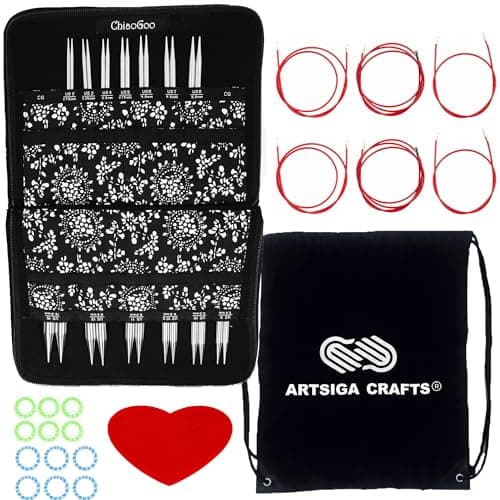
ChiaoGoo TWIST Red Lace Interchangeable Set (Complete, 5in tips)
The magic loop route: memory-free cables in 14in, 22in and 30in pairs - a coiling cable is what makes magic loop unpleasant.
$216.80 - View on Amazon#ad disclosure - price as of September 24, 2026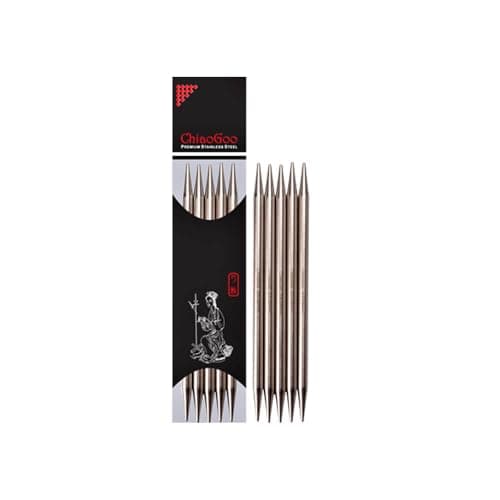
ChiaoGoo 6in Stainless Steel Double Point Needles
The double-point route: five 6in stainless needles per pack, US 0 (2mm) to US 11 (8mm), size laser etched on each.
$13.41 - View on Amazon#ad disclosure - price as of September 24, 2026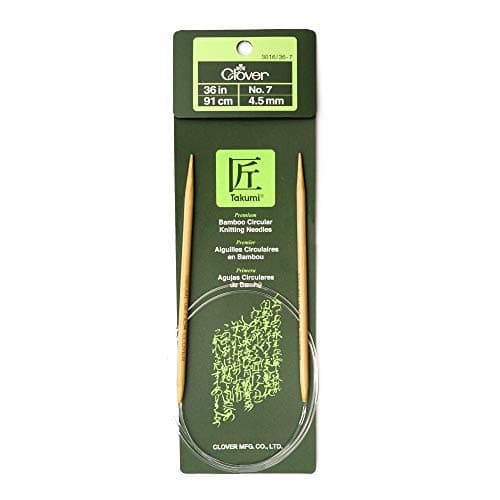
Clover Takumi Bamboo Circular Needles
Magic loop on one fixed cable - bamboo, 2.00mm to 15.00mm, in lengths up to 36in. Grip helps at small circumferences.
$7.74 - View on Amazon$8.9914% off · #ad disclosure - price as of September 24, 2026- No photo
Clover Takumi Bamboo Double Pointed Needles
The wood alternative in double points: polished bamboo, 5in and 7in, five per pack, tapered.
Questions people actually ask
Is magic loop better than double pointed needles?
Neither is better - they make identical fabric. Magic loop keeps everything on one needle and travels safely; double points need no long cable and avoid pulling cable loops twice a round.
What length cable do I need for magic loop?
32in is the practical minimum and 40in is more comfortable. A memory-free cable matters more here than in any other technique, because a coiling cable resists every loop you pull.
Which is faster, magic loop or DPNs?
Double points, slightly, for most people - magic loop spends time pulling the cable through twice per round. The difference is small compared with how much practice you have with either.
Do both methods get ladders?
Yes. Magic loop ladders at its two turn points and double points at every needle join. The fix is the same: pull the first two stitches after each join firmly, and move the join point on double points.
Which should a beginner learn for socks?
Whichever your pattern is written for, then try the other. If you already own a 32in or longer circular, magic loop may cost you nothing to try; a pack of five double points is the cheapest way in otherwise.