Guide
How to Hold Knitting Needles
Two main styles, several grips, and no correct answer. What matters is that your hands do not hurt.
By Sawyer V. · Published September 12, 2026
Disclosure: we earn a commission when you buy through the links on this page, at no extra cost to you. It never decides what we recommend or how we rank it - read the full disclosure.
The short answer
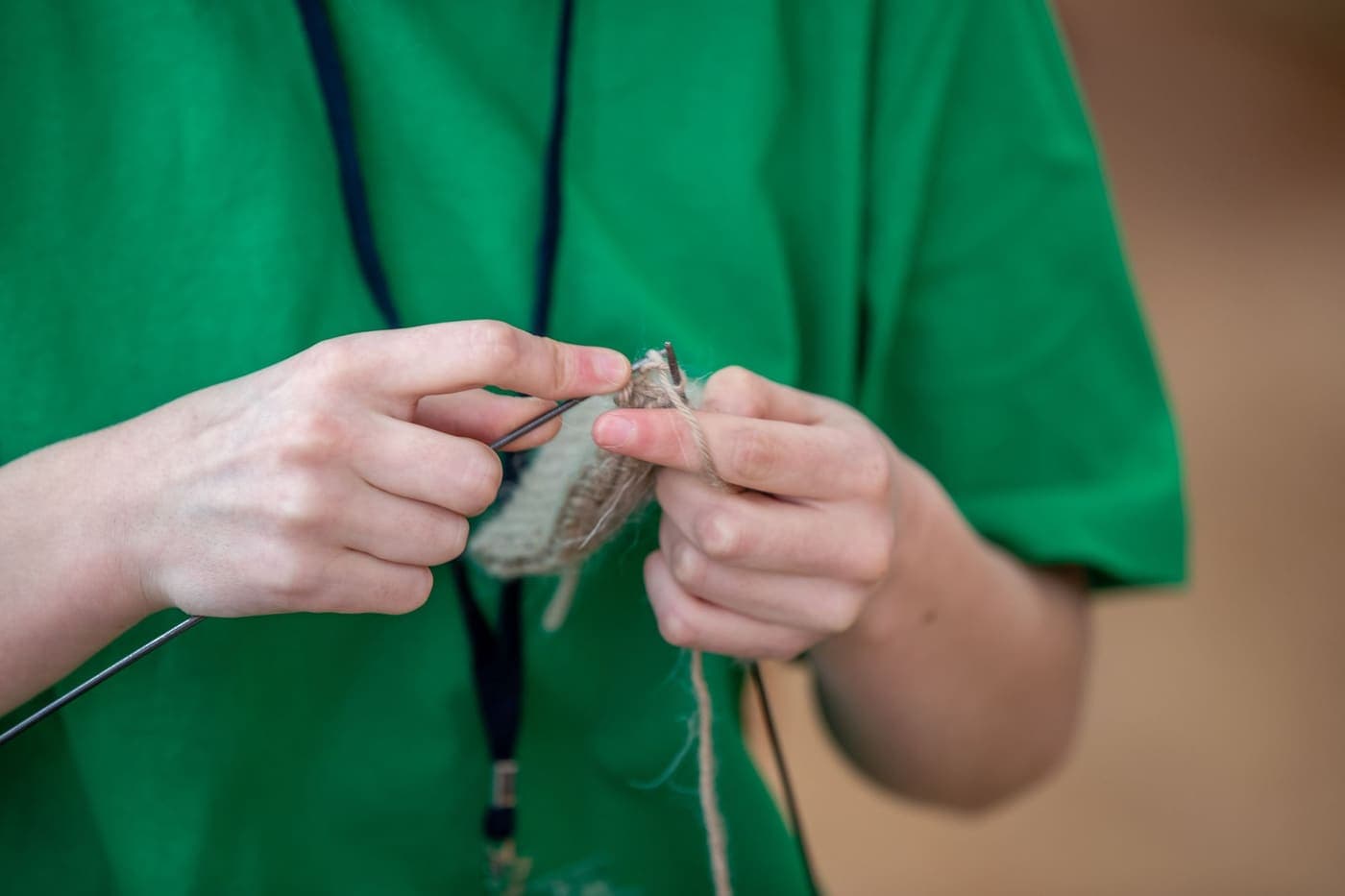
There are two main styles: English, where the working yarn is held and thrown by the right hand, and Continental, where it is held by the left and picked. Neither is correct and neither is faster in every pair of hands. Beyond that, hold the needles like a pencil or like a knife - whichever lets you work without gripping hard. The only real rule is that nothing should hurt.
English and Continental
| English (throwing) | Continental (picking) | |
|---|---|---|
| Yarn held in | Right hand | Left hand |
| Motion | Wrap the yarn around the needle | Scoop the yarn with the needle tip |
| Hand movement | More - the right hand travels | Less - the tip does the work |
| Tension control | Easier to feel at first | Takes longer to even out |
| Purling | Straightforward | Awkward until it clicks |
| Ribbing | Slower - yarn moves front to back | Faster once learned |
| Colorwork with two hands | One color goes here | The other goes here |
| Familiar to crocheters | Less so | Yes - the left hand already does this |
If you crochet already, try Continental first. Your left hand is already tensioning yarn in exactly that way and the transfer is usually quick.
Pencil grip and knife grip
Separate from the yarn question is how you hold the needle itself, and there are two common answers.
- Knife grip: the needle sits under the palm, hand over the top, as if holding a table knife. More stable, less fine control, and easier on the fingers over long sessions.
- Pencil grip: the needle rests in the crook between thumb and forefinger, as if writing. More control at the tip, more pinch force, and harder on the hands over hours.
- Most people use one on each hand, without noticing.
- Neither is correct. Both are used at high speed by people who have knitted for decades.
Tension, which is the actual skill
How you hold the needles matters less than how consistently the yarn runs through your fingers. Tension is what makes a fabric even, and it comes from the yarn hand rather than the needle hand.
- Run the yarn over and under your fingers in a consistent path - around the little finger, over the index, is the usual arrangement.
- Do not grip the yarn. Let it slide through under light resistance. A pinched yarn produces tight, uneven stitches.
- Expect the first project to be uneven, and expect it to fix itself. This is the one thing that genuinely improves on its own.
- Do not try to fix tension by changing needles. Fix it by knitting more, then adjust needle size to hit gauge.
If your hands hurt
Pain is information, and the fix is usually structural rather than a matter of technique.
| What hurts | Likely cause | First thing to change |
|---|---|---|
| Thumb web | Pinch force on a thin needle | Thicker needle, or the knife grip |
| Fingertips | Gripping because stitches slide | Bamboo or wood tips |
| Wrist | Levering long straight needles | Circulars |
| Shoulders | Arms held up and away | Sit differently; support the elbows |
| Everything, after two hours | Two hours | Twenty-minute sessions with breaks |
The single biggest change available is straights to circulars: the weight of the work sits in your lap rather than on the ends of two levers. Best knitting needles for arthritis goes further.
Left-handed knitters
Knitting uses both hands at once, which means most left-handed people learn the standard way without difficulty - and some find Continental particularly natural, because the dominant left hand controls the yarn.
Mirrored left-handed knitting exists and works, and its cost is that every written pattern needs reversing. Try the standard direction first; it is far easier than it sounds. The crochet equivalent is in best crochet hooks for left-handed crocheters.
What to learn on
- A grippy needle, so stitches do not slide off while your hands are still working it out. Bamboo is the classic beginner recommendation for exactly this reason.
- A middling size - around 5mm, with worsted yarn. Big enough to see, small enough to control.
- Light, solid-colored, smooth yarn. You cannot learn a stitch you cannot see.
- Straight needles are fine to learn on, and circulars are better for anything large.
Best knitting needles for beginners covers the purchase, and what to buy first the wider list.
Needles that suit a beginner's hands
- No photo
Clover Takumi Bamboo Single Point Needles
Polished bamboo straights in 9in and 13in, 17 sizes in the shorter length - grip, light weight, and forgiving of a new hold.
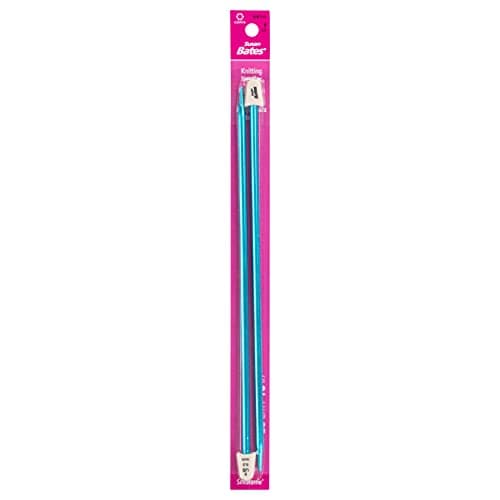
Susan Bates Silvalume Single Point Knitting Needles
Anodized aluminum straights, 10in and 14in, US 0 (2mm) to US 15 (10mm), with the size printed on a no-roll knob.
$8.68 - View on Amazon#ad disclosure - price as of September 21, 2026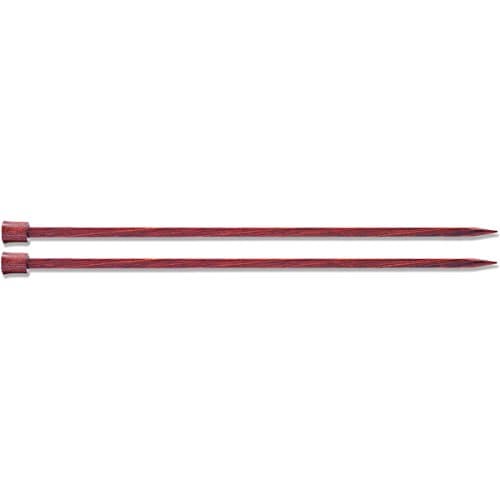
Knitter's Pride Dreamz Single Point Needles
Laminated birch single points, 10in, US 2.5 to US 17, color-coded by size - a middle ground between bamboo and metal.
$16.63 - View on Amazon$18.359% off · #ad disclosure - price as of September 21, 2026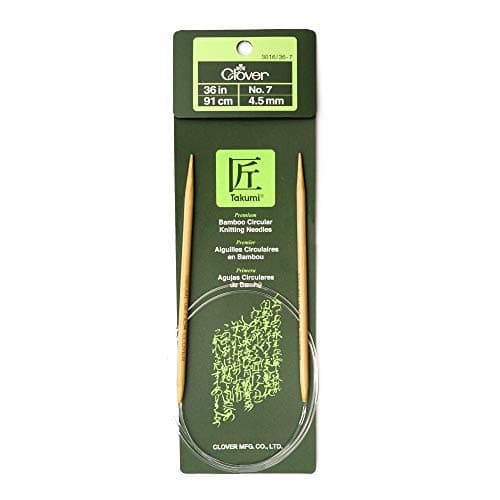
Clover Takumi Bamboo Circular Needles
The upgrade most hand pain responds to: circulars put the weight of the work in your lap instead of on two levers.
$9.14 - View on Amazon#ad disclosure - price as of September 21, 2026
Questions people actually ask
What is the correct way to hold knitting needles?
There is not one. The two main styles are English, where the right hand holds and throws the yarn, and Continental, where the left hand holds and the needle picks it. Beyond that, hold the needle like a pencil or like a knife - whichever lets you work without gripping hard.
Is Continental knitting faster than English?
Often, because the hand travels less - but not in every pair of hands, and plenty of very fast knitters throw. Speed comes from practice far more than from style.
Should a crocheter learn Continental knitting?
It is usually the easier transfer, yes. Your left hand already tensions yarn in exactly that way, so the yarn-holding half of the skill is already there.
Why is my knitting tension uneven?
Because you are new, and it fixes itself. Tension comes from how consistently the yarn runs through your yarn hand - let it slide under light resistance rather than gripping it. Do not try to fix it by changing needles.
Can left-handed people knit normally?
Yes, and most do. Knitting uses both hands at once, and some left-handed knitters find Continental especially natural because the dominant hand controls the yarn. Mirrored knitting works too, at the cost of reversing every written pattern.