Head to head
Knit or Crochet a Sweater?
This is the project where the two crafts differ most. Knitted fabric stretches; crocheted fabric does not.
By Sawyer V. · Published September 12, 2026
Disclosure: we earn a commission when you buy through the links on this page, at no extra cost to you. It never decides what we recommend or how we rank it - read the full disclosure.
The short answer
Knit a sweater if you want it to fit like a shop sweater - knitted fabric stretches, drapes and is lighter for the same warmth. Crochet one if you want texture and structure, or if crochet is simply the craft you enjoy. Crochet uses more yarn and produces a heavier, stiffer fabric with less give, which makes fit less forgiving and is the single biggest reason crocheted sweaters have a reputation they mostly no longer deserve.
The general comparison is in knitting vs crochet. This page is about one project, and a sweater is where the two crafts diverge most - because a sweater is the only thing either of them makes that has to fit a moving body.
The comparison, for a sweater
| Knitting | Crochet | |
|---|---|---|
| Fabric stretch | Considerable, both ways | Little, and mostly one way |
| Weight for the same warmth | Lighter | Heavier |
| Yarn used | Less | More |
| Drape | Fluid | Structured |
| Ribbing | Native - knit and purl | Approximated with post stitches |
| Fit forgiveness | High - the fabric adapts | Low - the measurement is the measurement |
| Speed | Slower per row | Faster per row |
| Shaping | Easy and gradual | Easy, in bigger steps |
| Pattern availability | Very wide | Narrower, and improving |
| Fixing a mistake | Harder - live stitches | Easier - one live stitch |
Stretch is the whole argument
A knitted stitch is a loop pulled through a loop, and the fabric is a grid of those loops that can open and close in both directions. That is why a knitted sweater moves with a shoulder and settles back.
A crochet stitch has more yarn locked into each stitch and far more of it is anchored. The fabric has some give, mostly along one axis, and much less than knitting does. The consequence for a garment is direct: a knitted sweater an inch too small often still fits, and a crocheted one an inch too small does not.
Weight, which people underestimate
Crochet uses more yarn for the same finished area, because crochet stitches wrap the yarn more times. All of that yarn ends up in the garment, hanging from your shoulders.
- A crocheted sweater is noticeably heavier than a knitted one in the same yarn and size.
- Heavy plus inelastic means it grows. The weight pulls downwards and the fabric has little recovery.
- Go lighter on the yarn to compensate - DK rather than worsted, or a lofty wool rather than a dense cotton.
- Avoid alpaca and cotton for a crocheted sweater unless you want that combination. Both are already heavy and neither has memory - see alpaca vs cashmere.
Ribbing
Knitting has ribbing built in: alternate knit and purl columns produce a fabric that contracts sideways and springs back. It is why cuffs and hems on knitted garments hold.
Crochet has no direct equivalent. Front-post and back-post double crochet produce a ribbed appearance with some elasticity, and worked-sideways slip stitch ribbing is stretchier still - but neither has the recovery of knitted rib. Plan bands and cuffs deliberately rather than assuming.
Where crochet clearly wins
- Texture. Bobbles, shells, cables in post stitches, motifs - crochet's stitch vocabulary is larger and more sculptural.
- Motif garments. A granny-square cardigan has no clean knitted equivalent.
- Open, lacy summer garments. Crochet lace is faster and easier than knitted lace.
- Trying it on as you go. One live stitch means you can put the hook down and pull the piece on at any point.
- Fixing errors. One live stitch again - unpicking crochet is far less alarming than unpicking knitting.
Where knitting clearly wins
- Fit. The fabric adapts to a body in a way crochet fabric does not.
- Weight. Lighter for the same warmth, every time.
- Drape. A knitted sweater hangs; a crocheted one holds.
- Cuffs and hems. Real ribbing.
- Pattern choice. The published field is much wider, particularly for fitted garments in a full size range.
Construction is the same question either way
Top down, bottom up, seamed in pieces or worked in the round - both crafts do all of these, and the choice matters more than the craft does.
Top down and in the round lets you try the garment on as you go, which is the biggest single advantage available to either. If you are making a first sweater, choose that construction in whichever craft you already know - see best needles for a sweater and best crochet hooks for garments.
Which to choose
| If you want... | Choose |
|---|---|
| A sweater that fits like a shop one | Knitting |
| Something light for its warmth | Knitting |
| Texture you can see across a room | Crochet |
| A granny-square cardigan | Crochet |
| Real ribbed cuffs | Knitting |
| To finish sooner | Crochet |
| An open summer garment | Crochet |
| The widest choice of patterns | Knitting |
| To use the craft you already know | That one - it matters more than this table |
That last row is not a cop-out. A sweater is the biggest project most people attempt, and doing it in the craft you are fluent in beats doing it in the theoretically better one.
What each route needs
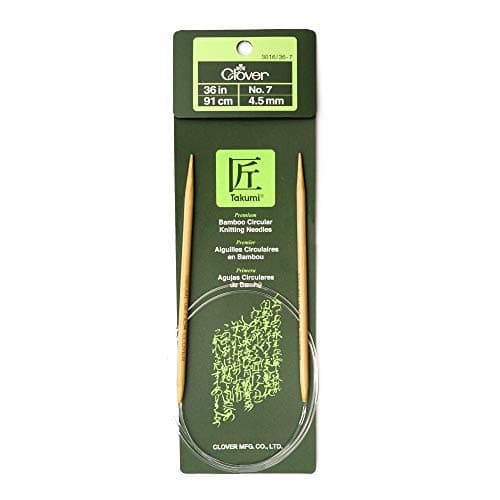
Clover Takumi Bamboo Circular Needles
The knitting route: a sweater wants a 24in to 32in circular. Bamboo, 2.00mm to 15.00mm, in 9in through 36in.
$9.14 - View on Amazon#ad disclosure - price as of September 21, 2026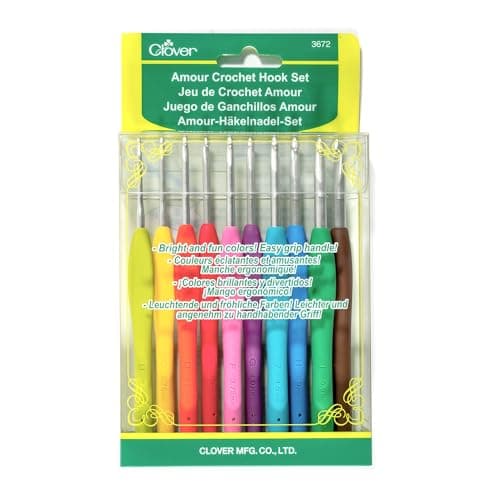
Clover Amour Crochet Hook Set
The crochet route: ten hooks, B/2.25mm to J/6.0mm, with a grip that survives a long project.
$46.30 - View on Amazon$49.156% off · #ad disclosure - price as of September 21, 2026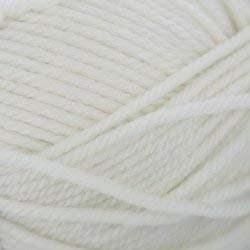
Cascade 220 Superwash Merino
Works for either - 100% superwash merino, 220yd per 100g, DK to light worsted, with the memory a garment needs.
$21.00 - View on Amazon#ad disclosure - price as of September 21, 2026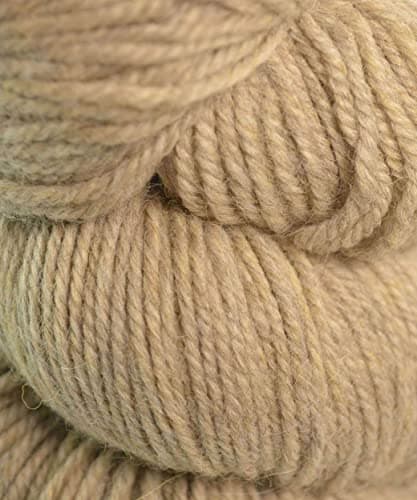
Berroco Ultra Alpaca
The warm option: 50% alpaca, 50% Peruvian wool, worsted, 219yd per 100g. Hand wash, lay flat.
$17.00 - View on Amazon#ad disclosure - price as of September 21, 2026
Questions people actually ask
Is it better to knit or crochet a sweater?
Knit, if you want it to fit and hang like a shop sweater - knitted fabric stretches, drapes and is lighter for the same warmth. Crochet, if you want texture, motifs or an open summer garment, or if crochet is the craft you are fluent in.
Why are crocheted sweaters heavier?
Crochet stitches wrap the yarn more times, so the same finished area takes more yarn - and all of that yarn hangs from your shoulders. Combined with crochet's limited stretch, that is why a crocheted sweater can grow under its own weight.
Does crochet have ribbing?
Not in the knitted sense. Front-post and back-post double crochet produce a ribbed appearance with some give, and sideways slip stitch ribbing stretches more, but neither recovers the way knitted rib does. Plan cuffs and hems deliberately.
Does gauge matter more for crochet garments?
Yes. Crocheted fabric has much less stretch to absorb an error, so half a stitch per inch off can put the chest measurement two inches out. Swatch large, wash the swatch and measure after blocking.
Which uses more yarn for a sweater, knitting or crochet?
Crochet, noticeably - the stitches wrap the yarn more times for the same finished area. Budget extra yardage, and consider going a weight lighter to keep the finished garment from being too heavy.