The picks
Best Yarn for Charity Knitting
You will never meet the person who receives this, which changes almost every decision about the yarn.
By Sawyer V. · Published September 27, 2026
Disclosure: we earn a commission when you buy through the links on this page, at no extra cost to you. It never decides what we recommend or how we rank it - read the full disclosure.
The short answer
Use a worsted acrylic that machine washes and machine dries. Charity items go to people you will never meet, laundered by institutions that will not read a care label, and possibly to someone with a wool allergy nobody can ask about. That rules out untreated wool, hand-wash-only yarn and anything precious. Check the receiving organization's own requirements first - many specify acrylic only, and some specify colors.
What to look for
The brief is unusually specific, because so many of the normal decisions are taken out of your hands.
- Machine wash and machine dry. This is the hard requirement. A hospital, shelter or care home launders at volume and nobody will lay your knitting flat to dry.
- Hypoallergenic, which in practice means acrylic. You cannot ask the recipient about wool allergies or lanolin sensitivity, so most organizations remove the question by specifying acrylic.
- Cheap enough to make in quantity. Charity knitting is measured in items, not projects, and yarn cost per item is the constraint on how many you finish.
- Widely available. You will buy the same yarn again in six months. A discontinued shade halfway through a batch is a real problem.
- Soft enough to wear. Coarse yarn on a newborn's head or a chemotherapy patient's scalp is not a kindness.
- Ask the organization first. Many publish exact requirements - fiber, color, size, sometimes even stitch pattern - and an item that does not meet them may be refused.
| # | Product | Best for | Fiber | Yards/skein | Price |
|---|---|---|---|---|---|
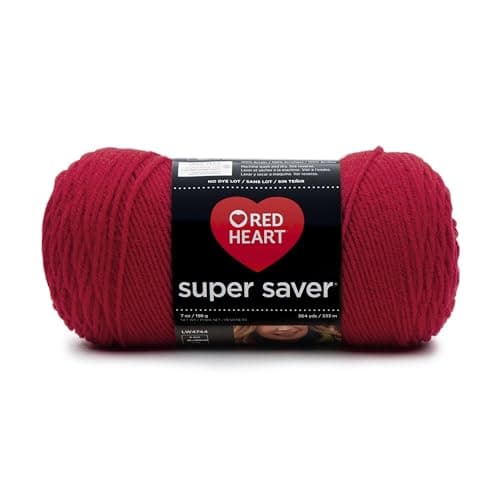
| 1 | Red Heart Super SaverThe most yardage per skein here, no dye lot, and it survives an institutional laundry. | Volume, and yarn you will buy again in six months | 100% acrylic | 364yd / 198g | $4.29 - View on Amazon#ad disclosure - price as of September 27, 2026 |
| 2 | 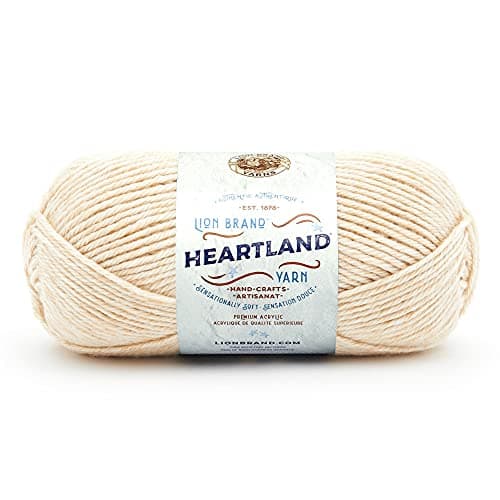 Lion Brand HeartlandNoticeably softer than the budget acrylics, with enough yardage to stay practical. Lion Brand HeartlandNoticeably softer than the budget acrylics, with enough yardage to stay practical. | Items that touch skin - hats, scarves, preemie blankets | 100% acrylic | 251yd / 142g | $12.42 - View on Amazon#ad disclosure - price as of September 27, 2026 |
| 3 | 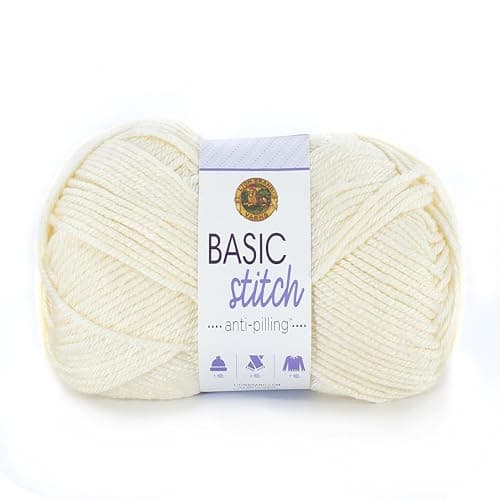 Lion Brand Basic Stitch Anti-PillingSold specifically on the failure that ends most donated acrylic items. Lion Brand Basic Stitch Anti-PillingSold specifically on the failure that ends most donated acrylic items. | Blankets that will be washed weekly | 100% acrylic | 185yd / 100g | $5.99 - View on Amazon#ad disclosure - price as of September 27, 2026 |
| 4 | 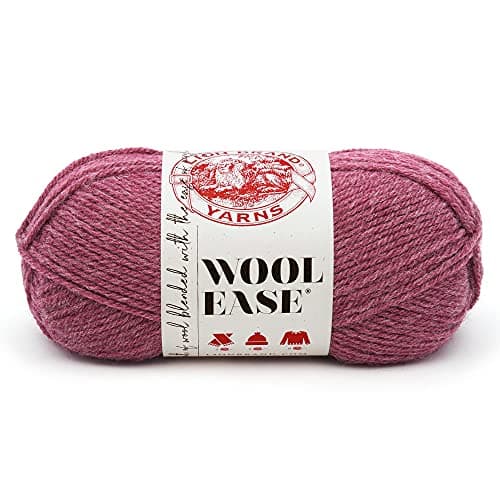 Lion Brand Wool-EaseTwenty percent wool, and it still machine washes and machine dries. Lion Brand Wool-EaseTwenty percent wool, and it still machine washes and machine dries. | Cold-climate outreach | 80% acrylic, 20% wool | 197yd / 85g | $11.77 - View on Amazon#ad disclosure - price as of September 27, 2026 |
| 5 | 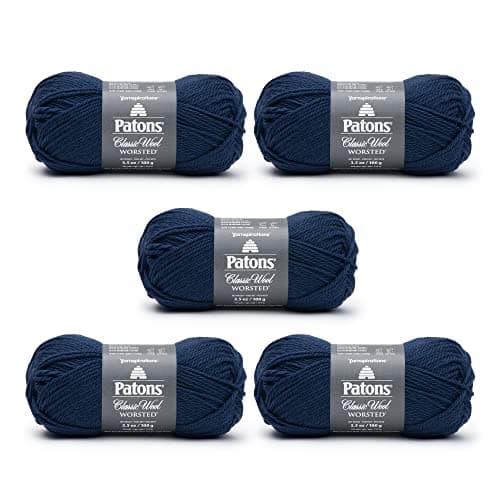 Patons Classic Wool WorstedA lovely yarn that will be destroyed by the first wash it receives. Patons Classic Wool WorstedA lovely yarn that will be destroyed by the first wash it receives. | Your own knitting, where hand washing is your choice to make | 100% wool | 194yd / 100g | $43.54 - View on Amazon |
Red Heart Super Saver
Red Heart · Best for volume, and yarn you will buy again in six months
The 7oz workhorse acrylic. Coarser than the softer acrylics here, and the cheapest yardage on the shelf by a distance.
- Fiber
- 100% acrylic
- Weight
- 4 Medium / worsted
- Skein
- 7oz / 198g, 364yd / 333m (no-dye-lot solids)
- Gauge
- 17 sts x 23 rows on 5mm (US 8)
- Hook
- 5.5mm (US I/9), 12 sc x 15 rows
- Care
- Machine wash warm gentle, tumble dry low, no bleach
Who it suits
Anyone knitting hats or blankets in quantity for a hospital, shelter or care home.
Why it is here
100% acrylic, worsted, 364yd per 198g skein, 17 sts x 23 rows on 5mm, machine wash warm and tumble dry low, with no dye lot on the solids. Acrylic sidesteps wool allergies entirely, the no-dye-lot solids mean a batch knitted over months stays consistent, and the care label survives a laundry that will not read it.
What you give up
It is the coarsest yarn on this page out of the ball and softens only after washing - which for a hat going to a stranger means it arrives at its least appealing. Deep shades can bleed on the first wash.
Specifications from Yarnspirations product page. We have not handled this item - see how we pick.
Lion Brand Heartland
Lion Brand · Best for items that touch skin - hats, scarves, preemie blankets
A soft all-acrylic worsted in a 5oz skein - a lot of yardage per skein, which matters when a blanket needs eight of them.
- Fiber
- 100% acrylic (solids); 94% acrylic, 6% rayon (tweeds)
- Weight
- 4 Medium / worsted
- Skein
- 5oz / 142g, 251yd / 230m (solids)
- Gauge
- 16 sts x 22 rows on US 9 (5.5mm)
- Hook
- J-10 (6mm), 12 sc x 15 rows
- Care
- Machine wash gentle, tumble dry low, no bleach
Who it suits
Anyone whose charity knits are worn rather than laid over someone.
Why it is here
100% acrylic in the solid shades, worsted, 251yd per 142g skein, 16 sts x 22 rows on US 9 (5.5mm), machine wash gentle and tumble dry low. It is the compromise between the coarse budget acrylics and yarn too expensive to give away in quantity.
What you give up
It carries dye lots, so a large batch needs buying together. The tweed shades are 94% acrylic and 6% rayon - a different fiber content from the solids, so do not mix the two in one item.
Specifications from Lion Brand product page. We have not handled this item - see how we pick.
Lion Brand Basic Stitch Anti-Pilling
Lion Brand · Best for blankets that will be washed weekly
An acrylic worsted sold specifically on its pilling behavior, which is the one complaint that ends most acrylic garments.
- Fiber
- 100% acrylic
- Weight
- 4 Medium / worsted
- Skein
- 3.5oz / 100g, 185yd
- Gauge
- 18 sts x 26 rows on US 8 (5mm)
- Hook
- H-8 (5mm), 16 sc x 18 rows
- Care
- Machine wash, machine dry
Who it suits
Anyone donating to somewhere that launders everything constantly.
Why it is here
100% acrylic, worsted, 185yd per 100g skein, 18 sts x 26 rows on US 8 (5mm), machine wash and machine dry. Pilling is what makes a donated blanket look tired after a month of institutional washing, and this is the one yarn here marketed on solving it.
What you give up
185 yards per skein is the lowest of the acrylics here, so a blanket takes more skeins and the cost per item rises. It also carries dye lots.
Specifications from Lion Brand product page. We have not handled this item - see how we pick.
Lion Brand Wool-Ease
Lion Brand · Best for cold-climate outreach
An 80/20 acrylic-wool worsted that machine washes and dries, and is the single most sensible first step away from all-acrylic.
- Fiber
- 80% acrylic, 20% wool (solids, heathers, twists)
- Weight
- 4 Medium / worsted
- Skein
- 3oz / 85g, 197yd / 180m
- Sold as
- Single skein on the listing we link
- Gauge
- 18 sts x 24 rows on US 8 (5mm)
- Hook
- J-10 (6mm), 13.2 sc x 16 rows
- Care
- Machine wash, water not above 105F; machine dry
Who it suits
Anyone knitting for rough sleepers or anywhere genuinely cold.
Why it is here
80% acrylic and 20% wool, worsted, 197yd per 85g skein, 18 sts x 24 rows on US 8 (5mm), machine wash and machine dry in water not above 105F. Wool insulates when damp and acrylic does not, which matters a great deal for someone outdoors.
What you give up
The wool content is a genuine allergy consideration, so check what the receiving organization accepts - many specify acrylic only for exactly this reason. 85g skeins also mean more joins per item.
Specifications from Lion Brand product page. We have not handled this item - see how we pick.
Patons Classic Wool Worsted
Patons · Best for your own knitting, where hand washing is your choice to make
100% non-superwash wool at supermarket money. It blooms when blocked, holds a cable, and it will felt if you put it in the machine.
- Fiber
- 100% wool (not superwash)
- Weight
- 4 Medium / worsted
- Ball
- 3.5oz / 100g, 194yd / 177m
- Gauge
- 20 sts x 26 rows on 4.5mm (US 7)
- Hook
- 5mm (US H/8), 14 sc x 17 rows
- Care
- Hand wash, lay flat to dry, do not machine wash
Who it suits
Not charity knitters. For a felted bag or a hand-washed sweater it is excellent.
Why it is here
100% non-superwash wool, worsted, 194yd per 100g ball, 20 sts x 26 rows on 4.5mm, hand wash and lay flat to dry.
What you give up
Untreated wool felts in a machine, and a donated item will go through a machine. A hat that arrives beautiful and comes out of the first wash as a doll's hat has helped nobody. It is also a wool allergy risk and costs more per item than the acrylics above.
Specifications from Yarnspirations product page. We have not handled this item - see how we pick.
Why acrylic rather than wool
On this site acrylic is usually the compromise choice. For charity knitting it is the correct one, for reasons that have nothing to do with how it feels in your hands.
- Allergies you cannot ask about. Wool sensitivity is common enough that most organizations simply exclude it.
- Laundry you do not control. Untreated wool felts in a machine, and the machine is a given.
- Cost per item, which decides how many people you help.
- Consistency across a batch, which is why the no-dye-lot solids matter more here than anywhere else.
- The exception is genuine cold. Wool insulates when damp and acrylic does not, which matters for someone sleeping outdoors - if the organization accepts wool blends.
Practical notes for knitting in quantity
- Weave ends in securely, because the item will be washed hard and nobody will repair it - see how to weave in ends.
- Avoid anything that can come off. Buttons, pom-poms and ties are hazards on baby items and are the commonest reason donations are rejected.
- Use a simple repeatable pattern. The twentieth hat should be faster than the first.
- Buy the whole batch at once where the yarn carries dye lots.
- Wash one finished item yourself before making nineteen more, to confirm it survives.
How we picked
Every yarn here is one we already list, ranked on the requirements charity organizations actually publish - machine washability, fiber content, cost per yard and availability - using the manufacturers' own specifications in the sources below. We have not tested these yarns and do not claim to have.
What we would buy
- Quantity and consistency: no-dye-lot acrylic.
- Anything worn against skin: a softer acrylic.
- Items laundered constantly: the anti-pilling acrylic.
- Real cold, if wool is accepted: 80/20 acrylic and wool.
- Not for donation: untreated wool.
Questions people actually ask
What yarn should I use for charity knitting?
A worsted acrylic that machine washes and machine dries. Items go to people you cannot ask about allergies, and are laundered by institutions that will not read a care label - which rules out untreated wool and hand-wash-only yarn.
Why do charities ask for acrylic yarn?
Two reasons: wool allergies they cannot screen for, and laundry they cannot control. Acrylic removes both problems, and it costs little enough that a volunteer can make many items rather than one.
Can I use wool for charity knitting?
Only if the organization accepts it, and only in a machine-washable form. Wool is genuinely better for anyone outdoors because it insulates when damp - but untreated wool felts in the first machine wash.
Does it matter if the yarn has dye lots?
More than usual here, because a batch is knitted over weeks or months from repeated purchases. A no-dye-lot solid stays consistent across the whole batch without you tracking anything.
What should I check before starting?
The receiving organization's published requirements. Many specify fiber, size and color, and some exclude ties, buttons or pom-poms on baby items entirely. An item that misses the requirements may be refused.
Sources
- Craft Yarn Council - Standard Yarn Weight System
- Yarnspirations - Red Heart Super Saver specification
- Lion Brand - Heartland specification
- Lion Brand - Basic Stitch Anti-Pilling specification
- Lion Brand - Wool-Ease specification
- Yarnspirations - Patons Classic Wool Worsted specification
- GINETEX - International care labeling symbols